E-Bike Battery Won’t Charge: Step-by-Step Fix
You plug in your e-bike battery. The charger light stays green—or worse, doesn’t turn on at all. You wait. Nothing happens.
I see this at least twice a week at the shop. Sometimes it’s serious. Most of the time? It’s not.
Here’s how to figure out which one you’re dealing with.
Start with the boring stuff first
Before you panic about a dead battery or faulty BMS, check these. I’m serious—half the “broken” batteries I see aren’t broken at all.
1. Check the wall socket
Sounds obvious. Still gets missed.
Try a different outlet. Preferably one you know works—plug your phone charger into it first if you’re not sure.
UAE-specific tip: Power surges and tripped breakers are common, especially in older buildings. If the outlet’s dead, your battery’s fine.
2. Inspect the charger itself
Look at the charger plug. Is it bent? Corroded? Loose?
Plug it into the wall without connecting it to the battery. Most chargers have an LED indicator. If it doesn’t light up at all, the charger’s dead—not the battery.
If the LED turns on when plugged into the wall but goes off or stays green when you connect the battery, keep reading.
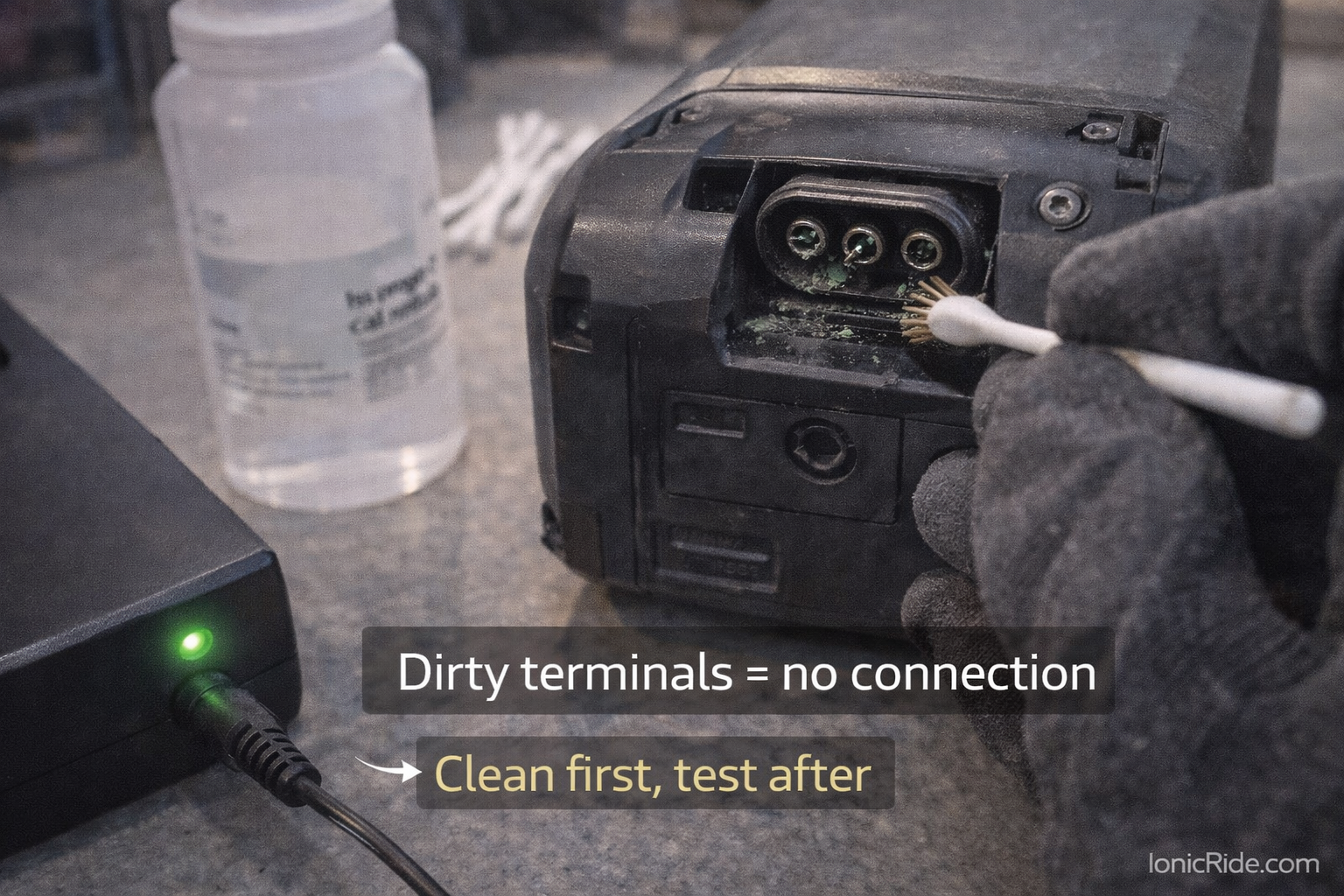
3. Check the battery terminals
Unplug everything. Look at the charging port on your battery.
Dirt, sand, and corrosion build up fast in Dubai’s climate. Even a thin layer of grime can block contact.
Grab a dry cloth or a cotton swab. Wipe the charging port gently. Don’t use water or solvents unless you know what you’re doing—moisture + electronics = bad idea.
If you see green or white crusty stuff, try cleaning it with isopropyl alcohol on a swab. If it’s deep, you might need a shop to replace the connector.
Now let’s test the charger properly
If the basics check out, we need to confirm whether the charger or the battery is the issue.
Borrow a charger (if possible)
If you know someone with the same e-bike or a compatible charger, try theirs. If their charger works, yours is toast. If it doesn’t, the problem’s in the battery.
Can’t borrow one? Most e-bike shops in the UAE will test your battery for free or a small fee. It’s faster than guessing.
Check the charger output voltage (if you have a multimeter)
This is optional, but if you’ve got a multimeter lying around, here’s what to do:
- Plug the charger into the wall (without connecting it to the battery)
- Set your multimeter to DC voltage
- Touch the probes to the charger’s output pins
You should see a voltage close to your battery’s rated voltage. For a 48V battery, expect around 54V. For a 36V battery, expect around 42V.
Zero volts? Charger’s toast.
If the charger’s fine, the battery’s the issue
This is where it gets less fun.
The BMS might have shut down
BMS stands for Battery Management System. Think of it as the panic button inside your battery. If anything goes wrong — too hot, too cold, voltage drops too low — it shuts everything down to keep the cells from catching fire or dying permanently.
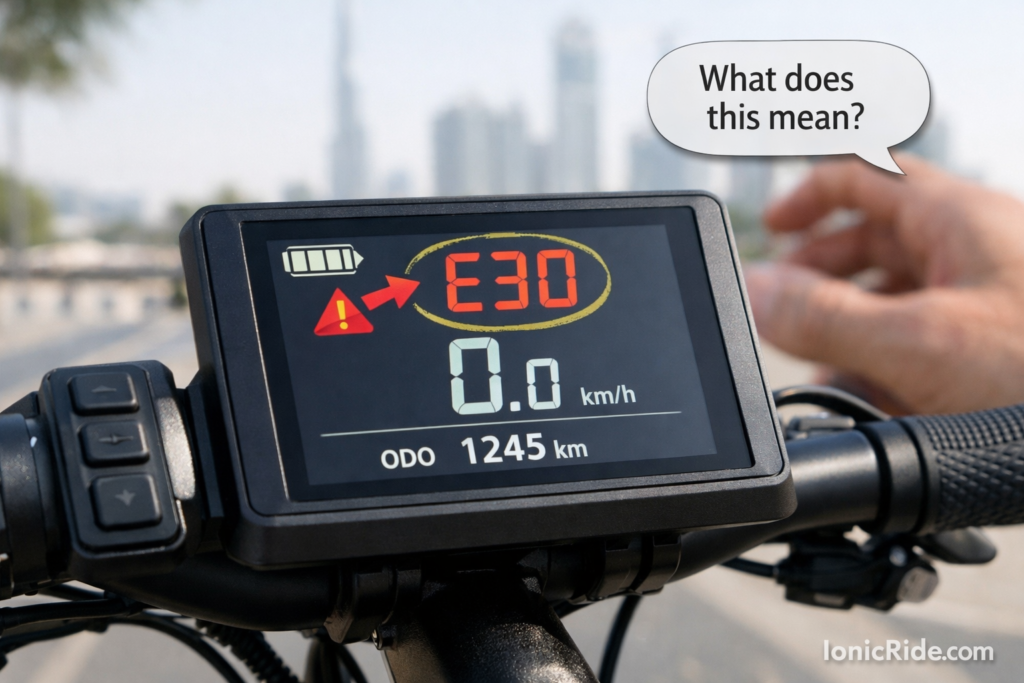
If the battery got too hot, too cold, or drained completely, the BMS might’ve tripped into protection mode. When that happens, it won’t accept a charge until it’s reset.
Signs the BMS is in protection mode:
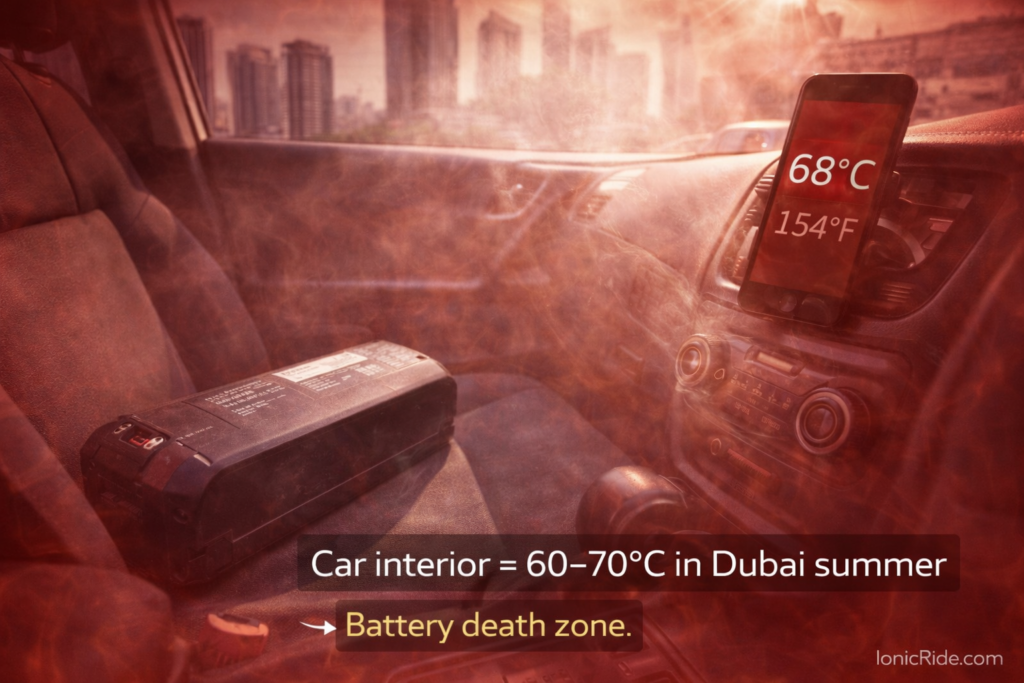
- The battery was stored in extreme heat (like a car trunk in UAE summer)
- You left the battery completely dead for weeks
- The charger light stays green immediately, like it thinks the battery’s full (it’s not)
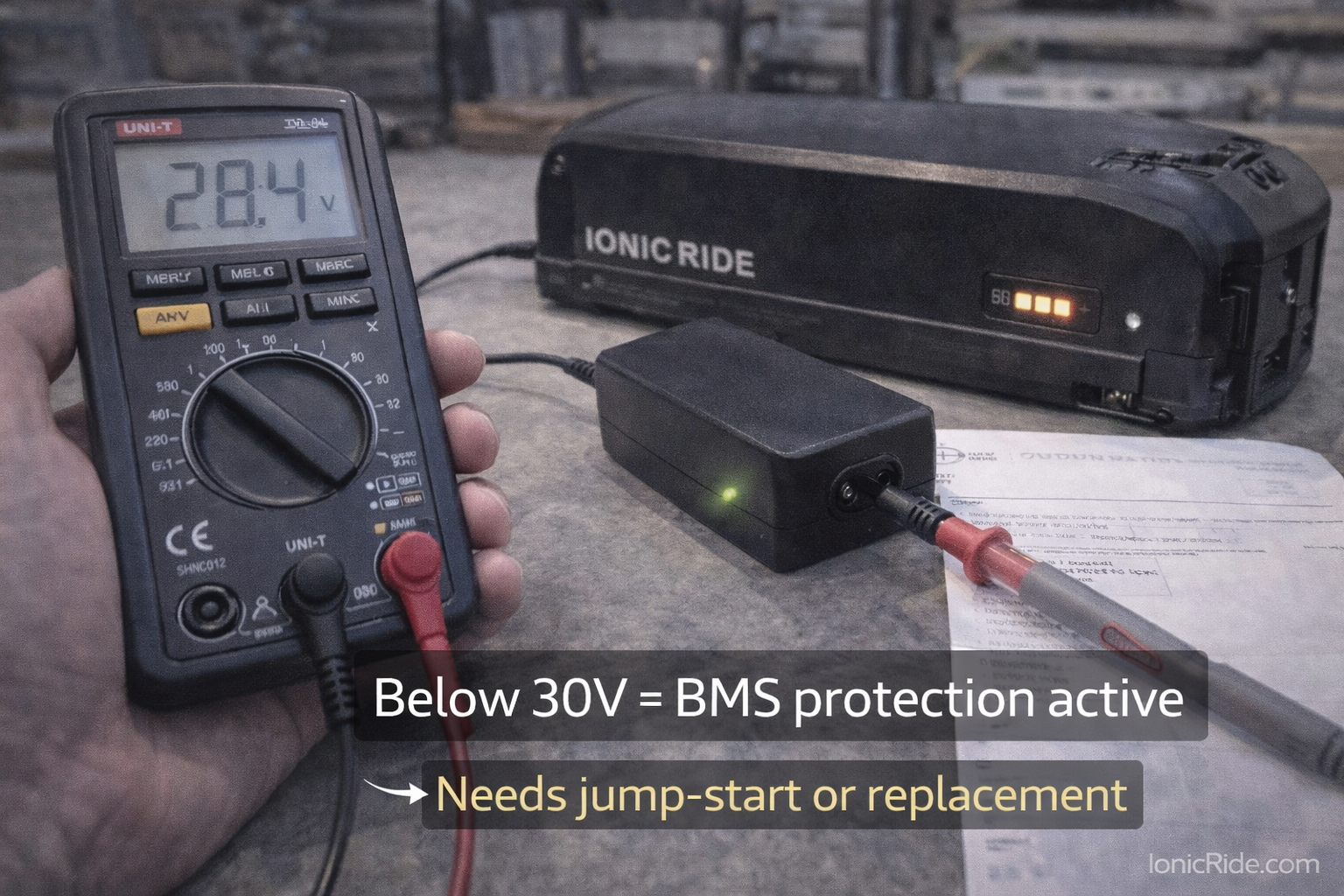
What you can do: Some BMS systems auto-reset after a few hours. Try leaving the charger connected for 2–3 hours, even if the light’s green.
If that doesn’t work, you might need a BMS reset or replacement. That’s a shop job—don’t try to open the battery yourself unless you know what you’re doing. Lithium cells don’t forgive mistakes.
The battery might actually be dead
If your battery’s been sitting unused for 6+ months or has gone through hundreds of charge cycles, the cells might be done.
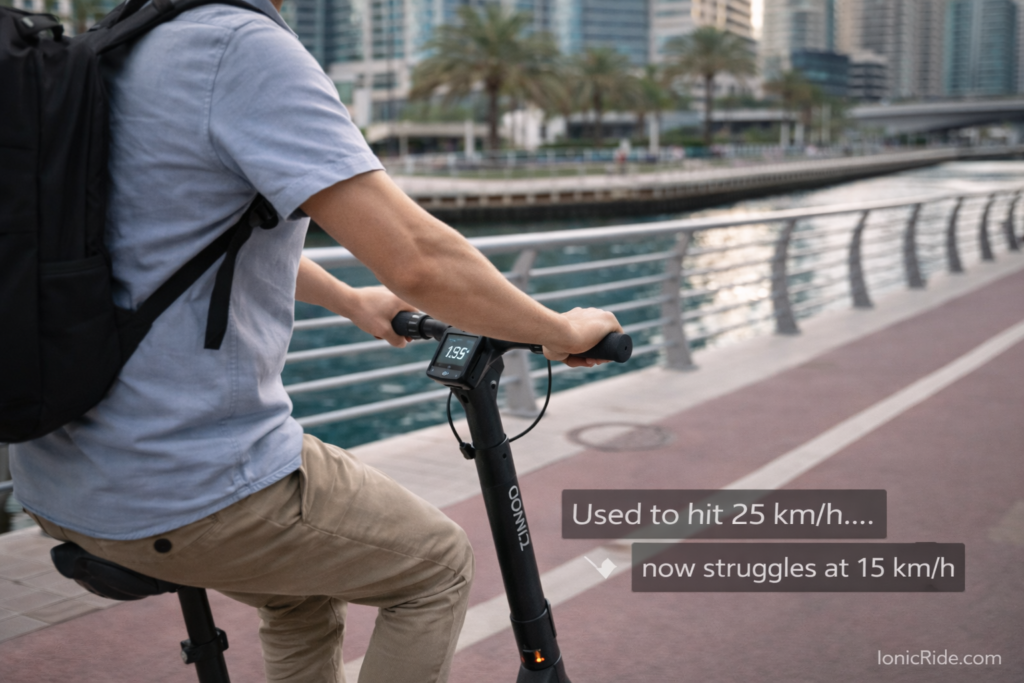
Lithium-ion batteries degrade over time — faster in UAE heat. Here’s what the heat actually does to them: how Dubai heat affects e-bike batteries (and what you can do). A battery that used to give you 50km might barely hold 10km—or refuse to charge at all. This is why advertised range rarely matches reality: why a “60km” battery often only goes 40km. .
How to tell if it’s truly dead:
- The battery is 3+ years old
- It’s been stored in high heat repeatedly
- It was working fine, then suddenly stopped (no gradual decline)
If it’s dead, you’re looking at a replacement. No magic fix here.
What I’d do if I were diagnosing your battery
Here’s my actual process when someone brings a “won’t charge” battery into the shop:
I don’t guess. I test. That’s the difference between a quick fix and throwing money at the wrong part.
One more thing: Heat kills batteries faster than anything else
If you’re in the UAE, listen to this.
Your battery hates heat. Charging it in 45°C weather or leaving it in direct sunlight will degrade the cells faster than anything else you do.
- Charge indoors, in air conditioning if possible
- Never leave the battery in your car during the day
- If you’re riding in summer, let the battery cool down for 20–30 minutes before plugging it in
- Store the battery at around 50–60% charge if you’re not using it for a while
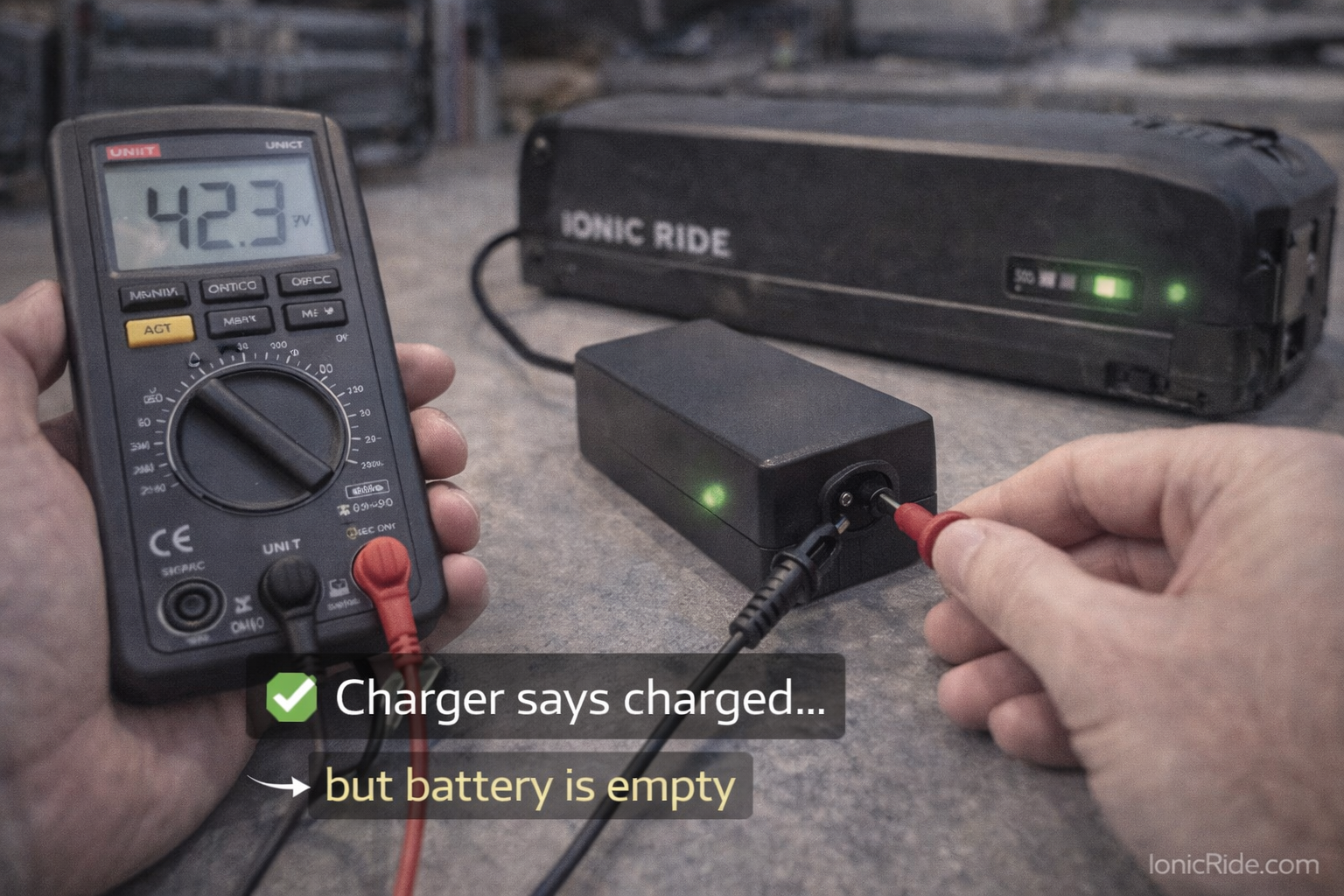
Most “dead” batteries I see aren’t defective. They were just cooked. A simple routine like this monthly e-bike maintenance checklist prevents this more often than people realize.
So—what’s actually wrong with your battery?
If you’ve followed this guide:
- You’ve ruled out the outlet, the charger, and dirty terminals
- You’ve tested what you can test
- You know whether the BMS tripped or the cells are done
If it’s still not charging and nothing obvious stands out, bring it to a shop. Don’t keep plugging and unplugging it hoping for magic. Lithium batteries don’t get better with time—they get worse.
And if it turns out the charger was just unplugged the whole time? Don’t feel bad. That’s happened too.