E-Bike Maintenance Checklist: What to Do Every Month
Most e-bike problems I see at the shop are preventable. This is something many first-time owners underestimate, especially when buying — covered in this practical guide to choosing an e-bike in the UAE.
A chain that snapped because it wasn’t lubricated in six months. Brake pads worn down to metal. Tires so low on pressure the motor was working twice as hard.
Spend 20 minutes a month on basic maintenance, and you’ll avoid 90% of those problems.
The monthly routine (20 minutes total)
This is what I tell every customer who buys an e-bike from us. Do these checks once a month. More often if you ride daily or in harsh conditions.
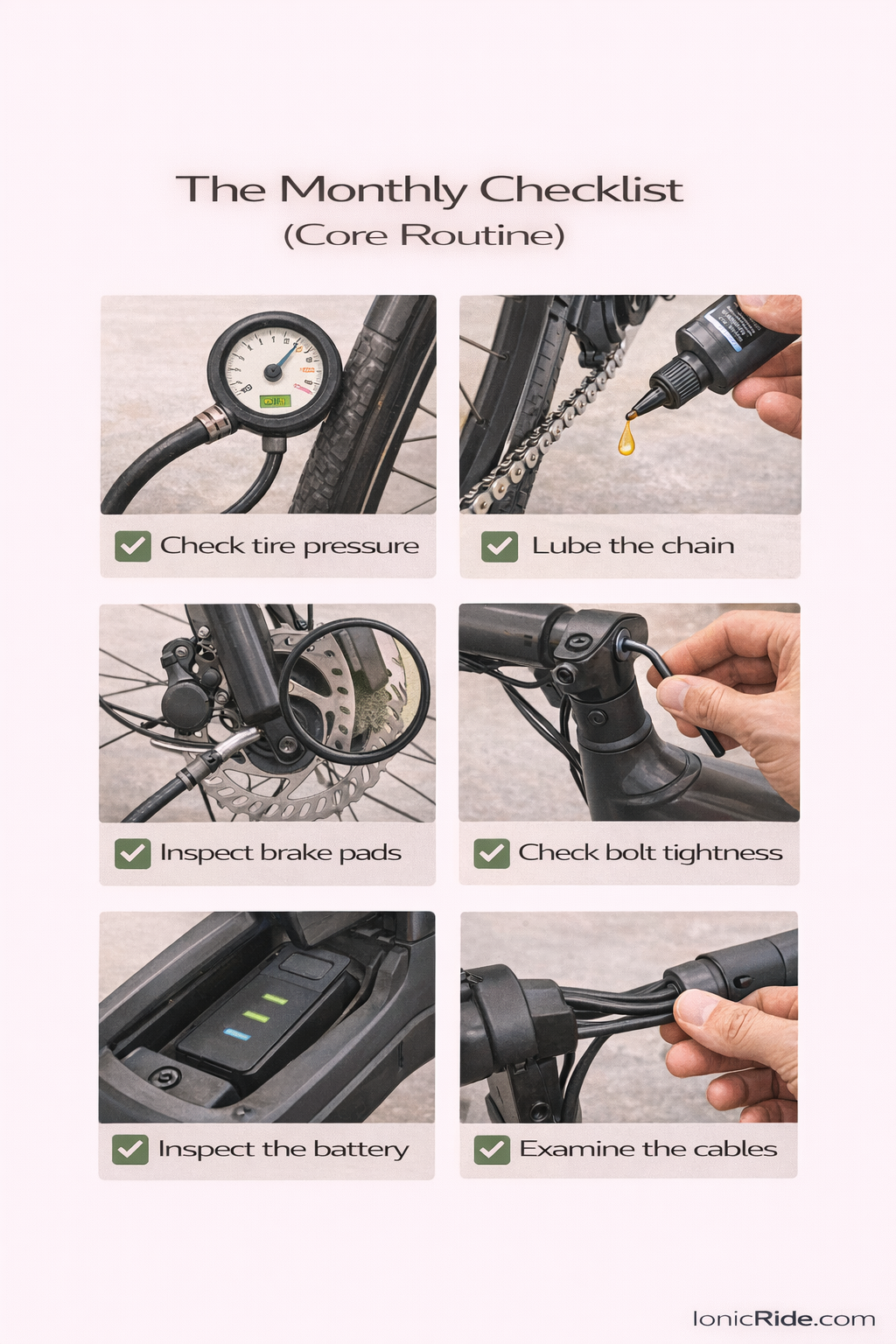
Monthly Checklist
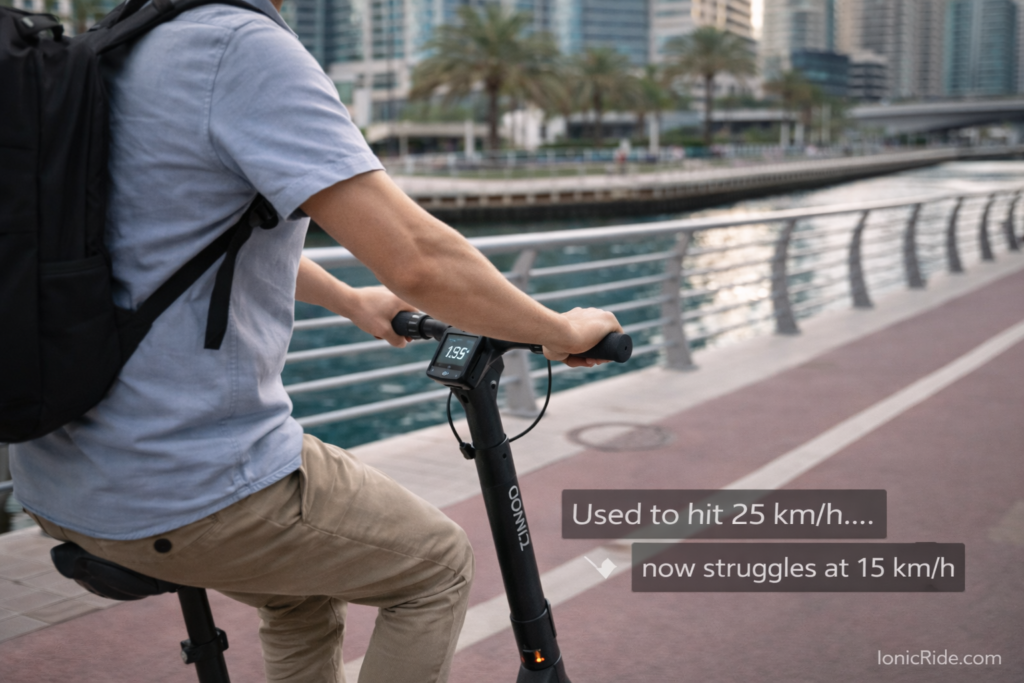
Inflate to the PSI listed on the tire sidewall (usually 40–50 PSI for e-bikes). Low pressure wastes battery and makes the bike feel sluggish. If your bike already feels tired, this explains why it happens over time: why your e-bike feels sluggish after 6 months.
Time: 2 minutes
Look for cracks, cuts, embedded glass, or excessive tread wear. Replace tires if the tread is worn smooth or if you see damage to the sidewall.
Time: 1 minute
Look at the pads. If they’re thinner than 1–2 mm, replace them. If they’re glazed (shiny surface) or contaminated with oil, they need replacing too.
Time: 2 minutes
Ride slowly and test both brakes. They should stop you quickly and smoothly. If they’re squeaking, rubbing, or feel weak, adjust or service them.
Time: 2 minutes
Wipe the chain with a rag to remove dirt and old lube. Apply fresh chain lube. Wipe off excess. A clean, lubed chain lasts 3x longer than a dirty one.
Time: 5 minutes
Check the stem, handlebars, seat post, and any accessory mounts. Tighten anything that’s come loose from vibration.
Time: 3 minutes
Look at visible connectors (battery, display, motor cables). Make sure they’re fully seated and not corroded. If you see corrosion, clean it gently.
Time: 2 minutes
If the bike’s been sitting, top up the battery to 50–60%. Check if the battery still gives you the range you expect. If it’s dropped significantly, note it.
Time: 2 minutes (plus charging time)
Turn on the front and rear lights. Make sure they’re bright and functional. Replace bulbs or LEDs if needed.
Time: 1 minute
Set a recurring reminder on your phone. First Sunday of every month, check the bike. Takes 20 minutes. Saves you hundreds in repairs and keeps the bike running smoothly.
What to check every 3 months
These don’t need monthly attention, but check them quarterly.
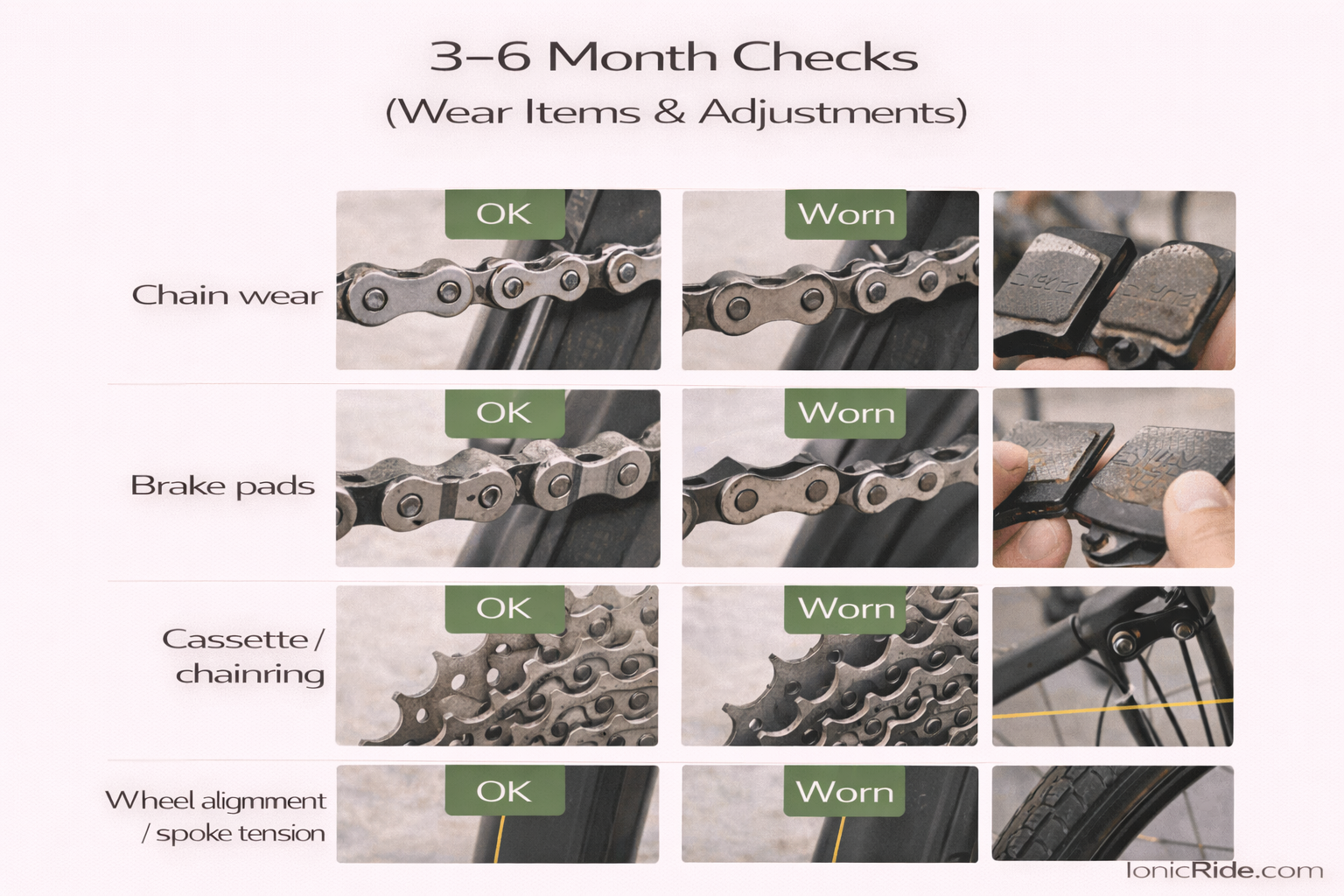
Chain wear
Chains stretch over time. A stretched chain wears down your cassette and chainring faster.
You can buy a chain checker tool for AED 30–50. If the chain has stretched beyond 0.5% (hub motor bikes) or 0.75% (mid-drive bikes), replace it.
Rough estimate without a tool: If you ride 100+ km per week, replace the chain every 2,000–3,000 km.
Brake adjustment
Even if the pads aren’t worn yet, brake alignment can drift. Check that the pads hit the rotor evenly and don’t rub when the brake isn’t engaged.
If you have hydraulic brakes, check the lever feel. If it’s spongy, you might need to bleed the brakes (shop job unless you’re experienced).
Wheel trueness
Spin each wheel and watch the rim. If it wobbles side-to-side, the wheel is out of true. Minor wobbles are fine. Big ones need a shop to true the wheel.
Spoke tension
Squeeze pairs of spokes together. They should feel tight and evenly tensioned. Loose spokes lead to wheel failure. If you find loose spokes, get them tightened at a shop.
Battery terminals
Remove the battery (if removable) and inspect the contacts. Clean any corrosion with isopropyl alcohol and a cotton swab. Dry thoroughly before reinstalling.
What to check every 6 months (or 1,000 km)
Cassette and chainring wear
If the chain is slipping under load (especially when you pedal hard), the cassette or chainring might be worn. Teeth should be sharp and even. If they’re hooked or shark-fin shaped, they’re done.
Mid-drive bikes wear these faster than hub motor bikes because the motor puts stress on the drivetrain.
Brake fluid (hydraulic brakes only)
If you have hydraulic brakes, the fluid should be clear or slightly amber. If it’s dark or contaminated, it needs changing. This is a shop job — don’t attempt it unless you know what you’re doing.
Bearing check
Lift the front wheel and spin it. It should spin freely with minimal resistance. Same with the rear wheel (harder to test on hub motor bikes, but try).
If you feel grinding or roughness, the bearings might need servicing. Headset bearings (where the fork meets the frame) and bottom bracket bearings also wear over time. If you feel play or roughness, get them checked.
Full bike cleaning
Give the bike a proper wash. Not a pressure washer — that forces water into bearings and electrical connections. Just a bucket, sponge, and gentle hose rinse.
Dry everything thoroughly, especially electrical connections. Re-lube the chain after washing.
UAE-specific maintenance tips
The UAE climate adds a few extra considerations.
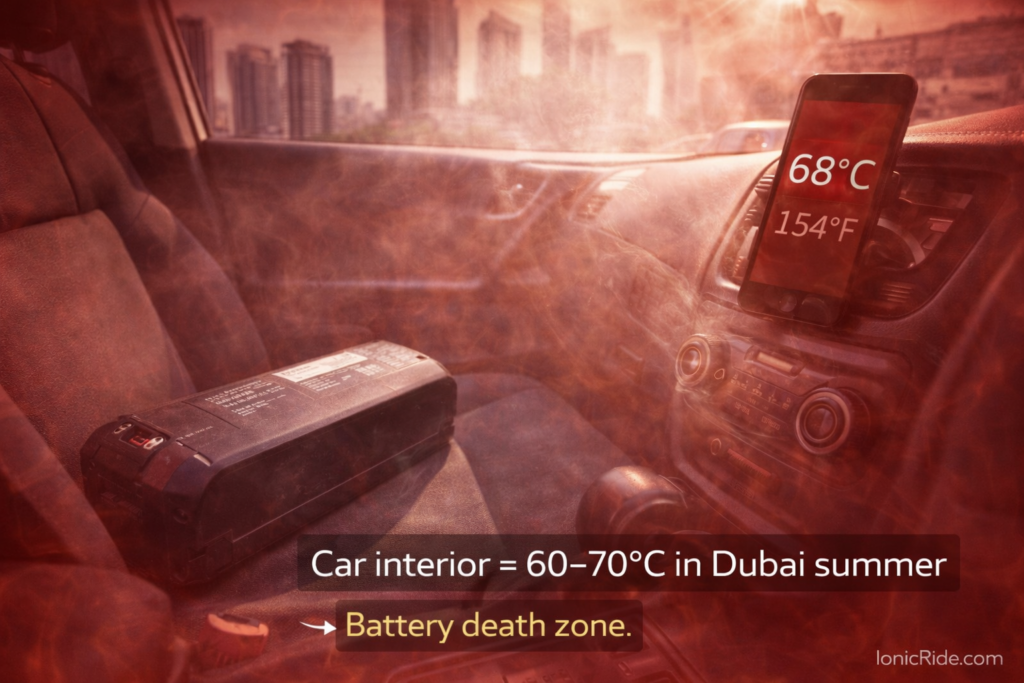
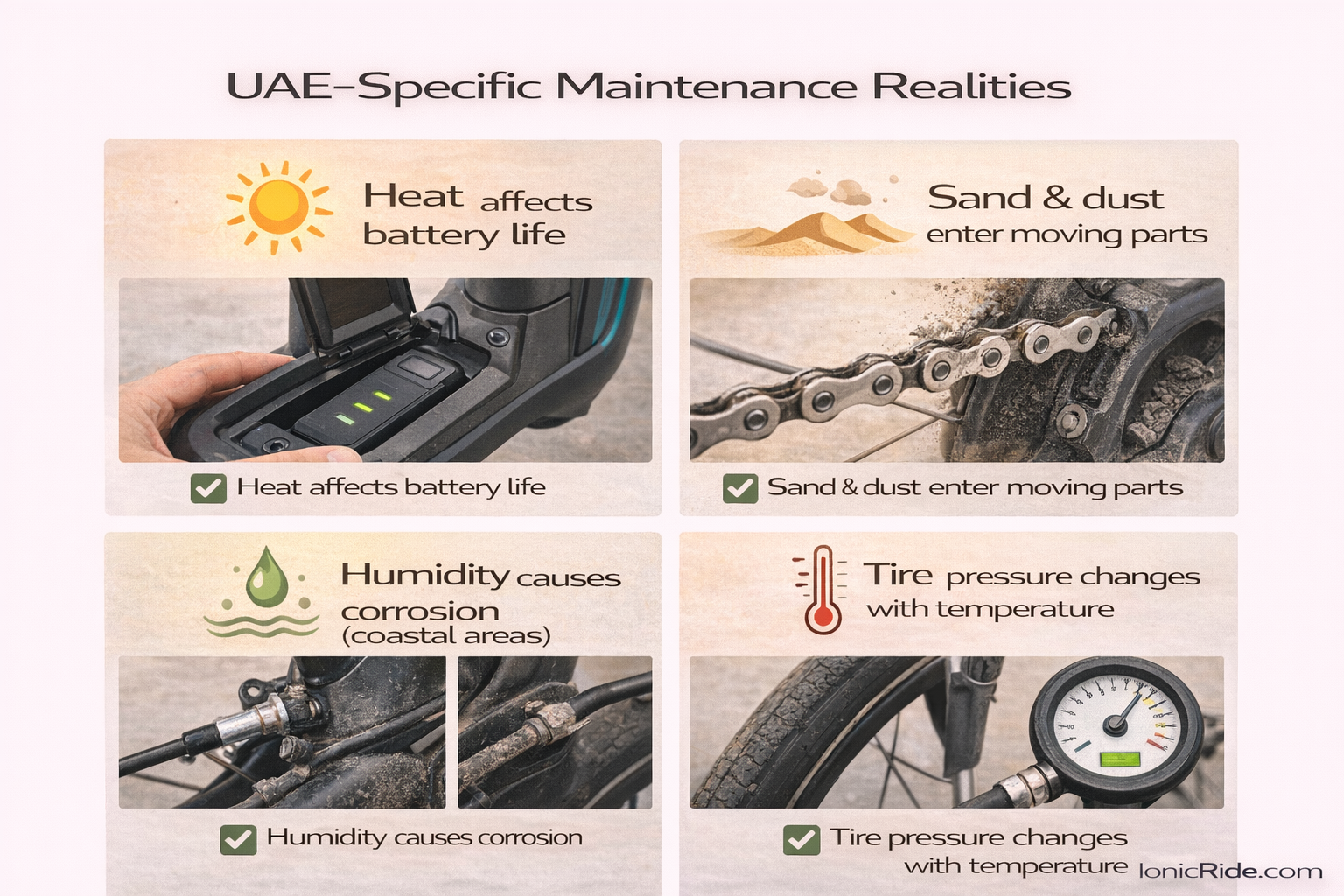
Heat accelerates battery degradation. This is especially true in the UAE — explained here: how Dubai heat affects e-bike batteries (and what you can do)
Check battery health more often if you ride in summer. If you notice a sudden drop in range, the heat might be taking a toll. Store the bike indoors when possible.
Sand and dust get everywhere
Wipe down the bike after every ride if you’re in a dusty area. Sand acts like grinding paste on moving parts. Clean and lube the chain more frequently — every 2–3 weeks instead of monthly.
Corrosion from humidity (coastal areas)
If you’re near the coast (Dubai Marina, JBR, etc.), humidity accelerates corrosion on bolts, connectors, and cables.
Check for rust on bolts. Apply a light coat of grease to threads when you tighten them. Check electrical connectors for green corrosion monthly.
Tire pressure swings with temperature
Air pressure increases in heat. If you inflate your tires in the cool morning, they’ll be overinflated by midday. Check pressure more often in summer.
What you can do yourself vs what needs a shop
- Tire pressure and inspection
- Chain cleaning and lubrication
- Brake pad inspection (replacement if you’re comfortable with it)
- Tightening loose bolts
- Cleaning electrical connections
- Basic bike washing
- Brake bleeding (hydraulic brakes)
- Wheel truing
- Bearing replacement or adjustment
- Derailleur adjustment (if it’s complicated)
- Motor or controller diagnostics
- Battery pack repair or cell replacement
The rule: if you’re not sure what you’re doing, take it to a shop. A AED 150 service call is cheaper than a AED 800 repair from trying to fix something yourself and making it worse.
How much does regular maintenance cost?
If you do most of it yourself, here’s what you’ll spend per year:
Chain lube: AED 30–50 (one bottle lasts 6–12 months)
Brake pads: AED 80–150 (replace once or twice a year depending on use)
Chain replacement: AED 80–150 (every 2,000–3,000 km for hub motors, sooner for mid-drives)
Tires: AED 150–300 per tire (every 2,000–5,000 km depending on quality and use)
Misc (bolts, cables, small parts): AED 50–100
Total DIY cost per year: AED 400–750
If you take it to a shop for full service twice a year, add AED 300–600 for labor.
Compare that to the cost of neglecting maintenance: AED 500 for a new cassette because the chain wasn’t replaced. AED 800 for a new wheel because the spokes came loose and the rim warped. AED 1,200 for a battery that died early from heat exposure.
Prevention is way cheaper.
One more thing: Keep a log
I know this sounds nerdy. But trust me — it helps.
Write down:
- When you did maintenance (date)
- What you replaced (chain, brake pads, tires)
- Any issues you noticed (weird noise, sluggish motor, reduced range)
- Odometer reading
You don’t need a fancy system. A notes app on your phone works. Or a simple spreadsheet.
This helps you track when parts are due for replacement, spot patterns (like range dropping faster in summer), and gives you a history if you ever need to troubleshoot a problem.
(It’s like keeping service records for a car. Except way simpler because e-bikes have fewer parts.)
The bottom line
E-bikes are low-maintenance compared to cars or motorcycles. But “low-maintenance” doesn’t mean “no maintenance.”
20 minutes a month. That’s all it takes to keep your e-bike running smoothly, avoid expensive repairs, and extend its life by years.
Most people spend more time washing their car. Your e-bike deserves at least that much attention.