Why Your E-Bike Feels Sluggish After 6 Months
Six months ago, your e-bike was fast. Responsive. Fun to ride.
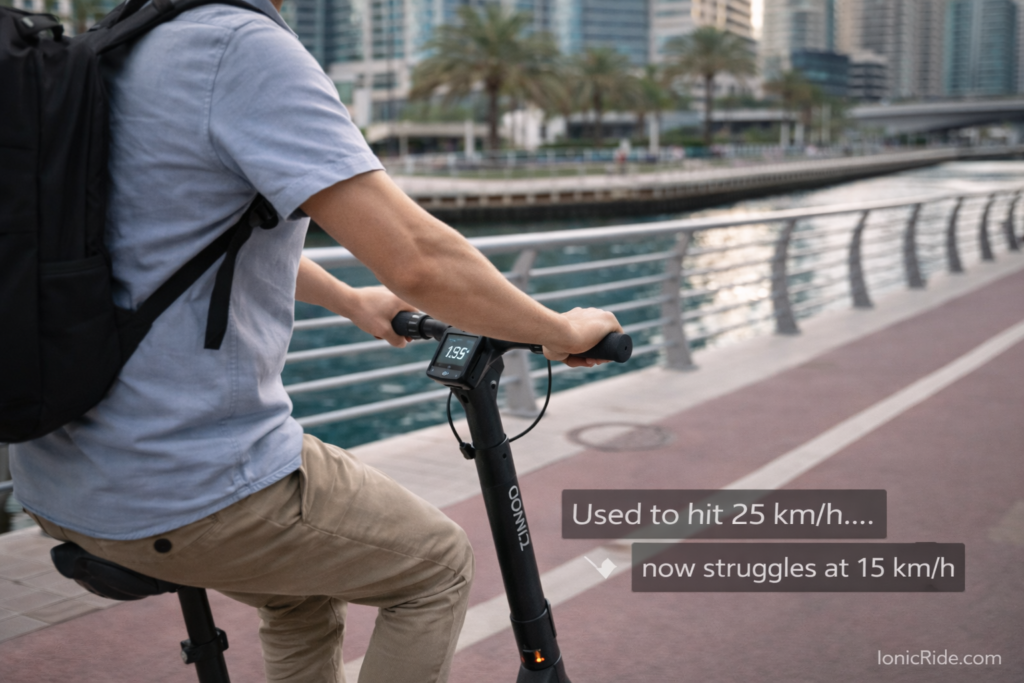
Now? It feels… tired. Acceleration is slower. Top speed isn’t what it used to be. The battery drains faster.
Nothing broke. Nothing failed. It just doesn’t feel the same. This catches a lot of new owners off guard — especially first-time buyers covered in this practical guide to choosing an e-bike in the UAE.
Here’s what’s actually happening — and what you can do about it.
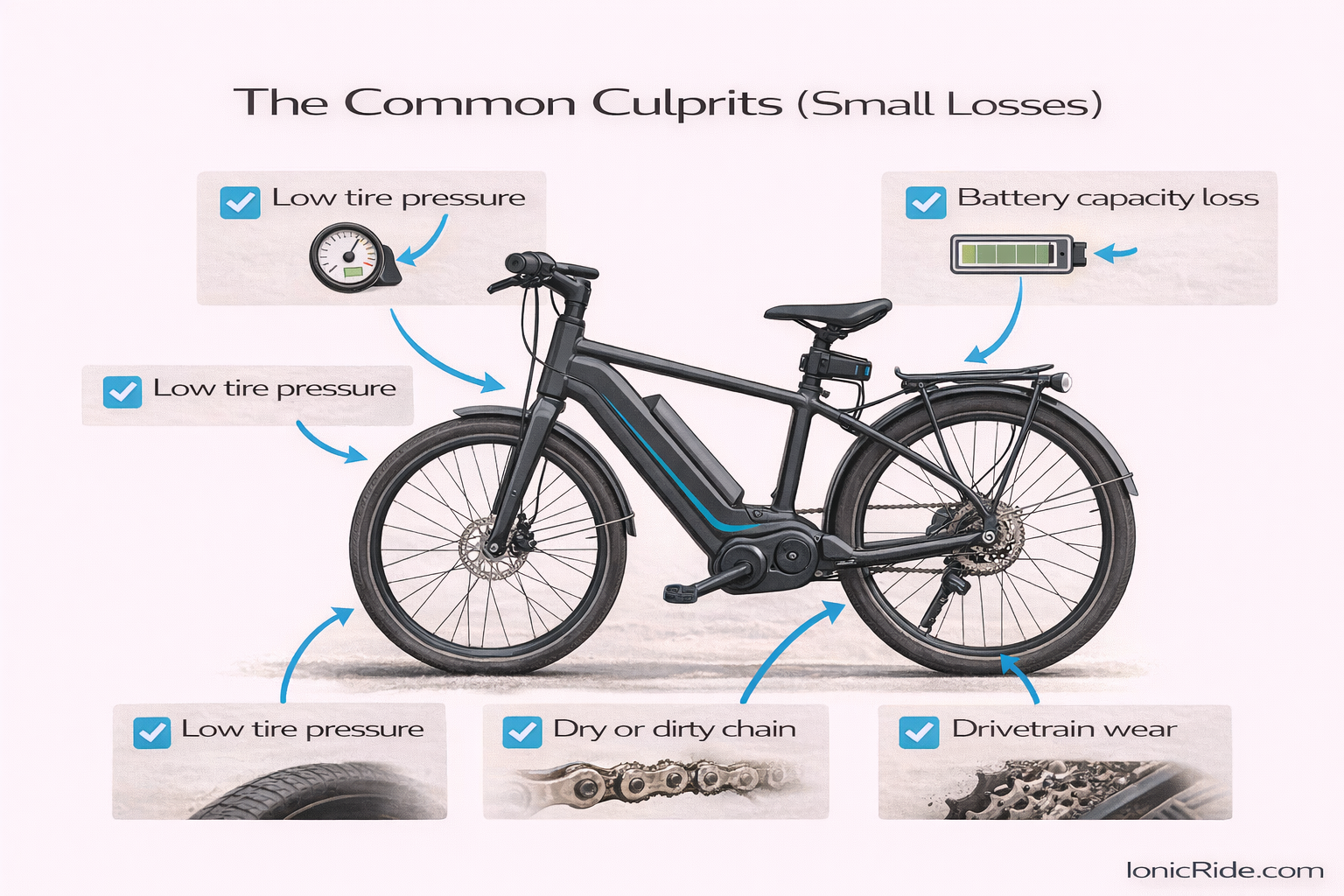
The most common culprits
When a bike loses performance gradually over months, it’s usually not one big problem. It’s several small things adding up.
Let’s work through them in order of likelihood.
1. Tire pressure has dropped
This is the number one reason bikes feel sluggish after a few months. And most people never check it.
Tires lose air naturally over time. Maybe 1–2 PSI per week. After six months, they could be 10–20 PSI low.
Low pressure means more rolling resistance. The motor has to work harder. Battery drains faster. Everything feels heavier and slower.
2. The chain needs lubrication
A dry or dirty chain creates friction. That friction robs power and makes pedaling feel harder.
If you haven’t cleaned and lubed the chain in six months, it’s probably crusty with dirt and old dried lube.
3. Brakes are dragging
Brake pads can drift over time. If they’re rubbing against the rotor (or rim) even slightly, the motor has to fight that resistance constantly.
You might not even hear it. But you’ll feel it as reduced performance and shorter battery life.
4. Battery degradation (the slow killer)
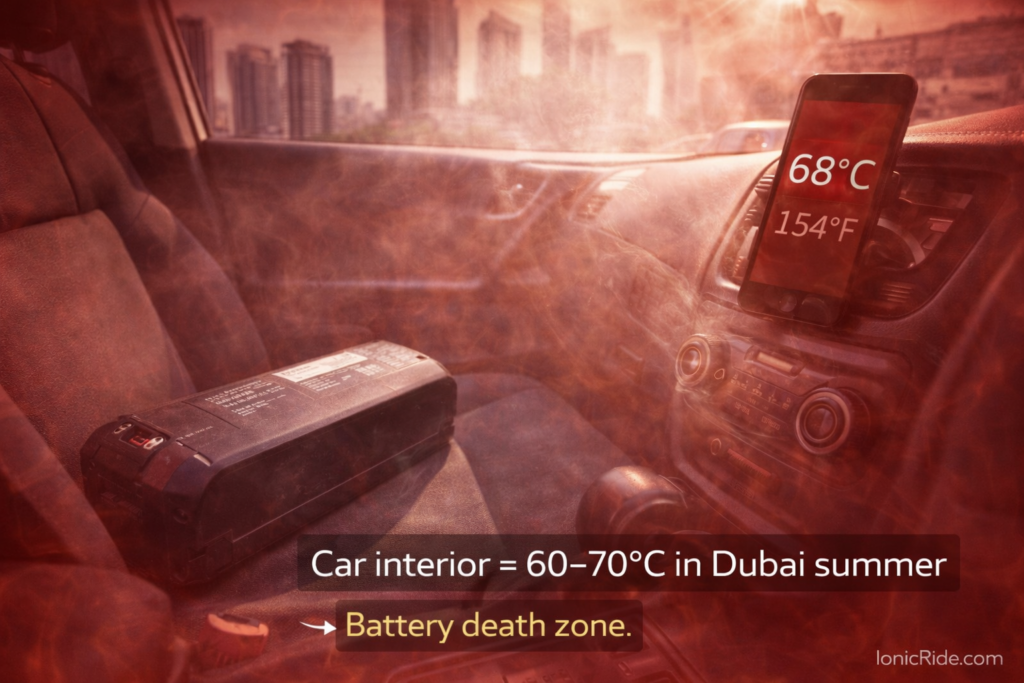
Lithium-ion batteries lose capacity over time. Dubai heat accelerates this more than most riders expect — explained here: how Dubai heat affects e-bike batteries (and what you can do).
That doesn’t sound like much. But it’s enough to notice. The battery can’t deliver as much current under load, so acceleration feels weaker. And it runs out faster.
If you’ve been storing or charging the battery in hot conditions (car trunk, direct sun, charging outside in summer), degradation happens even faster.
If the battery’s down to 70% capacity or less, consider a replacement. But if it’s just 10–15% degradation, live with it and focus on preserving what’s left.
5. Drivetrain wear (mid-drive bikes especially)
If you have a mid-drive bike, the chain, cassette, and chainring all wear faster than on hub motor bikes.
After six months of regular use, the chain might have stretched slightly. The cassette teeth might be starting to wear. This creates slippage under load and reduces power transfer efficiency.
You’ll notice it most when accelerating hard or climbing hills — the chain might skip or feel like it’s not catching properly.
6. Accumulated dirt and grime
Sand, dust, and dirt build up in bearings, on the chain, and in moving parts. This isn’t dramatic. But over six months, it adds up.
Wheel bearings get gritty. The motor might have dust in the ventilation. The chain is crusty. All of this creates friction and reduces efficiency.
Less common but still possible
Motor magnets weakening (rare)
Permanent magnet motors can lose strength over time — especially if exposed to extreme heat repeatedly. This is uncommon in the first year, but it happens.
You’d notice reduced torque and weaker acceleration. Top speed might still be okay, but getting there takes longer.
If you suspect this, take it to a shop. They can test motor performance. If the magnets are weak, the motor needs replacement.
Controller settings changed
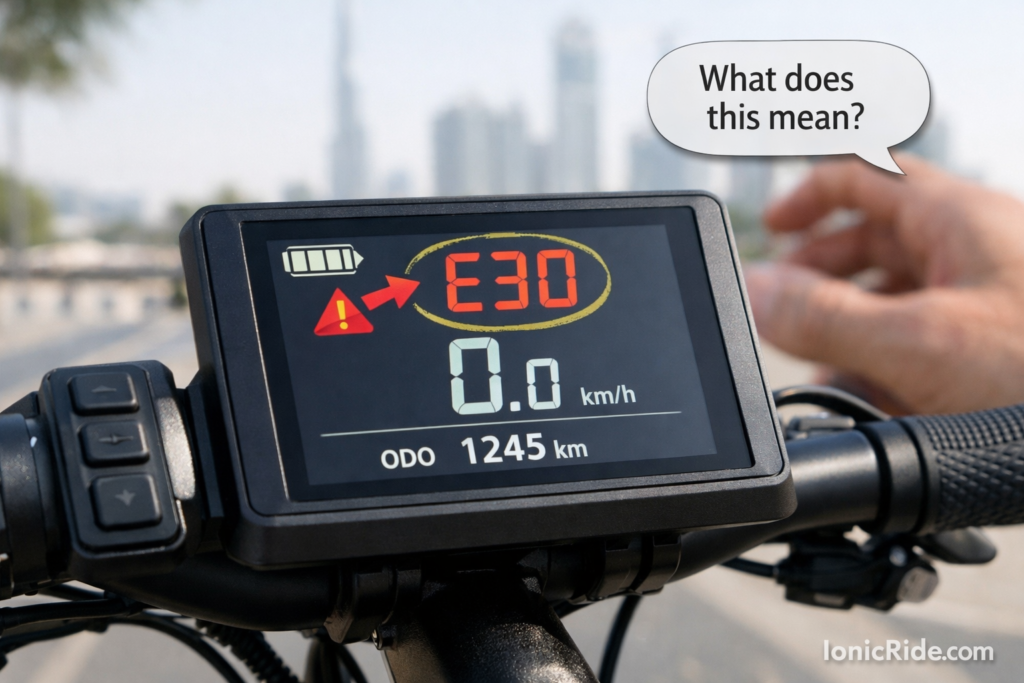
Some e-bikes have hidden settings that limit power output. If someone (maybe you, maybe a shop) accidentally changed a setting, the bike might be in a restricted mode.
Check your display menu for power limits, speed caps, or eco modes that might be enabled. Some bikes have an app — check there too.
Electrical connection issues
Loose or corroded connections between the battery, controller, and motor can cause intermittent power loss or reduced performance.
If the bike feels sluggish sometimes but not others, this is more likely. Open accessible panels and check that all connectors are fully seated and corrosion-free.
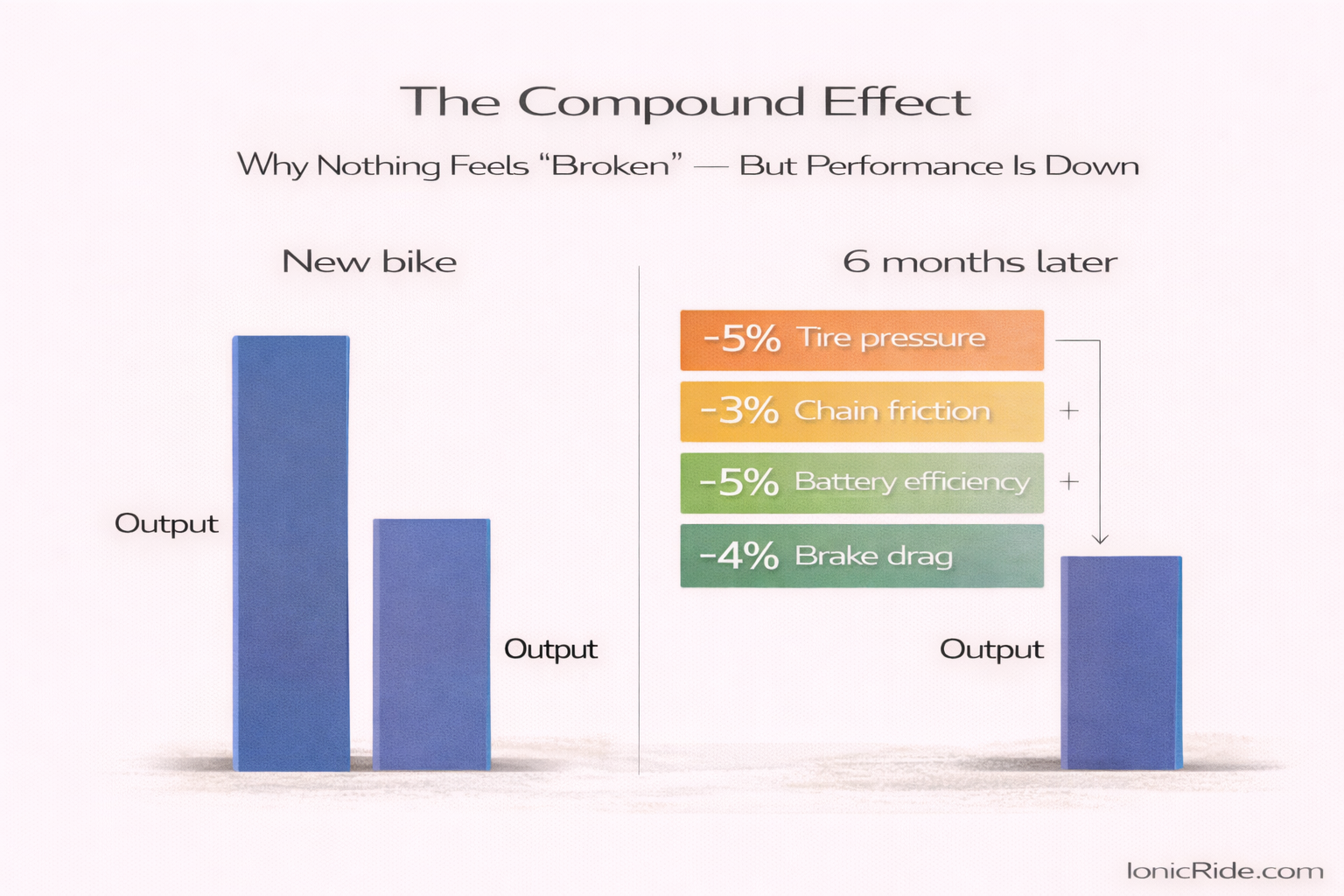
The compound effect
Here’s the thing: it’s probably not just one of these issues. It’s three or four of them happening at once.
Tires are 15 PSI low. Chain is dry. Brakes are slightly rubbing. Battery has degraded 10%.
Each one alone might only reduce performance by 5–10%. But combined? You’re down 30–40% from when the bike was new.
That’s why the bike feels “tired” instead of “broken.” Nothing’s catastrophically wrong. Everything’s just a little worse.
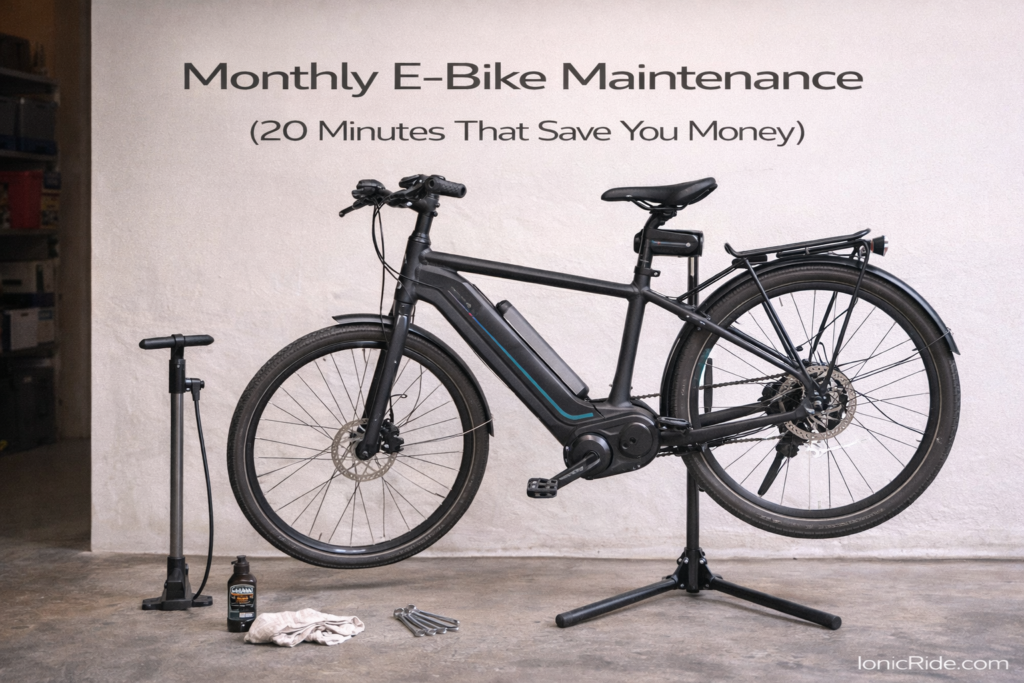
Most of these issues are fixable in 30 minutes with basic tools. This monthly e-bike maintenance checklist covers the exact routine that prevents this slowdown. Tire pressure, chain lube, brake adjustment — that’s 90% of the problem right there. Do those three things and the bike will feel way better immediately.
What won’t help (but people try anyway)
Charging the battery differently
Some people think changing how they charge will restore performance. It won’t. The battery’s capacity is what it is. Charging to 100% vs 80% doesn’t change how the bike rides — it just changes how far you can go on that charge.
Switching assist modes
If the bike feels sluggish in Sport mode now, dropping to Eco mode won’t fix it. You’ll just go slower. The underlying issue is still there.
Adjusting the display or app settings
Unless you accidentally changed a power limit setting, tweaking display options won’t restore lost performance. Fix the mechanical and electrical issues first.
How to prevent this from happening again
You can’t stop battery degradation completely. But you can slow everything else down.
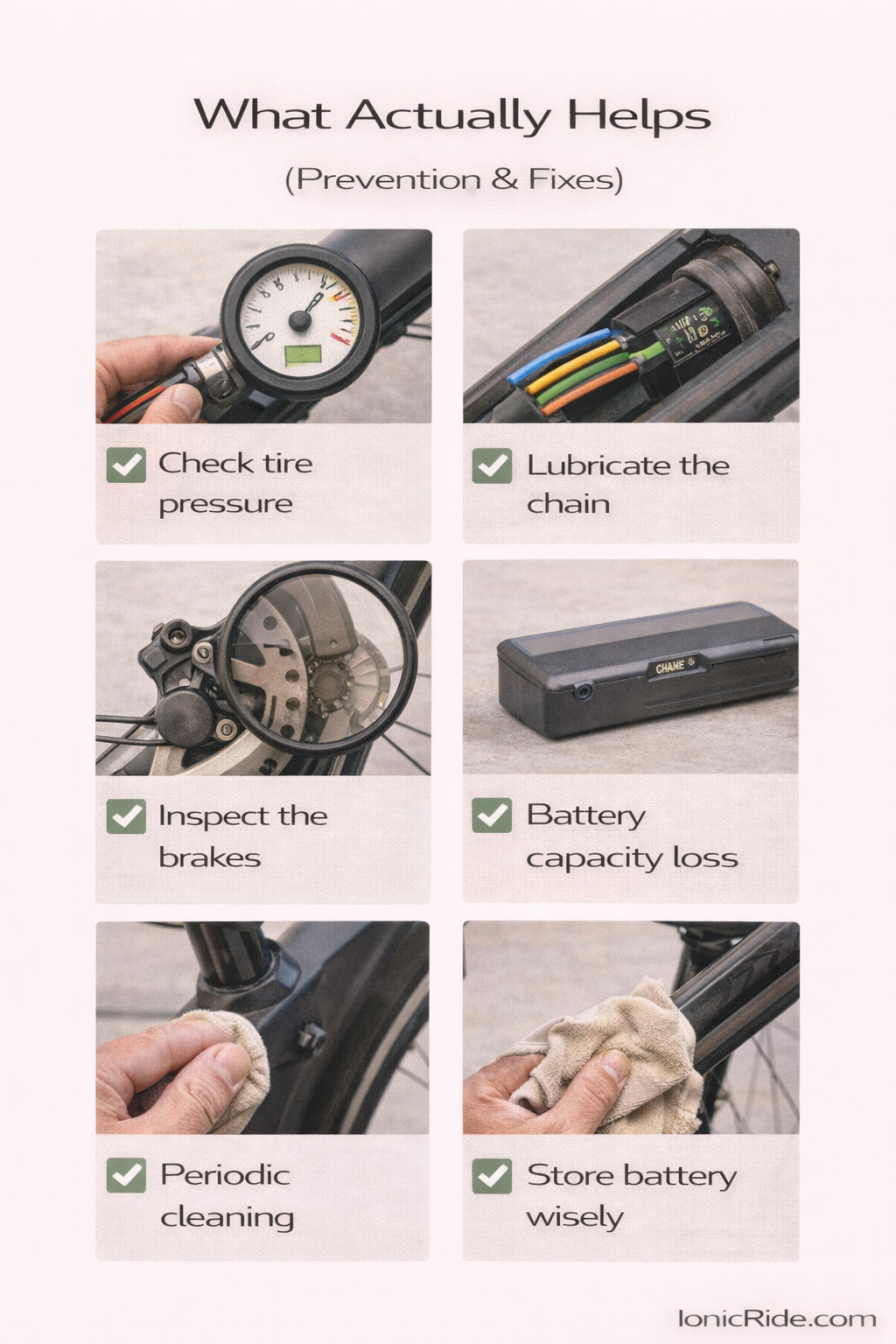
Check tire pressure every 2–4 weeks
Takes 2 minutes. Keeps the bike feeling responsive. Extends tire life.
Lube the chain monthly
Clean it with a rag. Apply lube. Wipe off excess. Takes 5 minutes. Saves your drivetrain from premature wear.
Inspect brakes monthly
Spin the wheels. Listen for rubbing. Check pad thickness. Adjust when needed. Prevents drag and brake fade.
Store and charge the battery properly
Indoors, cool, away from sun. Don’t leave it in your car. Don’t charge it outside in summer. This alone can double your battery’s usable lifespan.
Clean the bike every 3 months
Not obsessively. Just wipe it down, clean the chain, dry everything. Keeps dirt from accumulating in places it shouldn’t be.
(It’s like oil changes for a car. Boring. Unglamorous. But if you skip them, things get expensive fast.)
When to worry vs when it’s normal
Normal aging after 6 months:
- Battery capacity down 5–15%
- Slightly less punchy acceleration
- Range decreased by 5–10 km from new
- Minor wear on tires, brake pads, chain
This is expected. Keep up with maintenance and it won’t get worse quickly.
Not normal after 6 months:
- Battery capacity down 30%+ (major degradation)
- Motor cutting out randomly
- Grinding or clicking noises that weren’t there before
- Sudden loss of power (not gradual)
- Battery not charging properly
If you’re seeing these, something’s wrong beyond normal wear. Take it to a shop.
One more thing: Expectation vs reality
Some people expect their e-bike to perform exactly like it did on day one forever. That’s not realistic.
Batteries degrade. Parts wear. That’s normal for anything mechanical and electrical.
A well-maintained e-bike should still feel strong after six months. But it won’t feel identical to new. And that’s okay.
If you’ve done the basic maintenance (tires, chain, brakes) and the bike still feels 20–30% weaker than new, then yeah — investigate further. But a 10% drop in pep after six months of regular use? That’s just physics.