Do You Need a License to Ride an E-Scooter in Abu Dhabi?
Do You Need a License to Ride an E-Scooter in Abu Dhabi?
A customer walked into the shop last week, fresh from Dubai, asking: “I just moved to Abu Dhabi. Do I need to get that RTA e-scooter permit here too?”
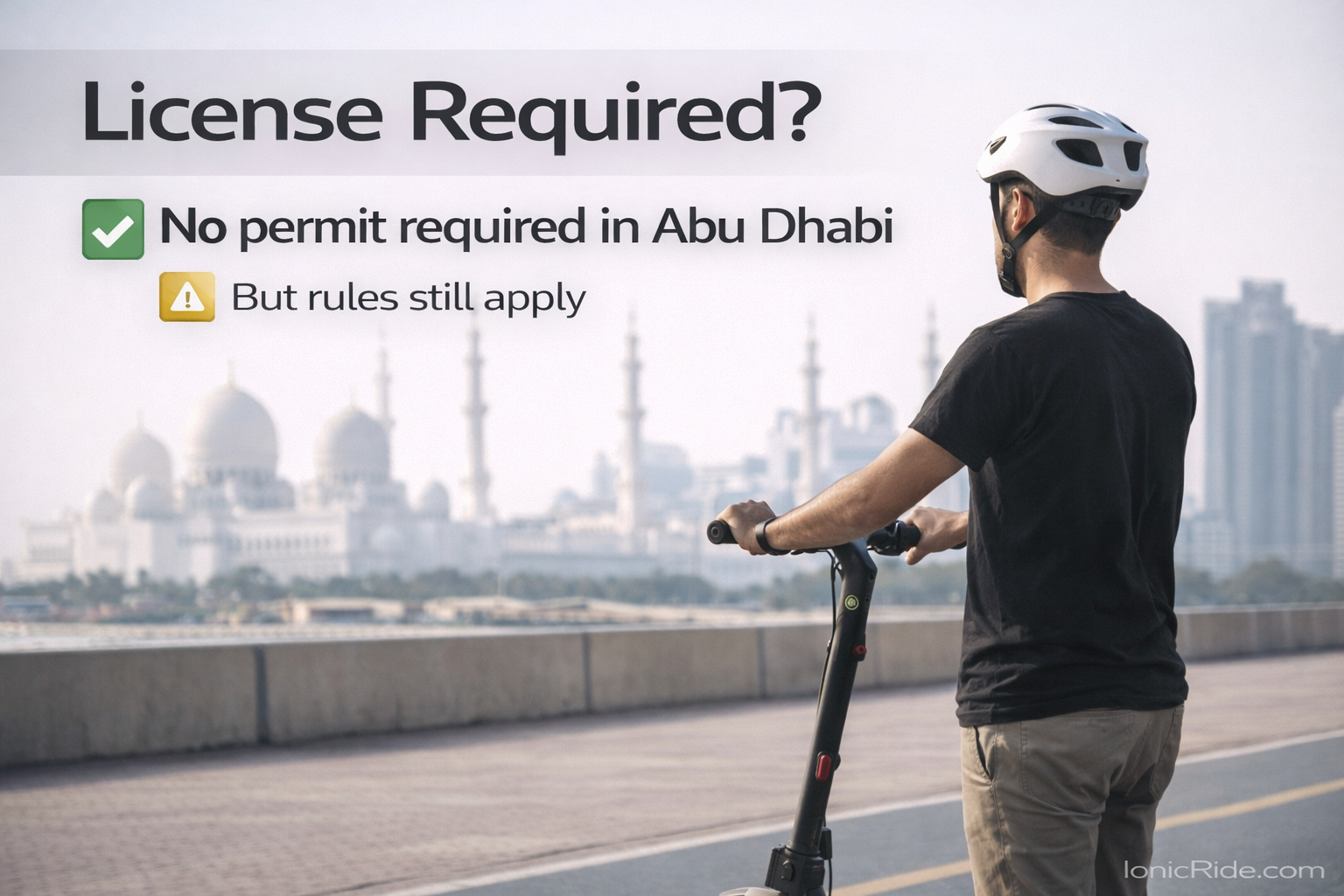
Short answer: No. Abu Dhabi doesn’t have a permit system like Dubai does.
Long answer: You don’t need a permit, but there are still rules. And if you ride in both emirates, the differences matter.
The official rule in Abu Dhabi
Abu Dhabi’s approach to micromobility regulations is simpler than Dubai’s.
You don’t need an e-scooter permit. You don’t need a driver’s license. You just need to follow the technical and safety requirements set by the Integrated Transport Centre (ITC), which falls under the Department of Municipalities and Transport (DMT).
Here’s what your e-scooter must meet to be classified as a “light vehicle” and be legal in Abu Dhabi:
- Height: 165 cm or less
- Weight: 35 kg or less
- Width: 70 cm or less
- Motor power: Under 700W continuous rated power (anything 700W or above requires a special permit)
If your scooter fits those vehicle specifications, you’re classified as a “light vehicle” under ITC guidelines and you can ride without any special permit or registration.
If your scooter exceeds those specs — especially the 700W motor threshold — you technically need a permit from ITC. But we’ll get to that in a moment.
(For context, Dubai’s RTA requires a free online permit for anyone riding e-scooters on designated streets. Abu Dhabi skips that entirely.)
What you do need (even without a permit)
Just because you don’t need a permit doesn’t mean there are no regulations. Abu Dhabi’s road safety requirements for e-scooters are clear.
Safety gear (mandatory personal protective equipment)
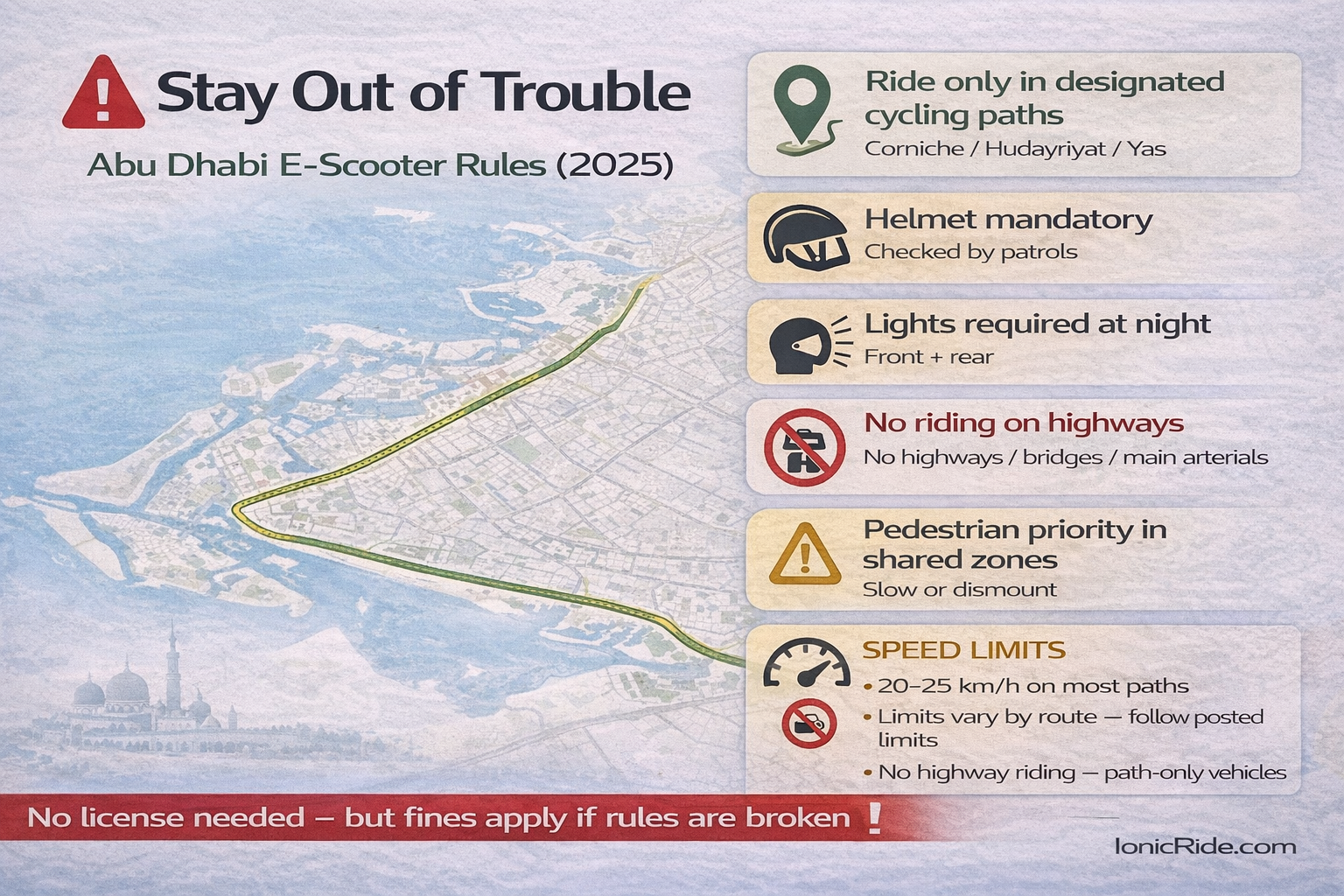
You must wear a helmet. This isn’t optional under ITC regulations.
At night or in low-light conditions, you’re also required to wear reflective clothing or a high-visibility vest. Enforcement on this is inconsistent, but if you get into an accident without proper safety gear, insurance complications become your problem.
Lights and equipment (vehicle technical requirements)
Your scooter must have:
- White headlight (front-facing)
- Red rear light or reflector (back-facing)
- Working brakes (front and rear)
- Functional horn or bell
If you bought a scooter from a reputable brand (Xiaomi, Ninebot, Segway, etc.), it probably has these safety features already. If you built something custom or bought a cheap import, double-check compliance with ITC technical specifications.
Age requirement for riders
Riders must be 16 years or older.
If you’re under 16, you’re not allowed to ride — even with parental permission. This age restriction is enforced more strictly near schools and public parks where children are present.
Where you can (and can’t) ride in Abu Dhabi
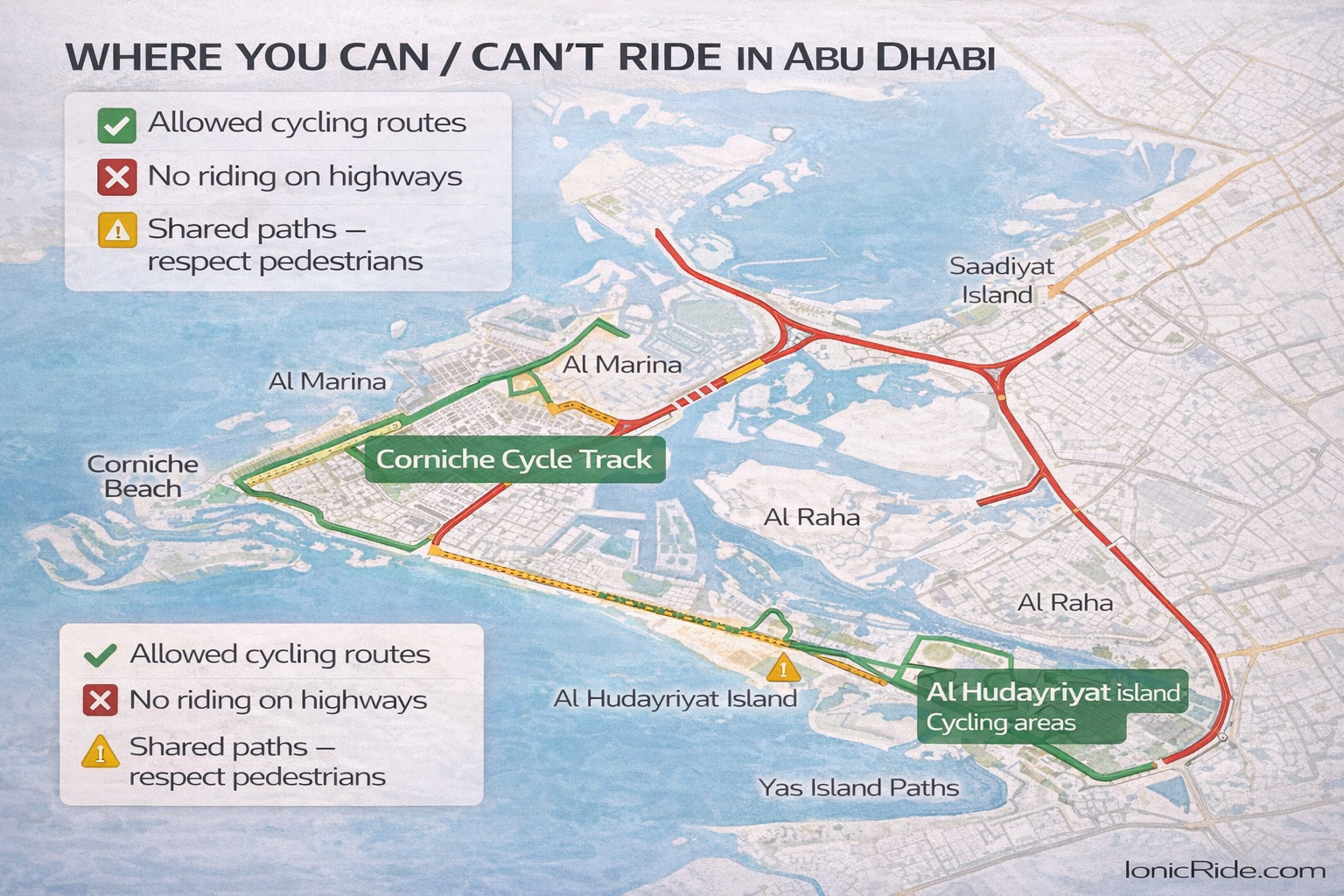
This is where people mess up the most. Abu Dhabi has designated zones and cycling infrastructure restrictions.
✓ Where e-scooters are allowed (permitted riding areas)
Internal roads with speed limits under 40 km/h
These are residential streets, community roads, and side streets. Safe, low-traffic areas within neighborhoods and housing compounds.
Shared pedestrian and cycling paths (mixed-use paths)
Paths marked for both walking and cycling. Common near the Corniche waterfront, Reem Island, and Yas Island tourist areas.
Dedicated bicycle and e-scooter lanes (cycling infrastructure)
Where these exist, use them. Priority goes to bikes and scooters, not pedestrians. Part of Abu Dhabi’s growing active mobility network.
Public parks with designated lanes
Some parks allow e-scooters and personal mobility devices on internal paths. Check signage at the entrance or ask park security before riding.
✗ Where e-scooters are banned (prohibited areas)
Highways and roads over 60 km/h (high-speed corridors)
No e-scooters on Sheikh Zayed Road, Emirates Road, or any high-speed arterial road. Ever. This is strictly enforced by Abu Dhabi Police.
Pedestrian-only walkways (exclusive pedestrian zones)
If the path is marked “pedestrians only,” you can’t ride there. Dismount and walk the scooter instead to avoid fines.
Hard shoulders on highways
Even the shoulder of a highway is off-limits for micromobility devices. This is enforced strictly for rider safety.
⚠ Popular riding areas (with specific regulations)
Al Reem Island: E-scooters allowed on internal roads and shared paths. Popular area for Tier, Lime, and Phoenix rental services.
Al Maryah Island: Similar to Reem — shared paths and internal roads are permitted. Heavy pedestrian traffic near The Galleria mall.
Corniche area (waterfront promenade): Designated paths exist. Stay in the bike/scooter lane, not the pedestrian walkway. Speed limit 20 km/h enforced.
Yas Island (entertainment district): Allowed on designated paths. Popular spot, especially near Yas Mall, Yas Marina Circuit, and Ferrari World.
Khalifa City (residential area): Internal roads and paths are okay. Main arterial roads are not.
Masdar City (sustainable urban development): One of the best areas for e-scooters in the UAE. Car-light environment, wide paths, bike-friendly urban design.
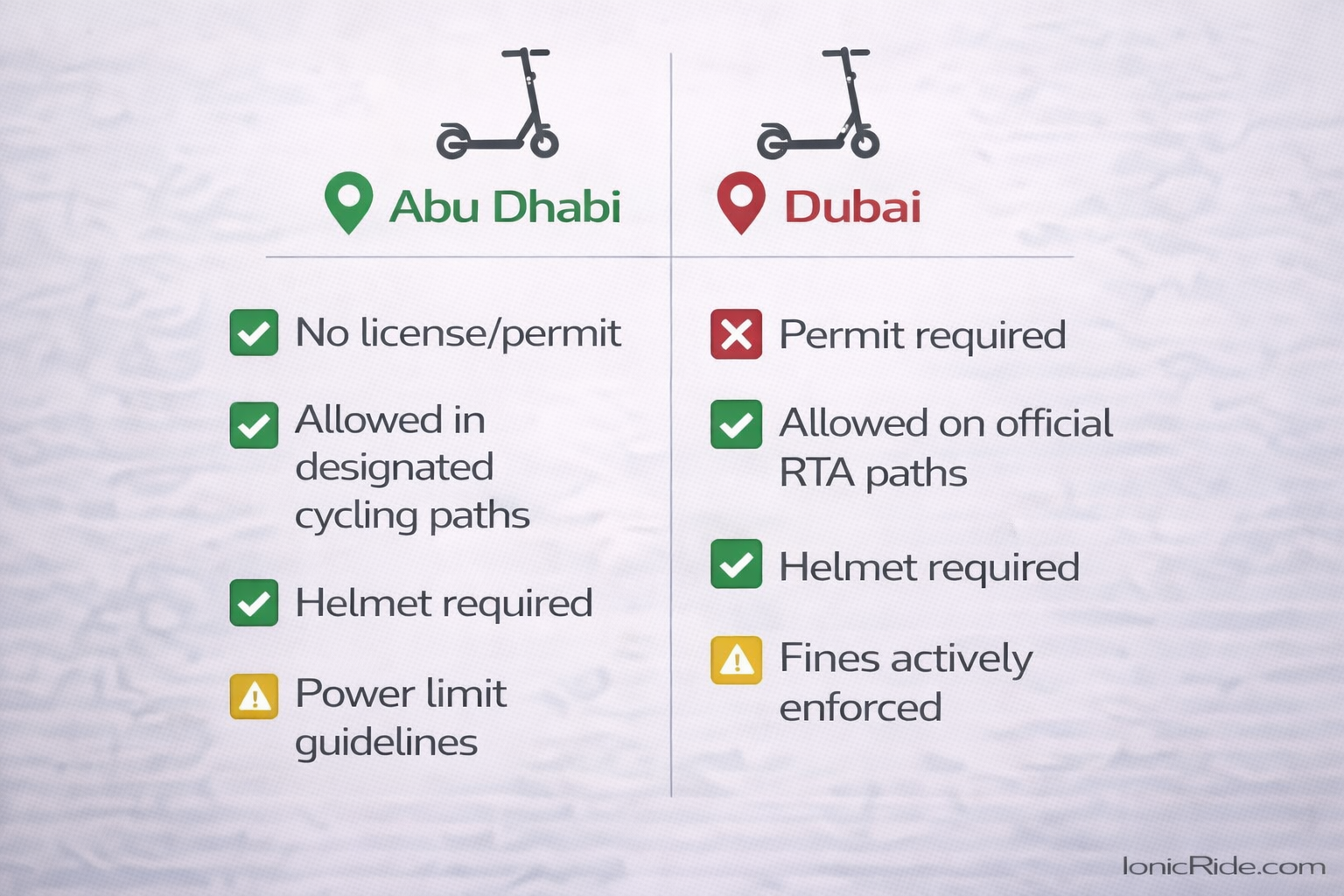
Abu Dhabi vs Dubai: What’s different?
If you ride in both emirates, here’s how the regulatory framework changes between ITC (Abu Dhabi) and RTA (Dubai) jurisdictions.
Permit requirements (licensing systems)
Dubai: Requires an RTA e-scooter permit if you’re riding on designated streets (unless you already have a valid UAE or international driver’s license). Free online course + theory test covering traffic rules and safety guidelines.
Abu Dhabi: No permit system through ITC. Just meet the size/weight specifications and follow the safety regulations.
Designated areas (geographic restrictions)
Dubai: Dubai: E-scooters are restricted to 10 specific districts and designated safe streets. Outside those zones, you can’t legally ride on roads. See our full Dubai riding map here. Outside those zones, you can’t legally ride on roads. See full Dubai riding map here.
Abu Dhabi: More flexible geographic coverage. As long as the road has a speed limit under 40 km/h and isn’t specifically restricted, you’re generally permitted to ride.
Enforcement style (compliance monitoring)
Dubai: Higher enforcement frequency. RTA traffic police check for permits more often, especially in high-traffic zones like JLT, Dubai Marina, and Downtown.
Abu Dhabi: Lower enforcement priority. Abu Dhabi Police focus more on safety violations (no helmet, reckless riding, riding on highways) than checking technical specifications or documentation.
If you own an e-scooter and ride in both Dubai and Abu Dhabi, get the Dubai RTA permit just to avoid hassle. It’s free, takes 20 minutes online, and covers you for cross-emirate travel.
For Abu Dhabi-only riding, focus on safety compliance (helmet, lights, reflective gear) and knowing where you can’t ride (highways, pedestrian-only paths, roads over 40 km/h).
What if your scooter is over 700W?
Technically, e-scooters with motors rated at 700W or above need a special permit in Abu Dhabi under ITC vehicle classification rules. But here’s where the regulatory framework gets murky.
The ITC regulations mention power rating thresholds, but there’s no clear public process for getting that high-powered vehicle permit. It’s not like Dubai’s online RTA system. You’d likely need to contact ITC directly through the Department of Municipalities and Transport, and even then, I haven’t seen anyone successfully register a high-powered scooter for legal road use.
What actually happens: People ride 500W, 800W, even 1000W scooters in Abu Dhabi without permits. Traffic enforcement doesn’t check motor specifications or power ratings on the street. They check rider behavior and safety compliance (helmet, lights, dangerous riding).
Is that legal? No. Is it common? Yes.
If you’re risk-averse, stick to scooters under 700W continuous rated power. If you already own a high-powered scooter, just be extra careful about following safety rules and avoiding restricted areas where enforcement is stricter.
Fines and penalties (if you break the rules)
Abu Dhabi Police issue traffic fines for e-scooter violations under ITC regulations. Here’s what penalty amounts look like:
- AED 200–500: Riding on unauthorized roads (highways, roads over 60 km/h, pedestrian-only paths)
- AED 200–500: Riding without a helmet or required personal protective equipment
- AED 200–500: Riding against traffic flow or disregarding traffic signs and instructions
- AED 200–500: Parking in a non-designated space that blocks pedestrians or vehicle movement
- AED 200–500: Not wearing reflective clothing or high-visibility vest at night
- AED 200–500: Carrying passengers (e-scooters are single-rider vehicles only)
The exact fine amount within that range depends on the violation severity and the officer’s discretion. Repeated violations can lead to scooter confiscation for up to one month, plus additional administrative fees for retrieval.
Watch out for: Enforcement spikes near schools, during major public events, and in high-traffic tourist areas (Corniche waterfront, Yas Island entertainment zone). Police are more lenient in quiet residential neighborhoods with low pedestrian density.
Rental scooters vs owned scooters
If you’re renting from shared mobility operators like Tier, Phoenix, Lime, or Bird, the compliance rules are the same — but the micromobility companies handle technical specifications and legal requirements for you.
Rental e-scooters from authorized operators are pre-approved by ITC for use in designated zones. The mobile app geofencing technology won’t let you unlock a scooter outside permitted riding areas. And the fleet scooters are already equipped with mandatory safety features: lights, speed limiters (20 km/h maximum), proper reflectors, and working brakes.
If you own your personal e-scooter, you’re responsible for compliance with ITC vehicle specifications and safety equipment requirements. No one’s checking your specs before you ride. But if you get stopped by Abu Dhabi Police and your scooter doesn’t meet the regulations (wrong size, no lights, missing safety features), that’s on you and you’ll face the penalty.
Rental companies also verify rider age (16+) through their app registration process, so you can’t bypass the age restriction requirement when using shared mobility services.
What about e-bikes?
Quick note: E-bikes (pedal-assist bicycles) are treated differently than e-scooters in Abu Dhabi’s vehicle classification system.
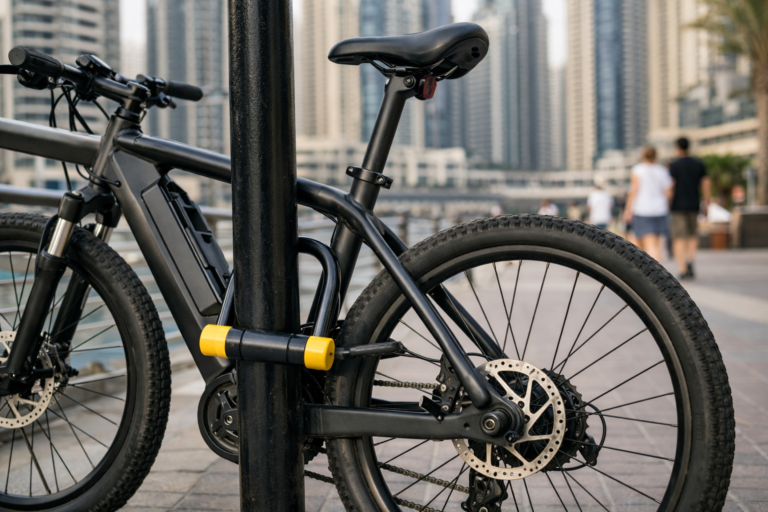
E-bikes with motors under 250W continuous power are classified as bicycles under ITC regulations, not motorized vehicles. No permit needed. No special registration. They can use dedicated cycling infrastructure, shared paths, bike lanes, and most internal roads just like regular bicycles.
E-bikes over 250W motor power? Regulatory gray area. Technically might require registration as a motorized two-wheeler or light motorcycle. But enforcement is almost nonexistent — ITC doesn’t have a clear process for this, and police rarely check e-bike motor specifications.
If you’re choosing between an e-scooter and an e-bike for commuting in Abu Dhabi, the e-bike gives you more flexibility in terms of where you can ride and cycling infrastructure access. Read our detailed comparison of e-bikes vs e-scooters in the UAE., the e-bike gives you more flexibility in terms of where you can ride and cycling infrastructure access. Plus, pedal-assist bikes are generally viewed more favorably by authorities than throttle-only scooters.
Tips for staying out of trouble
Always wear a helmet (mandatory safety equipment)
This is the #1 thing Abu Dhabi Police check during traffic stops. No helmet = immediate fine. Easy to avoid. Wear a properly fitted helmet that meets safety standards — not just for compliance, but for your own head protection.
Stay off highways and major roads (speed limit awareness)
Sheikh Zayed Road, Al Khail Road, Emirates Road — stay away from high-speed corridors. Even if you think you can handle it, don’t. These are arterial roads designed for cars at 100+ km/h. E-scooters don’t belong there legally or practically.
Use lights at night (visibility requirements)
Front white light, rear red light or reflector. If your scooter didn’t come with proper lighting equipment, add them. AED 50 investment in LED lights prevents AED 500 fine and makes you visible to motorists.
Know where you’re allowed to ride (geographic restrictions)
If the road has a posted speed limit over 40 km/h, you probably shouldn’t be on it. If it’s a pedestrian-only path with clear signage, definitely don’t ride there. When in doubt, use internal neighborhood roads or designated cycling infrastructure.
Be respectful to pedestrians (shared path etiquette)
On mixed-use paths, slow down around people. Don’t blast through crowded areas at maximum speed. Ring your bell or horn to alert pedestrians before passing. The more complaints about reckless e-scooter behavior authorities receive, the stricter enforcement becomes.
Will the rules get stricter?
Probably. Eventually. As micromobility adoption grows in the UAE.
Right now, Abu Dhabi’s regulatory approach through ITC is more relaxed than Dubai’s RTA system. No permit requirement, lighter enforcement, more geographic flexibility on where you can ride.
But if accident rates increase, or if public complaints about unsafe riding spike, expect tighter regulations and compliance monitoring. That’s what happened in Dubai — they started with loose rules, then added permit requirements and geographically restricted zones after too many incidents and public safety concerns.
The pattern across cities globally: micromobility gets introduced with minimal regulation → accidents and complaints rise → authorities implement stricter licensing, insurance requirements, and geographic restrictions → enforcement increases.
For now, Abu Dhabi’s rules are manageable. Follow them, ride safely, and you’ll be fine.
One more thing: If you ride in both emirates
Get the Dubai RTA permit even if you primarily ride in Abu Dhabi. It’s free. It takes 20 minutes online. Learn more about Dubai’s e-scooter regulations.
For Abu Dhabi-only riding under ITC jurisdiction, just focus on three things:
- Scooter meets ITC vehicle specifications (size, weight, power rating)
- Helmet, lights, and reflective gear (mandatory personal protective equipment)
- Know where you can’t ride (highways over 60 km/h, pedestrian-exclusive paths, unauthorized roads)
That’s it. You don’t need a permit through ITC. You don’t need to register your personal mobility device. Just follow the safety regulations and ride responsibly.
(It’s like how you don’t need a fishing license in Abu Dhabi’s public beaches, but you do in some other Emirates and countries. Different jurisdiction, different regulatory system. Just know which rules apply in which emirate.)