500W vs 1000W Electric Scooter UAE: Which Motor Do You Actually Need for Dubai?
In Dubai, people buy a 1000W scooter thinking it means “faster” — then they discover the speed is capped anyway, the battery drains quicker, and the scooter is heavier to carry into the lift.
Others buy a 500W scooter because it’s “more than enough”… until they hit a bridge ramp in summer heat with a backpack and the scooter starts crawling like it’s offended.
This guide is the UAE-specific answer: what wattage actually changes in real life — torque, heat behaviour, hill performance, and how much your weight matters.
🏁 Quick Answer — Choose in 20 Seconds
First: Wattage Is Not the Whole Story
“500W” and “1000W” are often used like a simple power ranking. In real scooters, wattage numbers can be messy because brands mix:
- Rated / continuous power (what the motor can sustain without overheating)
- Peak power (short bursts — great for marketing, not a guarantee for hills)
- Battery voltage + controller current (this is what creates torque you feel at take-off)
If you want to predict “pull” in Dubai: look at system voltage + controller current + motor type (single vs dual). Wattage on the box is the headline — the controller is the truth.
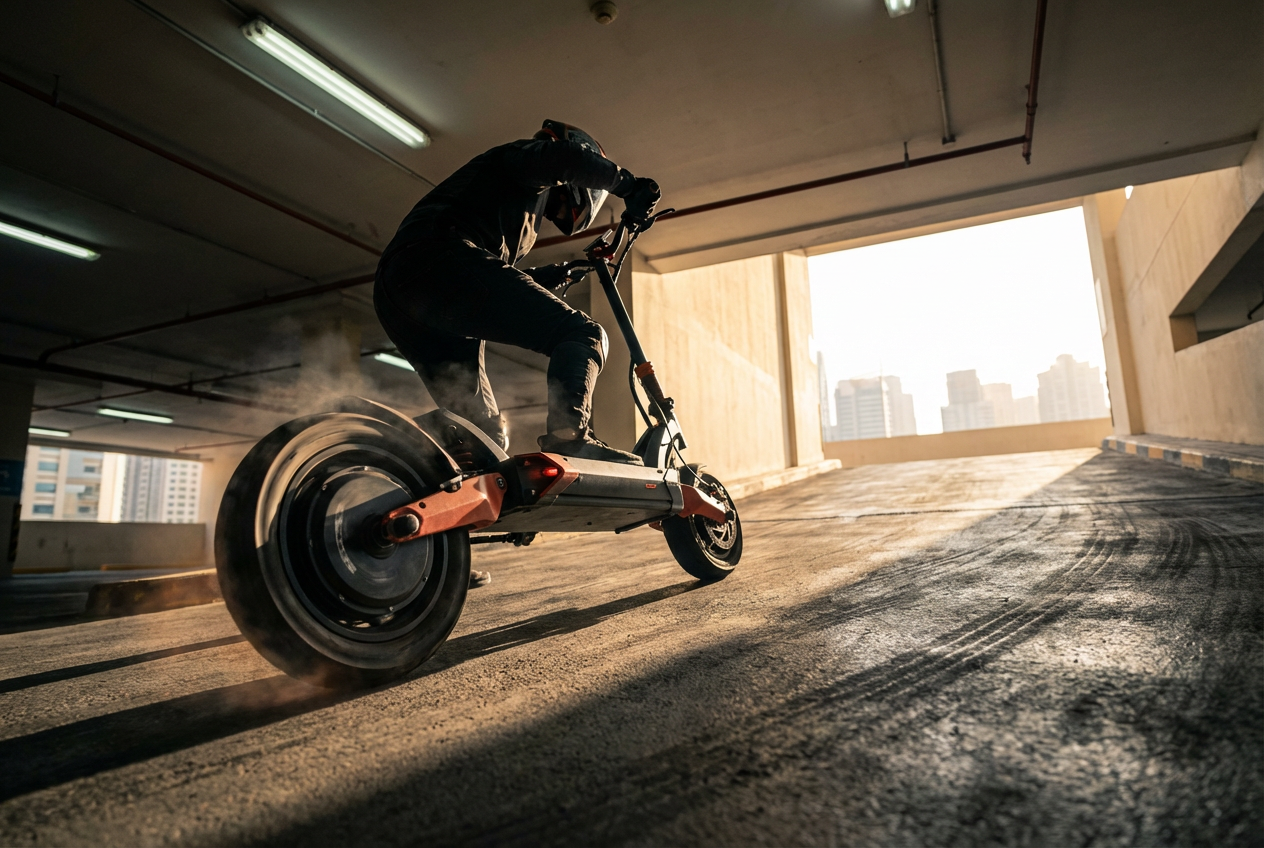
What 1000W Actually Buys You in Dubai
A 1000W-class scooter (when it’s genuinely built that way, not just “peak” marketing) usually gives you three practical advantages in UAE riding:
1) More torque where Dubai actually tests scooters: ramps + bridges.
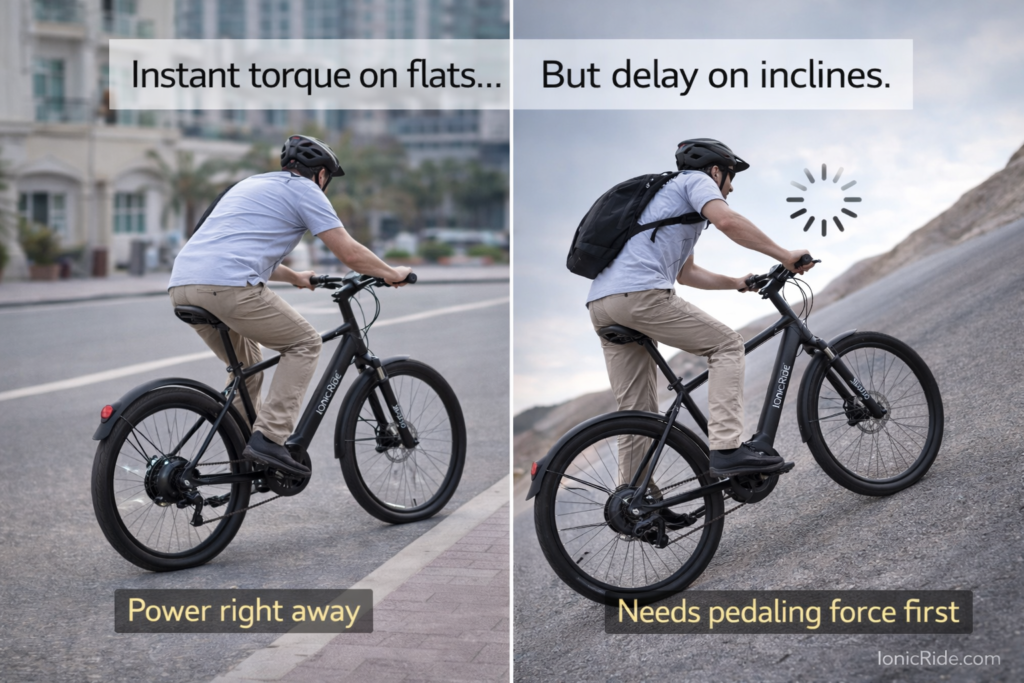
Dubai isn’t “mountain riding,” but it’s full of long gentle climbs that kill weak setups: bridge approaches, underpass ramps, and those sneaky “it’s flat until it isn’t” paths. A 500W can climb them — but often at half-speed with the motor working harder and heating the controller.
2) More heat margin in summer.
Heat doesn’t just reduce battery range — it stresses controllers, connectors, and throttle assemblies. A stronger system can do the same job at a lower percentage of its limit. That’s why two scooters can be “same speed” but one survives August better.
3) Less “bogging” under load.
Rider weight + backpack + groceries + a bit of headwind = your scooter suddenly feels like it lost confidence. A higher-power system usually keeps the ride feeling consistent.
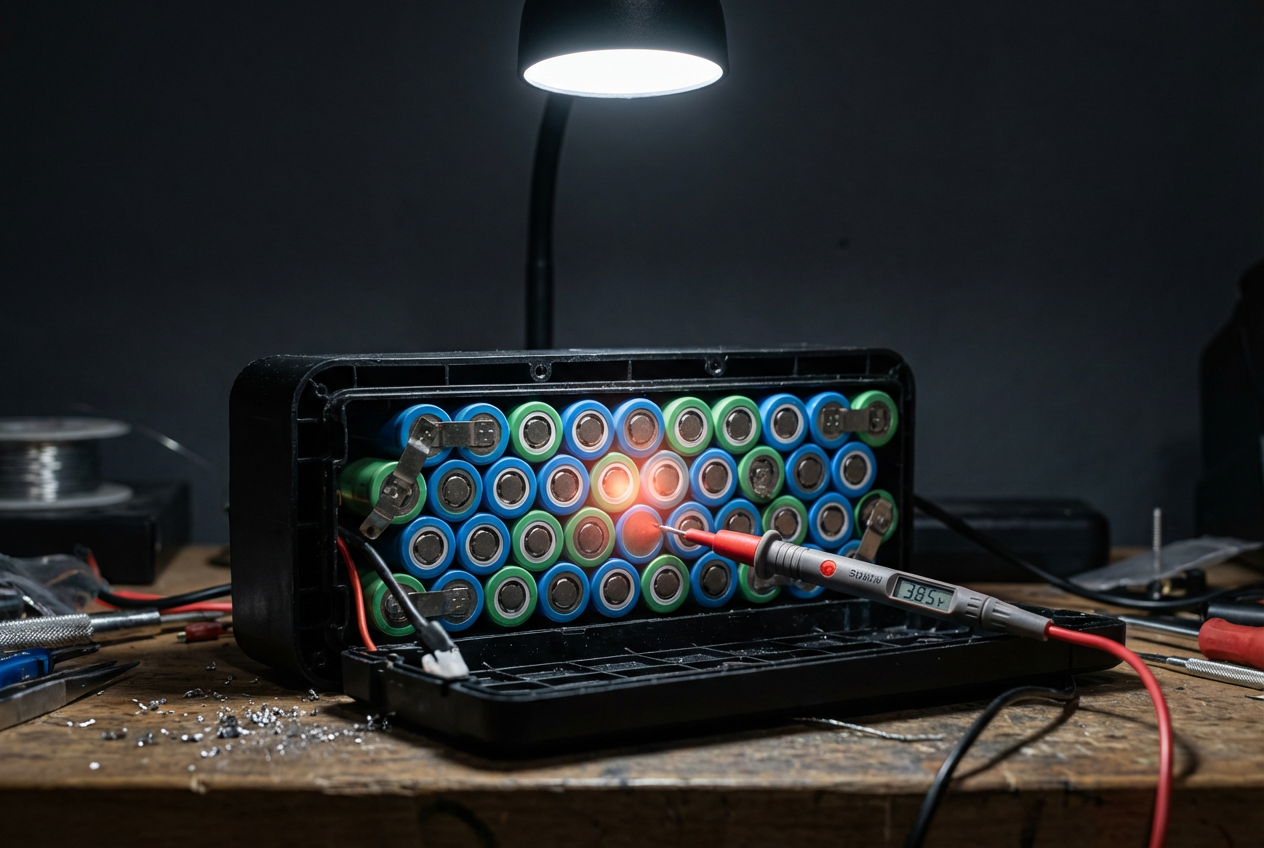
1000W doesn’t automatically mean “faster.” Many models are capped by firmware, safety modes, or riding rules. What 1000W really buys you is less struggle: smoother take-off, better climbs, less heat stress.
What 500W Does Better (And Why It’s Still the Smart Buy)
For a lot of Dubai riders, 500W is the right answer — because the real “pain” isn’t power. It’s daily convenience.
- Lighter weight (easier for metro/lift/stairs)
- Lower cost (and usually cheaper tyres/parts)
- Often better efficiency at relaxed cruising
- Less temptation to chase performance upgrades that reduce reliability
If your route is mostly flat paths, your commute is under ~8–10 km each way, and you care about portability: a good 500W scooter feels “right” in Dubai.
The Big Mistake: Buying Wattage Without Buying Battery
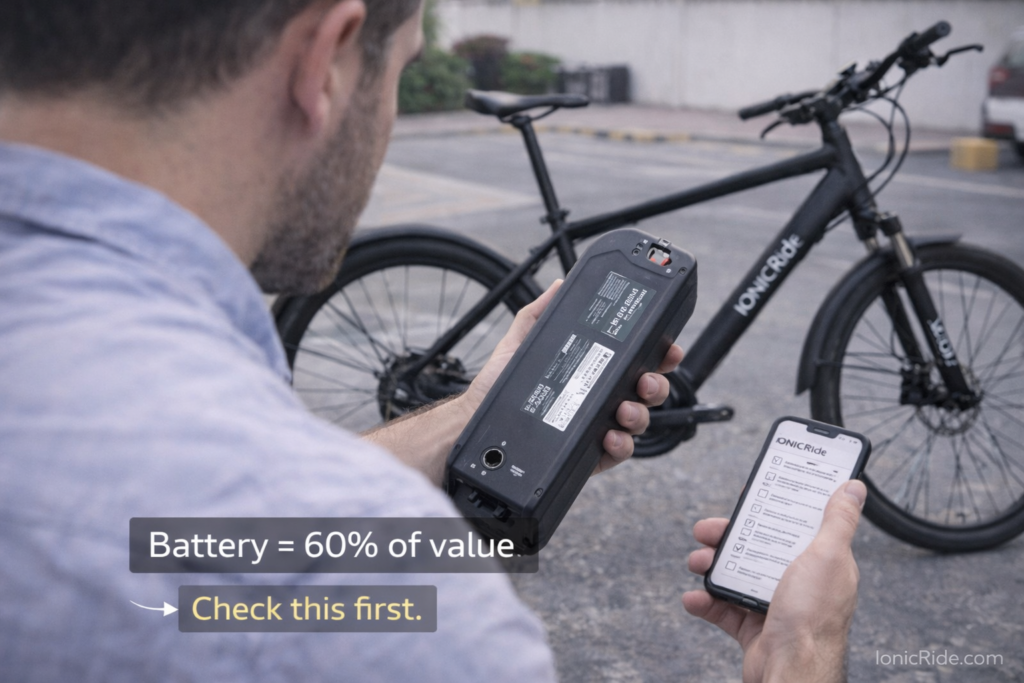
This is the part most people miss: a stronger motor with a small battery can feel worse.
Why? Because higher-power systems can pull more current. If the battery is small or low-quality, voltage sag kicks in and you get:
- weak acceleration after 30–40% battery
- range that collapses in heat
- controller cut-outs under load
We see “1000W scooters” with tiny packs come in with the same complaint: “It was strong on day one. Now it feels dead.” Usually the motor is fine — the battery can’t supply what the controller asks for anymore.
500W vs 1000W in Dubai: Real-World Comparison
Dubai Use Case Comparison (What You Actually Feel)
UAE 2026| Factor | 500W Class | 1000W Class |
|---|---|---|
| Take-off torque | Good on flat, can feel slow with load | Stronger launch, less “lag” under load |
| Bridge ramps / inclines | Usually climbs, but slower and hotter | Climbs with less drama, steadier speed |
| Summer heat stress | More likely to feel “tired” in peak heat | More margin if the controller/battery are decent |
| Range per battery size | Often more efficient at calm cruising | Can drain faster if you ride aggressive |
| Portability | Usually lighter, easier daily handling | Heavier frames, less fun to carry |
| Best rider weight range | Light-to-medium riders, flat routes | Medium-to-heavy riders, load + ramps |
| Maintenance & tyres | Cheaper parts in general | Tyres/brakes often pricier (depends on model) |
So Which One Should You Buy?
- Your route is mostly flat paths and short ramps
- You carry the scooter often (metro, stairs, office)
- You want lower cost + lower hassle
- You prefer a calmer, reliable setup over performance
- You hit bridge approaches/ramps daily and hate slow climbs
- You’re a heavier rider or ride with load (bag, groceries)
- You ride in peak summer hours and want heat margin
- You want smoother acceleration and less bogging
Don’t upgrade motor power without upgrading battery quality. If you’re spending for 1000W, make sure the scooter has a battery pack that can feed it without voltage sag. Otherwise you just bought heavier disappointment.
UAE Note: Don’t Buy a Motor You Can’t Use
Quick legal/common-sense note: UAE e-scooter rules and allowed riding areas are enforced differently depending on where you ride. In practice, many mainstream scooters are configured for safe capped speeds and permitted zones.
Don’t buy a high-power “performance” scooter if your daily route is regulated bike lanes and you just need a clean commute. You’ll pay more, carry more weight, and gain very little.
Before you ride anywhere: get the permit and understand the rules. Start here: E-Scooter License Dubai: Complete Guide
If range is your real problem (not power), read this next: Best Long Range E-Scooter UAE (2026)
500W is the right Dubai buy for most people — flat commutes, portability, low hassle. It’s the “I just want it to work” option.
1000W is worth it when your route and body weight demand it — ramps, bridges, load, and summer heat margin. You’re paying for “no struggle,” not top speed.
The real deciding factor is battery quality. A well-built 500W scooter can feel better than a fake 1000W with a weak pack. Buy the system, not the sticker.
Before You Buy: 90-Second Motor Checklist
- Confirm whether the wattage is rated/continuous or just peak marketing
- Check your route: ramps/bridges daily or mostly flat?
- Be honest about rider + load: weight, backpack, groceries, second rider (don’t)
- Prioritise battery quality (cells + capacity). Weak battery = weak scooter
- Make sure the scooter fits your real use: carrying, storage, metro/lift life
- Buy from authorised stock to avoid warranty pain in UAE
- Get your permit and ride where it’s allowed — no surprises