E-Scooter Controller Problems: Symptoms, Testing, Replacement Cost Dubai
Your e-scooter cuts out mid-ride. Or it starts but won’t accelerate. Or the display flickers and throws error codes you can’t find anywhere online. You’ve already checked the battery — it’s full. You’ve checked the throttle — it’s not stuck. So what’s left?
The controller. It’s the brain of the scooter — the circuit board that manages power from the battery to the motor. When it fails, the symptoms can look like anything. A battery problem. A motor problem. A throttle problem. People waste weeks chasing the wrong component because the controller mimics every other fault. And it’s one of the most expensive parts to replace — AED 400 to over AED 1,000 depending on the brand.
Here’s how to confirm it’s actually the controller before you spend anything. Symptoms, testing steps, what it costs to replace, and when it’s worth fixing vs when the scooter is done.
What the Controller Actually Does
The controller is a small circuit board — usually mounted inside the frame or under the deck. It sits between the battery and the motor and does three things: it reads your throttle input, it manages how much power flows from the battery to the motor, and it communicates with the display to show speed, battery level, and error codes.
When people say their scooter “isn’t working,” the controller is almost always involved — either as the actual fault or as the thing that’s incorrectly reporting a fault somewhere else. It’s the single most important electronic component on the scooter, and it’s the hardest to diagnose without the right approach.
On most scooters, the controller is a small black or green circuit board inside the frame tube, near where the handlebar stem meets the deck. You can usually see it by removing a panel or cover on the underside of the frame. On Xiaomi models, it’s typically near the base of the handlebar post. On Segway Ninebot, it’s often under the front deck plate. Don’t pull anything out yet — just locate it first.
Controller Symptoms: What to Look For
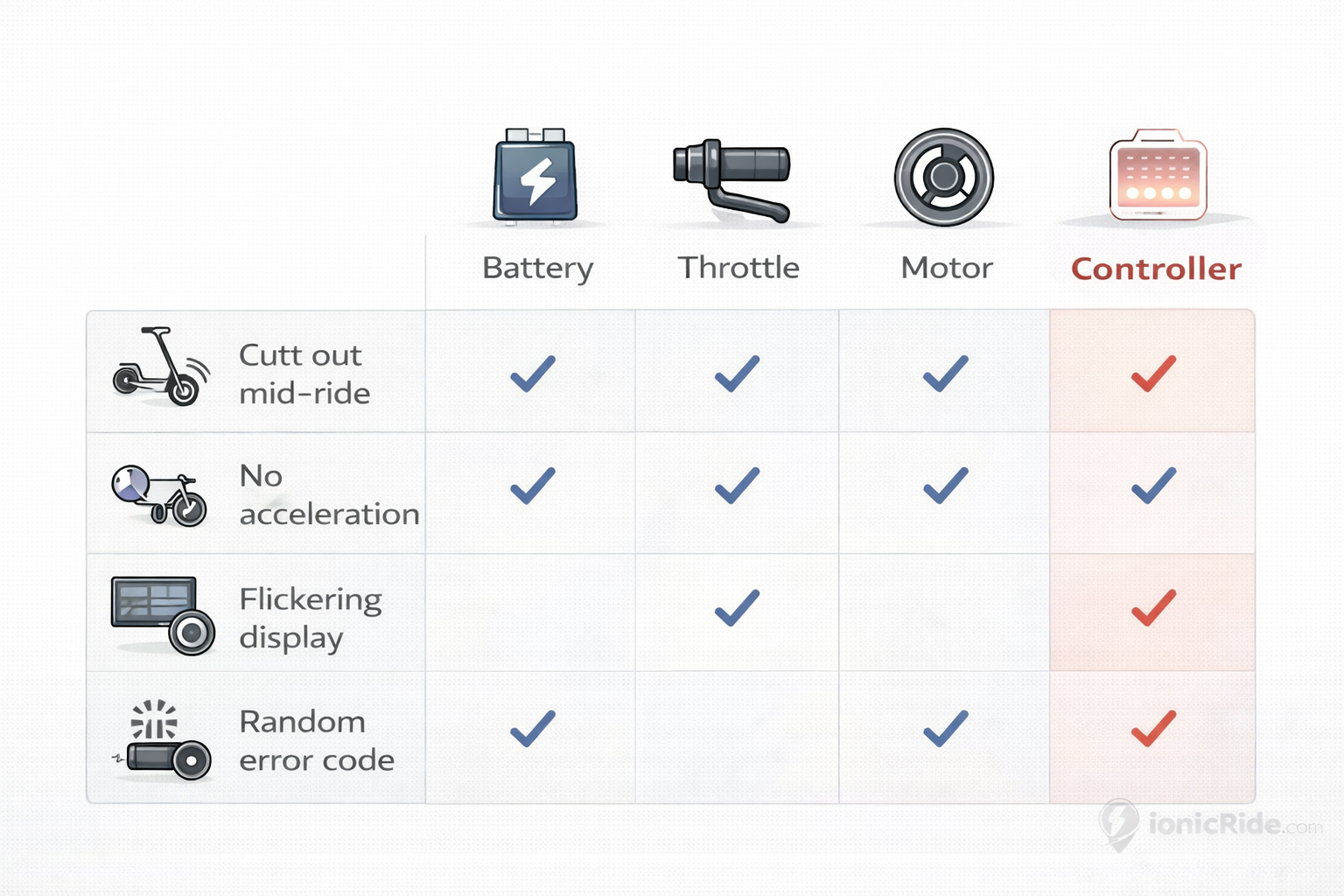
The tricky part about controller problems is that they look like other problems. Here’s the full symptom list — and for each one, what else could be causing it so you can rule those out first.
Controller Symptoms vs Other Causes
Diagnosis Guide| Symptom | Could Be Controller? | Could Also Be… |
|---|---|---|
| Cuts out mid-ride randomly | Yes — top suspect | Loose cable, low battery, overtemperature |
| Won’t accelerate despite full battery | Yes — top suspect | Stuck throttle, motor fault, hall sensor |
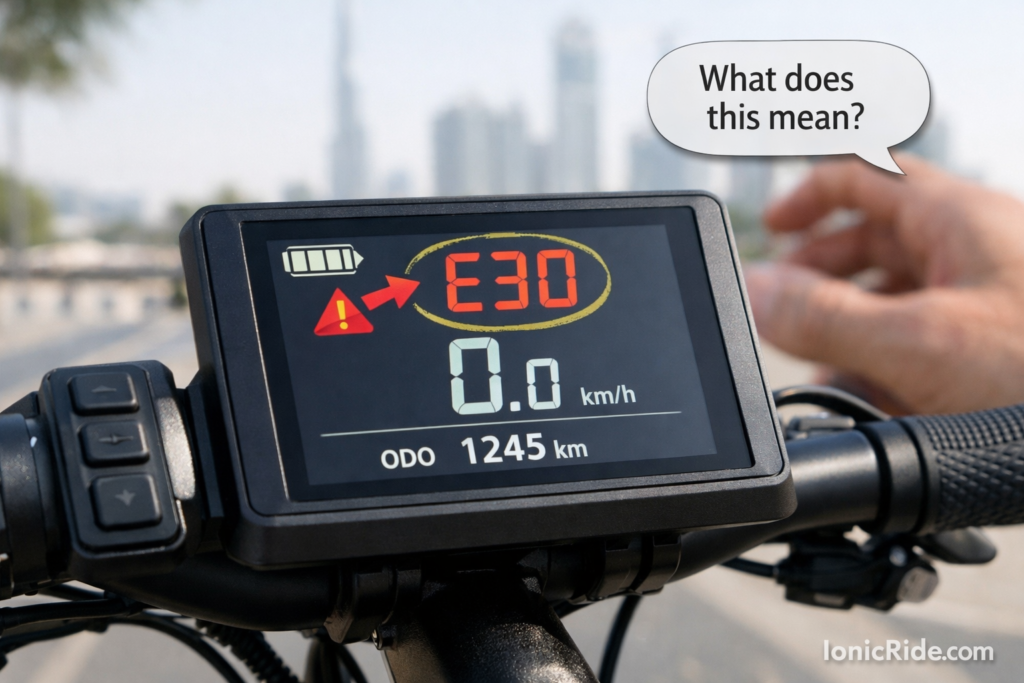
| Display shows error codes | Yes — likely | Battery BMS fault, motor fault |
| Scooter starts but motor stutters | Yes — likely | Hall sensor fault, loose motor connector |
| Power drops under load (going uphill) | Possibly | Weak battery, degraded cells |
| Display flickering or going black | Possibly | Loose display cable, display unit itself |
| Scooter won’t turn on at all | Possibly | Dead battery, broken power switch, blown fuse |
A customer from JLT brought in his Segway G30 cutting out every 200 metres on Sheikh Zayed Road. He’d already replaced the battery — AED 650 spent — and it made zero difference. The actual fault was a cracked solder joint on the controller board, caused by heat expansion and contraction over one Dubai summer. The controller was visually fine. No burn marks, no obvious damage. It took a close-up inspection under magnification to spot the crack. Lesson: controller faults can be invisible to the naked eye.
How to Test If It’s Actually the Controller
Here’s the thing…
Before you buy a replacement controller — which is not cheap — you need to confirm the controller is actually the problem. Here’s a step-by-step testing process that rules out the other common causes first. You need a basic multimeter for some of these steps. AED 40–80 at any electronics shop in Dragon Mart or along Sheikh Zayed Road.
Confirm the Battery Is Actually Delivering Voltage
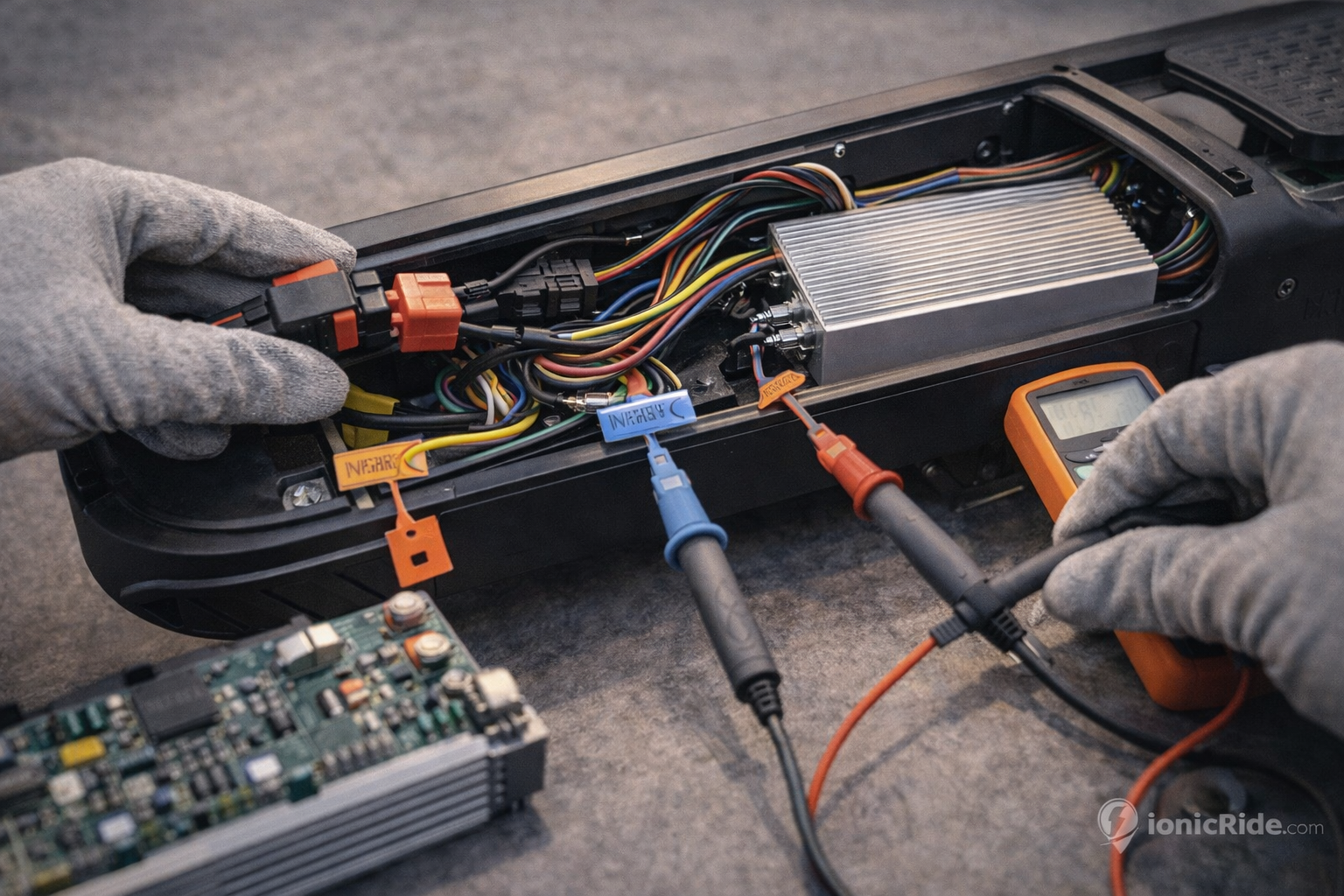
Set your multimeter to DC voltage. Measure across the battery output terminals (the main connector that goes to the controller). A healthy battery should read 36V–42V when full, or 30V+ when partially charged. If it reads below 28V or nothing at all, the battery is the problem — not the controller. Don’t go further until the battery is confirmed healthy.
Check All Cable Connections to the Controller
Unplug and replug every connector that goes into or out of the controller. Battery connector, motor connector, throttle connector, display connector, brake connector. Look for corrosion (green or white crusty residue), bent pins, or loose fits. In Dubai’s humidity, connector corrosion is more common than you’d think. Clean any corroded pins with a pencil eraser and a small brush. This fixes about 15% of suspected controller faults.
Check for Visible Damage on the Controller Board
Remove the controller from the frame (usually 2–3 screws). Look at both sides of the board under good lighting. You’re looking for: burnt or blackened components, swollen capacitors (bulging tops), cracked solder joints (dull grey lines instead of shiny silver), or water damage stains. Any of these confirms the controller is dead or failing. No visible damage doesn’t mean it’s fine — internal IC failures leave no marks.
The Swap Test
If you’ve ruled out battery, connections, and visible damage, the next step is swapping in a known-good controller. If your scooter works perfectly with the new controller and fails with the old one, that’s your answer. This is why buying the replacement before you’re 100% sure is risky — you might be replacing the wrong part. Some shops in Dubai will let you test a controller in-store before committing to the purchase.
Don’t short-circuit the controller trying to test it. No probing random pads with a multimeter in voltage mode. The controller has capacitors that hold charge — touch the wrong two points and you’ll fry it permanently, or worse, burn yourself. Stick to measuring at the battery terminals and visually inspecting the board. Leave internal electrical testing to a shop.
Replacement Costs by Brand: What You’ll Actually Pay
Now here’s what most people miss…
Controller prices vary massively by brand and model. A Xiaomi controller is cheaper than a Segway one because Xiaomi has more aftermarket supply in Dubai. Generic brand controllers are the cheapest but the quality is inconsistent. Here’s what we’ve actually seen on invoices in 2026.
Controller Replacement Costs in Dubai (AED)
Real Prices 2026| Brand / Model | Part Cost | Labour | Total |
|---|---|---|---|
| Xiaomi Mi Pro 2 | AED 280–380 | AED 100–150 | AED 380–530 |
| Xiaomi Electric Scooter 2 | AED 250–350 | AED 100–150 | AED 350–500 |
| Segway Ninebot G30 / Max | AED 450–600 | AED 150–200 | AED 600–800 |
| Segway Ninebot P100 | AED 550–750 | AED 150–200 | AED 700–950 |
| Segway Ninebot P100S | AED 600–850 | AED 200 | AED 800–1,050 |
| Generic / Dragon Mart brands | AED 150–250 | AED 80–120 | AED 230–370 |
The labour cost is relatively consistent across shops — AED 100–200 depending on how accessible the controller is. The part cost is where the variation happens. Xiaomi controllers are widely available through Dragon Mart suppliers and online. Segway controllers are harder to source locally, which pushes the price up.
Why Dubai Heat Kills Controllers Faster
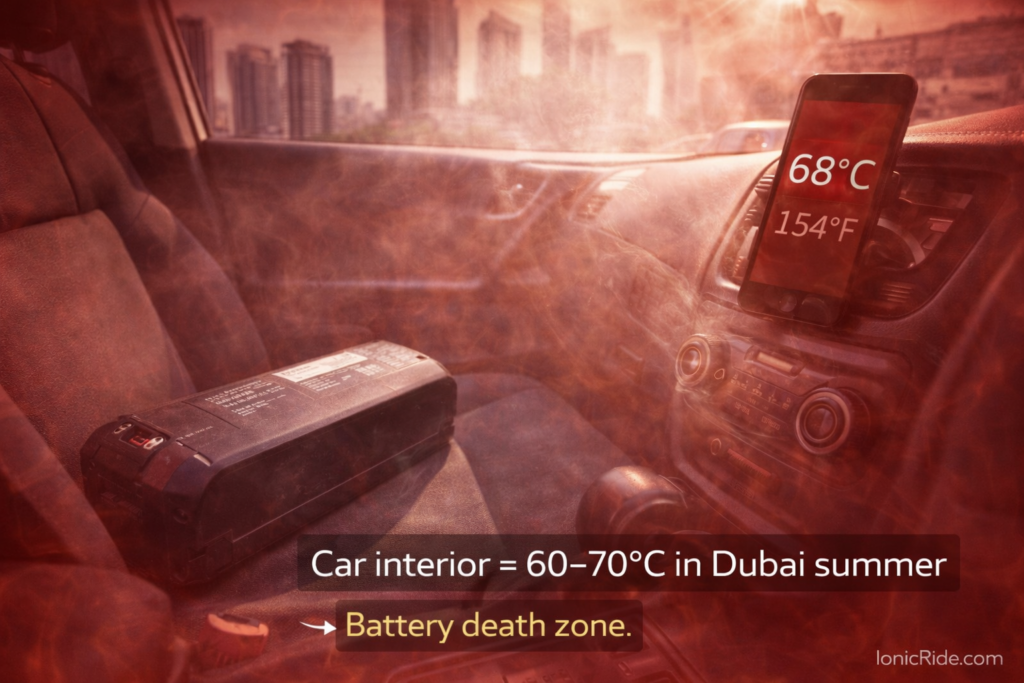
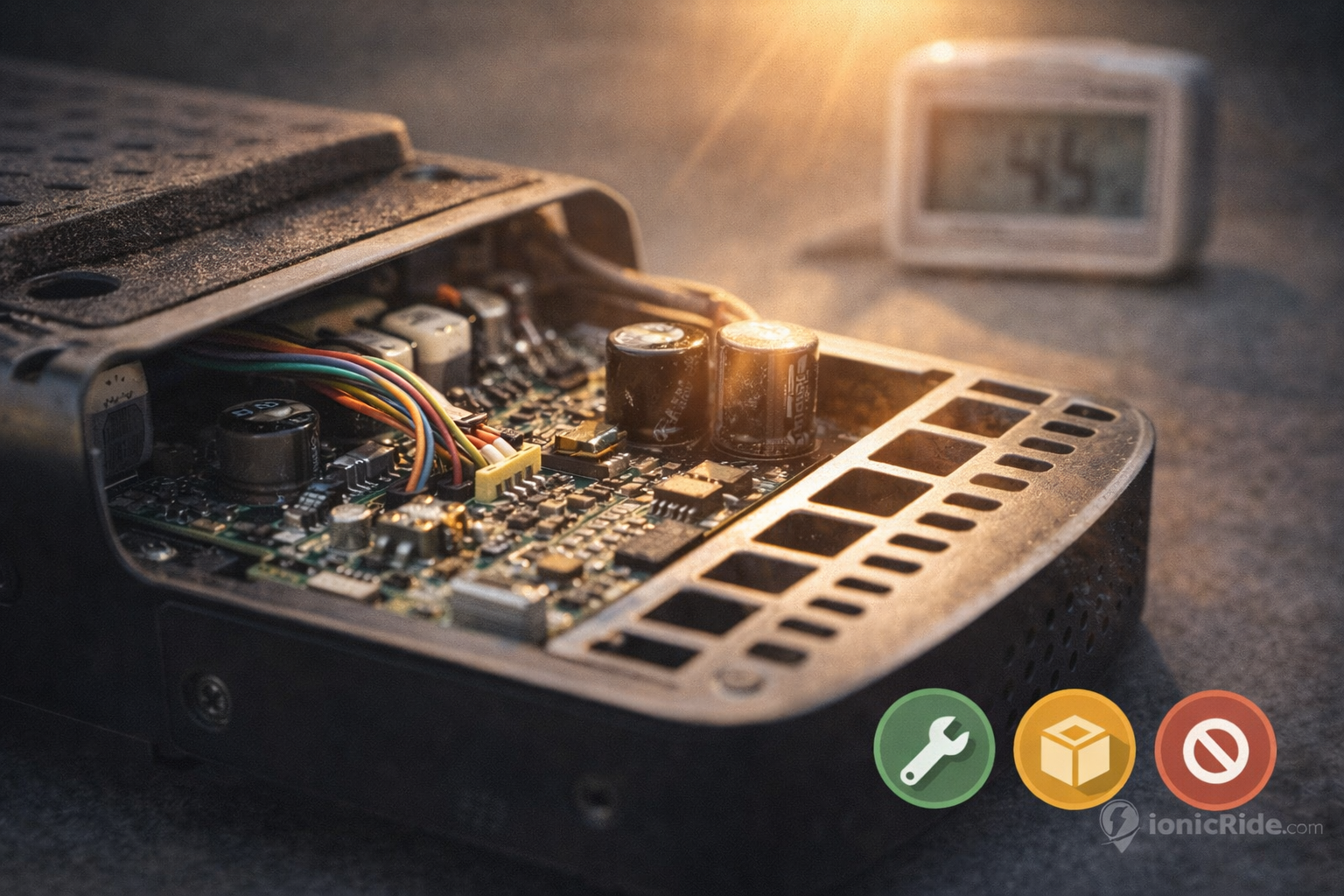
Controllers are designed for temperate climates. The electronic components inside — capacitors, MOSFETs, solder joints — all have thermal limits. Dubai summer regularly hits 45°C ambient, and the inside of a scooter frame in direct sunlight can reach 60°C or higher. That’s not a normal operating environment.
✓ How to Extend Controller Life
- Don’t park in direct sunlight — shade or underground parking
- Avoid riding during peak heat (12pm–3pm in summer)
- Don’t push max throttle sustained in heat — reduces thermal stress
- Keep the frame clean — dust insulates and traps heat
- If the scooter has a thermal cutoff, let it cool before restarting
✗ What Kills Controllers in Dubai
- Parking in direct sun on Sheikh Zayed Road for hours
- Full-throttle uphill runs in 45°C heat
- Ignoring thermal cutoff warnings and forcing the scooter
- Water intrusion during rare rainstorms (not waterproof)
- Dust and sand getting into the frame through gaps
If you’re buying a used scooter in Dubai, always ask how old it is and whether it’s been through a full summer. A scooter that’s been parked outside in direct sun from May to September has already taken significant thermal stress on the controller. That’s not visible — but it’s shortening the controller’s life. A one-year-old scooter in Dubai has seen more thermal stress than a three-year-old one in London.
Controller Problem vs Not Worth Fixing
The bottom line?
A controller replacement is expensive relative to the value of the scooter. On a budget scooter that cost AED 1,200 new, spending AED 400–500 on a new controller is a significant chunk of the original price. On a Segway P100S that cost AED 4,500, an AED 900 controller replacement is more justified. Here’s how to think about it.
Scooter Cost Was AED 2,500+ and It’s Less Than 2 Years Old
The controller is the only major fault. Battery and motor are fine. The rest of the scooter is in good condition. A replacement controller brings it back to full working order. Total repair cost is under 40% of what you paid for the scooter. Fix it.
Scooter Cost AED 1,200–2,500 and Has Other Issues Too
The controller is shot but so is the battery, or the tyres are worn, or there’s frame damage. You’re looking at AED 800+ in total repairs on a scooter worth AED 1,500. At that point, a used scooter in better shape might be the smarter spend. Run the numbers before committing.
Budget Scooter Under AED 1,200 with a Dead Controller
The repair cost is going to be 30–40% of what you originally paid. And budget controllers are prone to failing again — often within 6–12 months in Dubai heat. You’re better off putting that money toward a better scooter. Don’t throw good money after bad on a cheap frame.
Need a shop in Dubai to do the replacement? Here’s the full directory with pricing and reviews: E-Scooter Repair Dubai: 20 Shops with Prices, Reviews, Wait Times
Controller is fine but the battery is the real problem? Full replacement guide here: E-Scooter Battery Replacement Dubai: Cost, Lifespan & Which Batteries Actually Last
The controller is the hardest fault to diagnose because it mimics every other problem. Confirm the battery is healthy first. Check all connections. Inspect the board visually. Then and only then consider a replacement.
Replacement costs range from AED 230 for generic brands to over AED 1,000 for Segway P100S. Dubai heat accelerates controller failure — it’s not a manufacturing defect, it’s an environmental one. Shade your scooter, avoid peak-heat riding, and don’t ignore thermal cutoff warnings.
If the repair cost is over 35–40% of what you paid for the scooter and there are other faults too, a replacement scooter is probably the better financial decision. Controllers on budget scooters tend to fail again. Invest in the scooter, not the repair.
Controller Troubleshooting — Step by Step
- Battery confirmed healthy? Measure voltage at the output terminals. 30V+ means battery is not the issue. Below 28V? Fix the battery first.
- All connectors unplugged and replugged? Clean any corrosion off the pins. This fixes 15% of cases — do it before anything else.
- Controller board visually inspected? Look for burnt components, swollen capacitors, cracked solder joints, or water stains on both sides.
- Display showing a specific error code? Note it down — it narrows the fault. E1–E9 codes are controller or motor related on most brands.
- Confirmed it’s the controller via swap test? Then get a replacement matched to your exact model. Wrong controller = won’t work or will damage the scooter.
- Replacement cost vs scooter value checked? If repair is over 40% of the scooter’s worth and there are other faults, consider replacing the scooter instead.
Controller sorted but want to make sure it lasts this summer?
Dubai heat is the number one killer of e-scooter electronics. Here’s how to protect your investment.