What to Look for When Buying a Used E-Bike in Dubai
Buying used can save you 30–50% off a new e-bike. But it can also leave you with an expensive paperweight if you don’t know what to check.
I’ve seen people get great deals. I’ve also seen people bring in “bargains” that need AED 1,500 in repairs.
Here’s how to tell the difference. If you want the full step-by-step checklist version, use this: complete used e-bike inspection guide for Dubai.
Before you even meet the seller
Most problems reveal themselves if you ask the right questions upfront.
How old is the bike?
E-bike batteries degrade over time. A 3-year-old bike with heavy use has a battery that’s probably at 70–80% of original capacity.
That doesn’t make it a bad buy — just know what you’re getting. If you’re unsure what “70–80% battery” feels like in real life, read why a 60km-rated e-bike often only does 40km.
How often was it ridden?
“Barely used” means different things to different people. Try to get specifics: kilometers ridden per week, how many months of regular use.
A bike ridden 10 km/week for 2 years is in way better shape than one ridden 50 km/week for 2 years.
Where was it stored?
If it was stored in a cool, dry place indoors — good.
If it was left outside, in a garage with no AC, or in a car trunk regularly — battery degradation is worse. Corrosion is more likely. Dubai storage heat is a battery killer — here’s the deep dive: how Dubai heat affects e-bike batteries (and what you can do).
Why are they selling?
Most people sell because they’re upgrading, moving, or stopped using it. That’s fine.
If they’re vague or defensive about why they’re selling, that’s a yellow flag. Not a dealbreaker, but pay closer attention during inspection.
Is there any warranty left?
Some e-bikes have 1–2 year warranties. If there’s time left and the warranty is transferable, that’s a bonus.
Most sellers won’t have this. But if they do, it’s a good sign they took care of the bike.
What to inspect in person
Don’t buy sight unseen. Meet the seller. Inspect the bike. Test ride it.
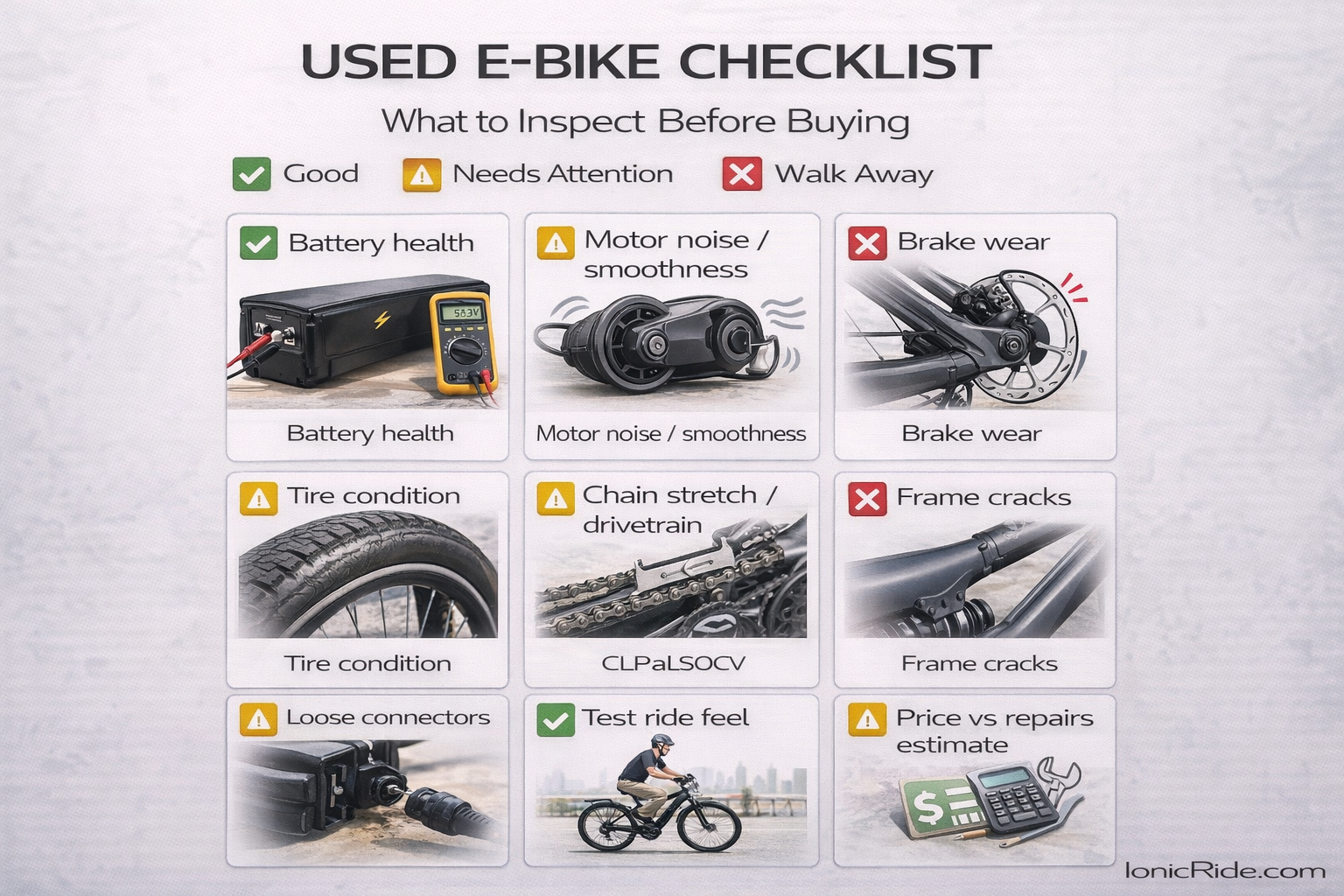
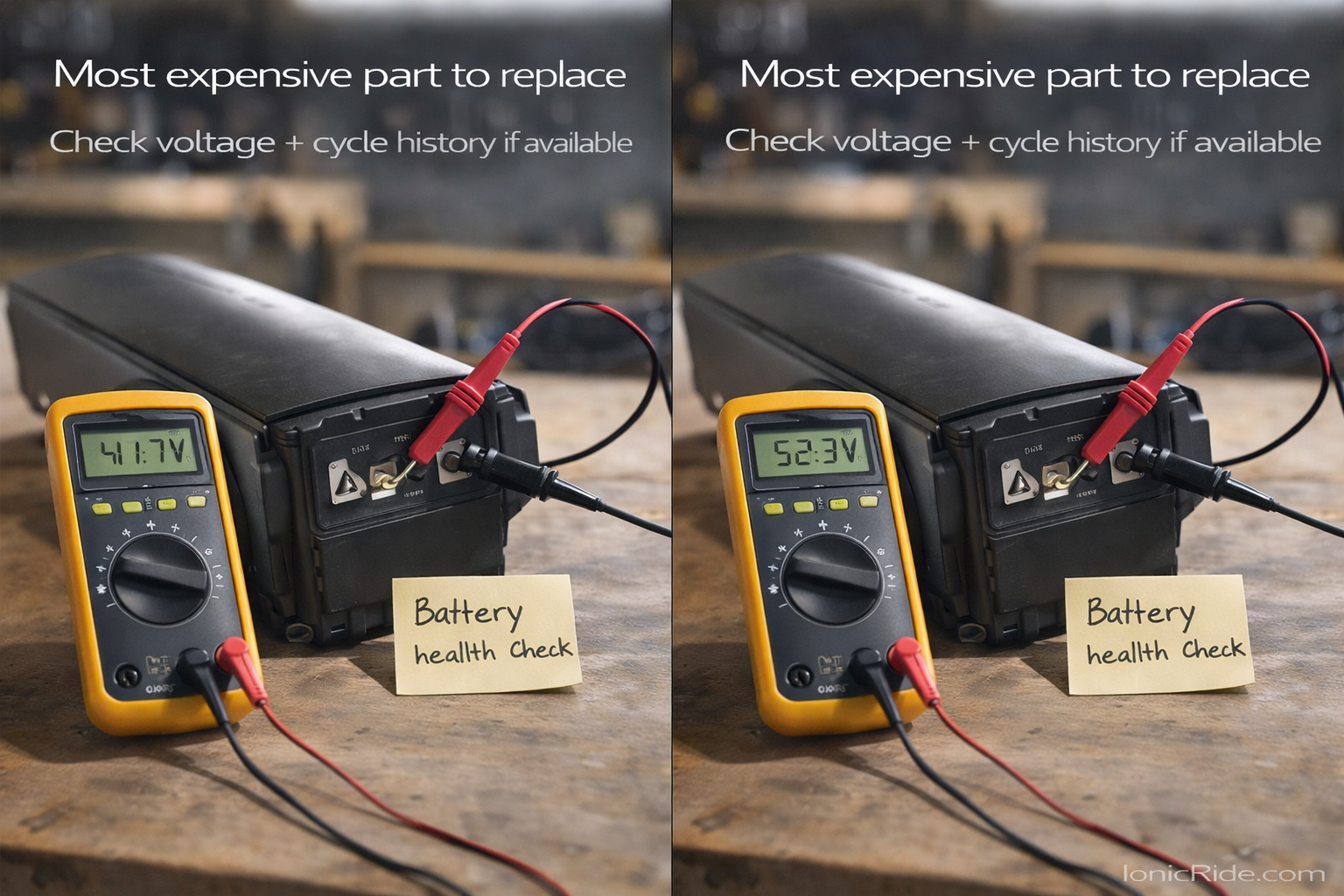
1. Battery health (this is the expensive part)
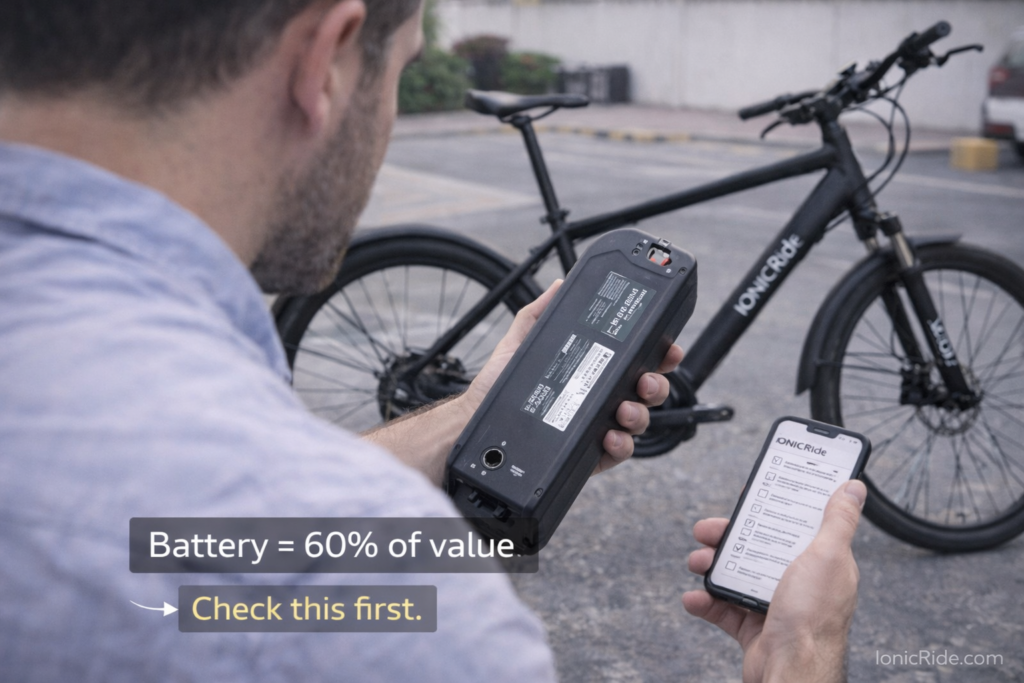
The battery is the most expensive component. If it’s toast, you’re looking at AED 600–1,500 for a replacement.
What to check:
- Ask for a fully charged battery. Check the display. Does it show 100%?
- Take a short test ride (5–10 minutes). Check the battery level after. If it dropped from 100% to 80%, the battery’s weak.
- Ask how far they typically get on a charge. Compare to the manufacturer’s spec. If they’re getting 60% or less of the advertised range, the battery’s degraded.
- Look for physical damage: cracks, dents, swelling. A swollen battery is dangerous — walk away.
Battery age matters: 0–1 year = excellent. 1–2 years = good. 2–3 years = expect some degradation. 3+ years = budget for a replacement soon.
2. Motor condition
What to check:
- Turn on the bike and engage the motor. Listen for grinding, clicking, or unusual noises. It should hum quietly.
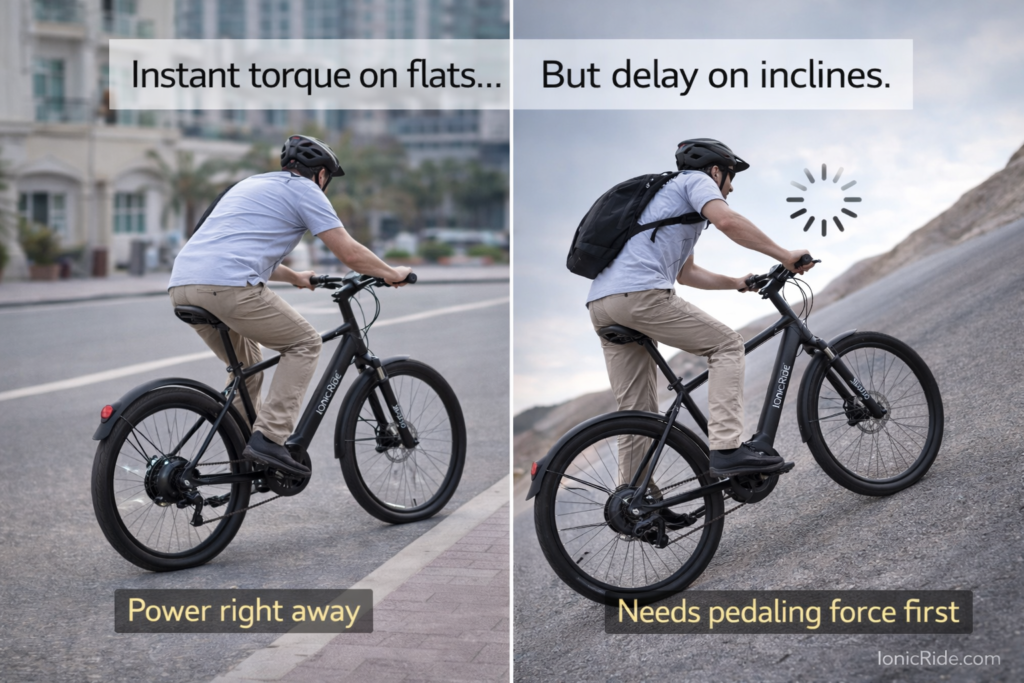
- Test acceleration. It should be smooth and responsive, not jerky or weak.
- Try different assist levels. All of them should work.
- On a hub motor, spin the wheel by hand (power off). It should spin freely without drag.
3. Brakes
What to check:
- Inspect brake pads. If they’re thinner than 1–2 mm, they need replacing soon (AED 80–150).
- Squeeze the brake levers. They should feel firm and stop the bike quickly.
- Listen for squeaking or grinding. Squeaking usually means pads need replacing or cleaning. Grinding means they’re worn to metal.
- Check for brake drag. Spin each wheel — if it stops quickly, the brakes are rubbing.
4. Tires
What to check:
- Look at tread depth. If it’s worn smooth, tires need replacing (AED 150–300 per tire).
- Check sidewalls for cracks, cuts, or dry rot. That’s from age or sun exposure.
- Check tire pressure. If it’s low, that’s not a dealbreaker — just pump them up and retest.
5. Chain and drivetrain
What to check:
- Look at the chain. Is it rusty, dry, or caked with dirt? That’s neglect.
- Check for chain stretch. If the chain is loose or skips when you pedal hard, it needs replacing (AED 80–150).
- On mid-drive bikes, check the cassette and chainring teeth. If they’re hooked or shark-fin shaped, they’re worn (AED 200–400 to replace both).
6. Frame and components
What to check:
- Look for cracks in the frame, especially near welds and high-stress points. Frame cracks are a safety issue — walk away.
- Check for rust or corrosion on bolts, connectors, and metal parts. Minor surface rust is okay. Deep corrosion is a red flag.
- Wiggle the handlebars, stem, and seat. Nothing should feel loose.
- Spin the wheels. They should be straight (no wobble).
7. Electrical connections
What to check:
- Look at visible connectors (battery, display, motor cables). Are they clean and corrosion-free?
- Test all functions: display, lights (if equipped), throttle (if equipped), assist levels.
- If anything doesn’t work, factor repair costs into your offer.
The test ride (don’t skip this)
Numbers and visuals only tell you so much. You need to ride it.
What to test:
- Acceleration: From a stop, does it feel responsive? Or sluggish?
- Braking: Can you stop quickly and confidently?
- Motor noise: Should be a quiet hum. Grinding or whining is bad.
- Assist consistency: Does power delivery feel smooth? Or does it surge and cut out?
- Handling: Does the bike feel stable? Or wobbly and loose?
- Battery drain: Note the battery level before and after the ride. Excessive drain = weak battery.
If anything feels off, ask about it. A good seller will explain. A shady seller will get defensive.
Red flags that should make you walk away
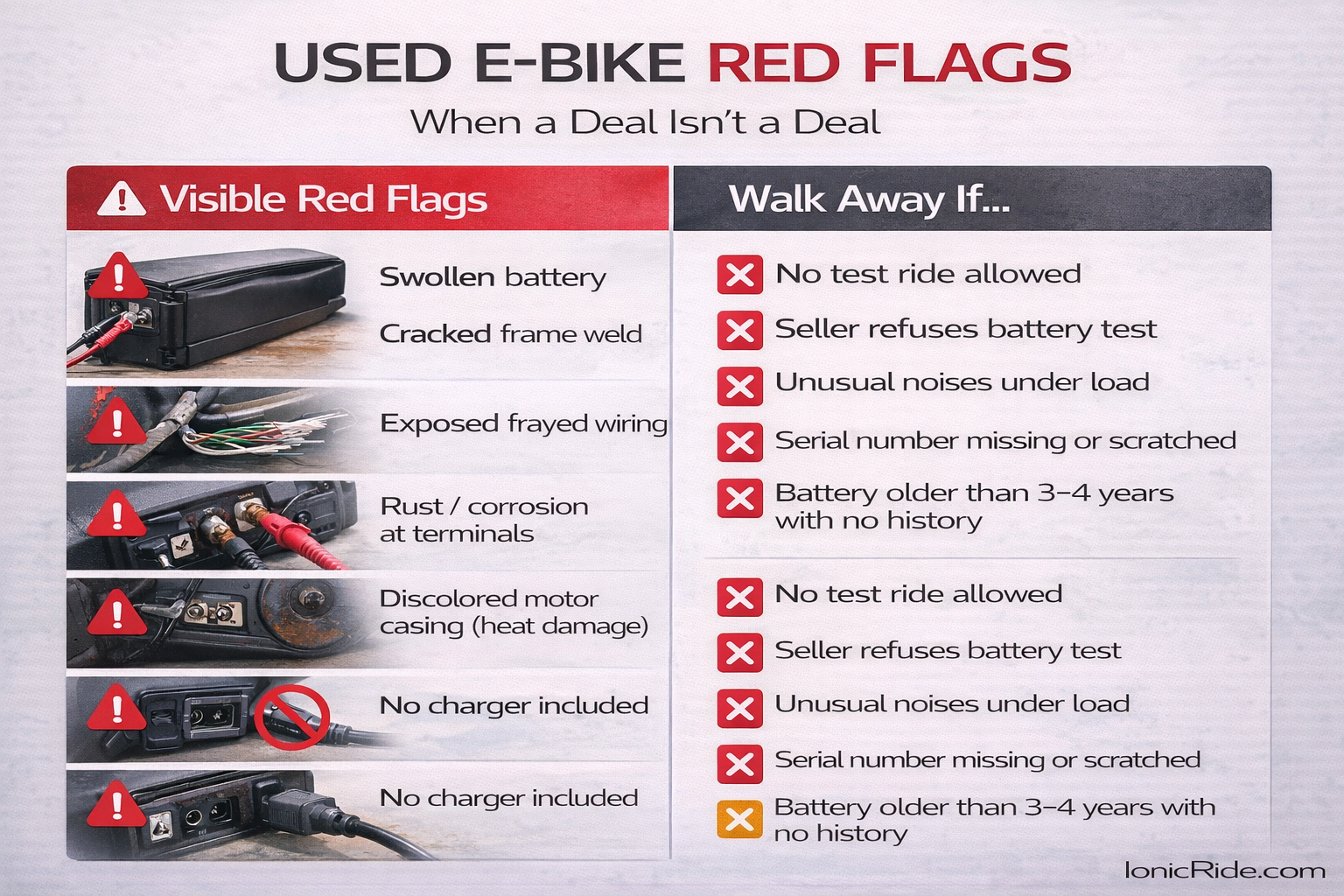
Lithium batteries don’t swell unless something’s wrong. Swelling = fire risk. Don’t buy it at any price.
No amount of discount is worth a cracked frame. It’s unsafe.
If they say “it’s too far” or “just trust me, it works,” walk away. There’s a reason they don’t want you to ride it.
If you see signs of water inside the battery compartment, controller box, or display, corrosion will continue. Electrical problems will get worse over time.
This could be stolen. Ask for a receipt or proof of ownership. If they can’t provide it, walk away.
If it’s so small, why didn’t they fix it before selling? Usually means the problem is bigger than they’re admitting.
How to price a used e-bike
Used e-bikes in Dubai typically sell for 50–70% of their original price, depending on age and condition.
Rough pricing guide:
0–6 months old, excellent condition: 70–80% of new price
6–12 months old, good condition: 60–70% of new price
1–2 years old, good condition: 50–60% of new price
2–3 years old, decent condition: 40–50% of new price
3+ years old: 30–40% of new price (battery likely needs replacing soon)
Subtract costs for needed repairs:
- Battery replacement: AED 600–1,500
- Brake pads: AED 80–150
- Chain: AED 80–150
- Tires (both): AED 300–600
- Cassette: AED 150–300
If the seller’s asking AED 2,000 but the bike needs AED 500 in immediate repairs, offer AED 1,500.
Where to buy used e-bikes in Dubai
Dubizzle: Biggest marketplace. Lots of options. But also lots of junk. Inspect carefully.
Facebook Marketplace: Similar to Dubizzle. Same advice applies.
Local bike shops: Some shops sell refurbished or trade-in bikes. More expensive than private sellers, but usually come with a short warranty.
Cycling groups and forums: Enthusiasts selling to upgrade. Often better maintained than random Dubizzle listings.
Most used e-bikes on Dubizzle are overpriced. Sellers list at 80% of new price for a 2-year-old bike with a weak battery. Don’t be afraid to lowball. If they’re serious about selling, they’ll negotiate.
Negotiation tips
Don’t accept the asking price without trying.
Start 20–30% below asking price. If they’re asking AED 2,500, offer AED 1,800–2,000. Worst case, they say no. Best case, you save money.
Point out issues you found during inspection. “The battery seems weak and the brake pads need replacing. That’s AED 400 in repairs. Would you take AED 2,100?”
Be ready to walk away. If the price doesn’t make sense or the bike has too many issues, leave. There are always more listings.
Bring cash. Cash offers get better deals. “I have AED 2,000 cash right now” is more compelling than “I’ll transfer you later.”
After you buy: First things to do
Even if the bike seems fine, do this as soon as you get it home:
- Check and inflate tires to proper PSI
- Clean and lube the chain
- Inspect and adjust brakes
- Charge the battery fully and check range on a test ride
- Tighten any loose bolts
- Consider a full service at a shop (AED 150–300) to catch anything you missed
Think of it like buying a used car. You wouldn’t drive it off the lot without checking fluids and tire pressure. Same principle.
Is buying used worth it?
It depends.
If you find a 1-year-old bike in good condition for 60% of new price, and you inspect it properly — yes, absolutely.
If you’re buying a 3-year-old bike with a questionable battery for 70% of new price — no, just buy new.
The key is knowing what to look for and not being afraid to walk away from bad deals.
(It’s like buying used phones. Sometimes you get a mint-condition iPhone for half price. Sometimes you get a scratched-up battery-dead nightmare. The difference is knowing how to check.)