
Where You Can (and Can’t) Ride E-Scooters in Dubai 2026
Customer came in last week. Just bought a Xiaomi scooter.
“Where can I ride this? Can I take it to my office in Deira?”
I pulled up the RTA zone map. “No. Deira’s not a designated zone. You’ll get fined 200 AED.”
“But there’s a bike lane right outside my building.”
“Doesn’t matter. If it’s not one of the 21 zones, you can’t ride there. Bike lane or not.”
This is the #1 confusion I see: riders think bike lanes = legal zones. Wrong.
The simple rule: 21 zones only
Dubai has 21 designated zones where e-scooters are legal.
Not 20. Not 22. Exactly 21.
Outside these zones? Illegal. Doesn’t matter if:
- There’s a bike lane
- You see other riders
- It’s a short distance
- You’re being careful
- No one’s around
If it’s not one of the 21 zones, you’re breaking the law.
Riding outside designated zones = 200 AED fine + possible scooter confiscation.
If you cause an accident outside a designated zone, you’re automatically at fault. Insurance won’t cover you. You pay everything out of pocket.
We covered this in detail here: Had an E-Scooter Accident? Here’s What to Do
The complete list: all 21 designated zones
Here’s the official RTA list. These are the ONLY areas where you can legally ride:
That’s it. These 21 zones cover approximately 390 km of dedicated cycle tracks across Dubai.
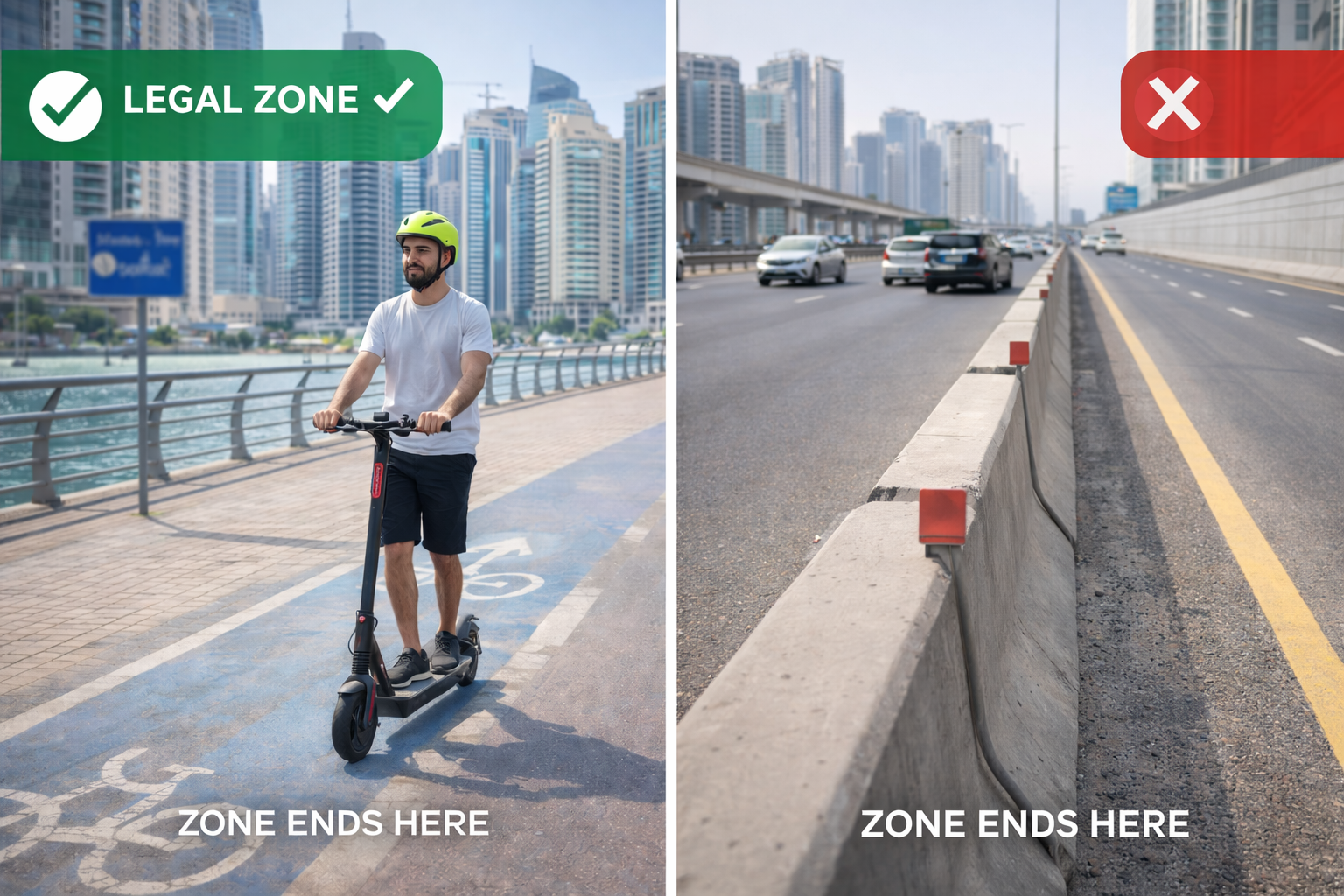
What each zone actually covers
Zone names can be confusing. Here’s what you need to know about the major ones:
1. Sheikh Mohammed bin Rashid Boulevard (Downtown Dubai)
What’s included:
- Boulevard area around Burj Khalifa
- Dubai Mall pedestrian zones
- Downtown cycling tracks
What’s NOT included:
- Sheikh Zayed Road itself (highway = banned)
- Financial Centre Road (main car road)
You can ride on the designated cycling tracks and shared paths in Downtown. You cannot ride on the actual roads where cars go.
2. Jumeirah Lakes Towers (JLT)
What’s included:
- JLT Metro station area
- Cluster roads with dedicated lanes
- JLT Lake circuit
What’s NOT included:
- Sheikh Zayed Road (you can’t cross it)
- Cluster parking areas (designated parking only)
JLT is one of the most popular zones. Lots of commuters use scooters between Metro and offices.
The JLT zone STOPS at the Sheikh Zayed Road boundary. I’ve seen riders get fined trying to ride from JLT to Marina. You have to stop at the boundary, fold your scooter, walk/Metro to Marina, then ride again.
Pain in the ass? Yes. But that’s the rule.
3. Dubai Internet City
What’s included:
- Internet City Metro connection
- Office cluster areas
- Designated cycling tracks
What’s NOT included:
- Sheikh Zayed Road
- Al Sufouh Road (main road)
4. Al Rigga
What’s included:
- Al Rigga Street designated lanes
- Al Rigga Metro station area
- Connected paths to Deira City Centre
What’s NOT included:
- Most of Deira (not a designated zone)
- Old Dubai areas
5. The Palm Jumeirah
What’s included:
- Trunk area cycling tracks
- Designated paths along Palm
- Specific resort pathways (check signage)
What’s NOT included:
- Main roads where cars drive
- Private residential areas
- Beach club exclusive zones
6. City Walk
What’s included:
- City Walk pedestrian areas (designated paths)
- Surrounding cycling tracks
What’s NOT included:
- Al Wasl Road (main road)
- Indoor shopping areas
Places people think are legal (but aren’t)
These are the areas where customers tell me they got fined:
- Dubai Marina — Despite having a “promenade,” most of Marina is not designated. Walking area = pedestrian zone = no scooters allowed.
- Deira (except Al Rigga small zone) — All of old Deira is banned
- Bur Dubai — Not a designated zone
- Jumeirah Beach Residence (JBR) — Beach walk is pedestrian only
- Business Bay (most of it) — Only specific tracks are legal
- Dubai Sports City — Not on the list
- Motor City — Not designated
- Arabian Ranches — Private community, not RTA zone
- Dubai Silicon Oasis — Not designated
- Academic City — Not on the list
Customer got fined 200 AED riding in Dubai Marina. “But everyone rides here!”
I showed him the RTA map. Marina is NOT one of the 21 zones.
Yes, you see rental scooters. Yes, you see people riding. Yes, there’s a promenade.
Doesn’t matter. Marina = not designated = illegal = you get fined if caught.
The rental scooter apps geofence the zones. If you try to ride a Lime or Tier scooter into Marina, the app stops you. That’s your clue it’s not legal.
Roads and areas that are ALWAYS banned
Even inside designated zones, some roads are illegal:
- Highways — Any road over 60 km/h speed limit
- Sheikh Zayed Road — Entire length is banned
- Al Khail Road — Highway = banned
- Emirates Road — Highway = banned
- Pedestrian footpaths — Walking paths only
- Jogging tracks — Pedestrians only
- Professional cycling tracks — Al Qudra, Meydan, Nad Al Sheba (bikes only, no scooters)
These bans apply everywhere, even if you’re in a designated zone.
Example: You’re in JLT (designated zone). You want to cross Sheikh Zayed Road to get to Dubai Internet City (also designated). You cannot ride on Sheikh Zayed Road. Highway = banned. Period.
How to know if you’re in a legal zone
Before you ride, verify:
- Check the RTA map — Available on rta.ae (look for “E-scooter zones”)
- Look for RTA signs — Blue signs with scooter symbols mark designated areas
- Use rental app geofencing — Lime/Tier/Skurtt won’t let you ride outside zones
- Check Google Maps — Search “[your area] e-scooter zone Dubai” to see if it’s listed
- When in doubt, don’t ride — Better to walk 5 minutes than pay 200 AED fine
What “designated” actually means
Inside designated zones, you must still ride on:
- Cycling tracks — Dedicated bike lanes marked with signs
- Shared paths — Areas marked for bikes, scooters, and pedestrians
- Marked scooter lanes — Specific e-scooter paths
You CANNOT ride on:
- Main car roads (even inside zones)
- Pedestrian-only sidewalks
- Shopping mall indoor areas
- Private property without permission
Being in a designated zone doesn’t mean you can ride anywhere in that zone.
Example: JLT is a designated zone. But you can’t ride your scooter into a building lobby or through a parking garage. Designated zone = you can ride on the designated paths within that zone.
Stay on marked cycling tracks and shared paths. That’s it.
Scenic zones (technically legal, but watch out)
RTA mentions these areas as “scenic zones” where scooters are allowed:
- Kite Beach
- Umm Suqeim Beach
- Dubai Canal paths
These areas ARE legal BUT:
- Very crowded on weekends (pedestrians everywhere)
- Police patrol heavily (checking permits, helmets)
- You must ride slow (tons of families, kids)
- Parking is confusing (designated spots only)
Technically legal. Practically annoying. Many riders avoid these areas on Friday/Saturday.
Crossing between zones: the big problem
Here’s where it gets tricky.
Say you live in JLT. You work in Dubai Internet City. Both are designated zones.
But to get from JLT to Internet City, you have to cross Sheikh Zayed Road.
Sheikh Zayed Road = highway = banned.
So what do you do?
- Ride to the edge of Zone 1
- Fold your scooter (if foldable)
- Take Metro or walk to Zone 2
- Unfold and ride again in Zone 2
Or:
- Ride to zone boundary
- Walk with scooter through the non-designated area
- Resume riding in next designated zone
Can you ride the whole way? No. If the route crosses non-designated areas or highways, you have to walk that section.
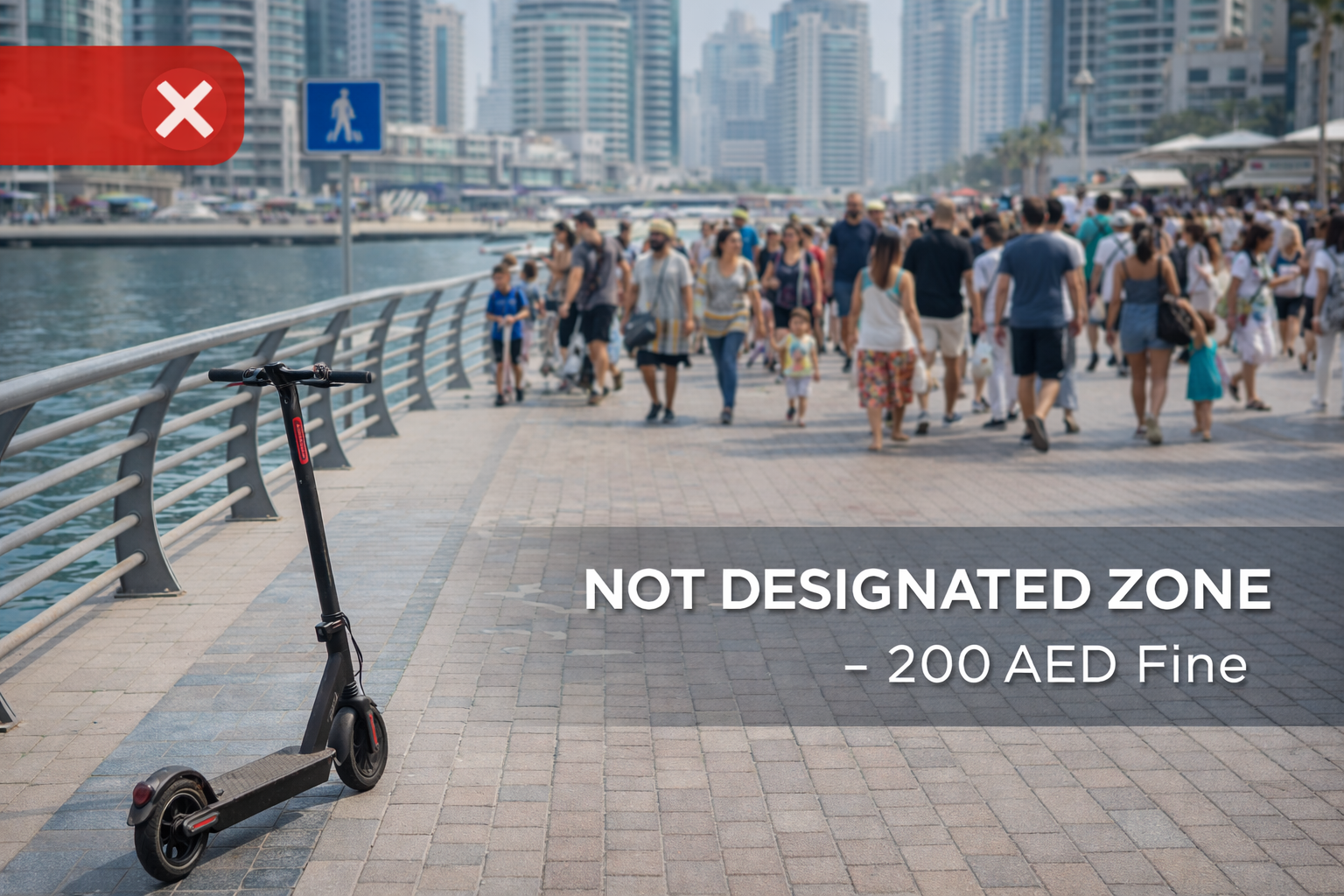
“I’m not gonna walk for 10 minutes just to cross one road.”
I get it. It’s inconvenient. But that’s the rule.
Risk vs reward: 200 AED fine + possible confiscation vs 10-minute walk.
Your choice.
Residential communities: their own rules
Even if you live in a designated zone, your residential community might ban scooters:
- Arabian Ranches — No e-scooters allowed
- The Springs — Check with security
- The Meadows — Some phases ban them
- Emirates Hills — Private, no scooters
Private communities set their own rules. RTA zones don’t override private property rules.
Call security or property management. Ask: “Are e-scooters allowed in common areas?”
Even if the answer is yes, you still can’t ride outside the RTA designated zones.
What happens if you ride outside zones
Police catch you riding in Deira (not a designated zone). Here’s what happens:
- Police stop you
- Check your permit (even if you have it, doesn’t matter — wrong zone)
- Issue fine: 200 AED for riding outside designated zone
- Possible additional fines if:
- No helmet (+200 AED)
- No permit (+200 AED)
- Carrying passenger (+300 AED)
- If repeat offense: Scooter confiscation
Confiscation = 3,000 AED release fee. We covered this here: Complete Dubai Fine Breakdown
How enforcement actually works
The Personal Mobility Monitoring Unit (RTA + Dubai Police) patrols designated zones and borders.
They focus on:
- High-traffic areas (Downtown, JLT, Marina borders)
- Zone boundaries (catching people who cross into non-zones)
- Complaint hotspots (areas where residents complain about illegal riding)
They can’t monitor every street 24/7. Some riders break rules and don’t get caught.
But when they DO catch you:
- Fine is instant
- No warnings (“I didn’t know” doesn’t work)
- Repeat offenders get scooters confiscated
43 violations per day in 2024. They’re serious about enforcement.
Will more zones be added?
Yes. RTA is expanding the network.
In 2024, Dubai had 10 zones. In 2026, it’s 21 zones.
New zones are added based on:
- Population density
- Infrastructure readiness (cycling tracks exist)
- Traffic safety records
- Proximity to public transport
Check the RTA website periodically. When new zones are added, RTA announces them.
Sign up for RTA notifications or check rta.ae every few months for zone updates.
Just because an area isn’t designated today doesn’t mean it won’t be next year.
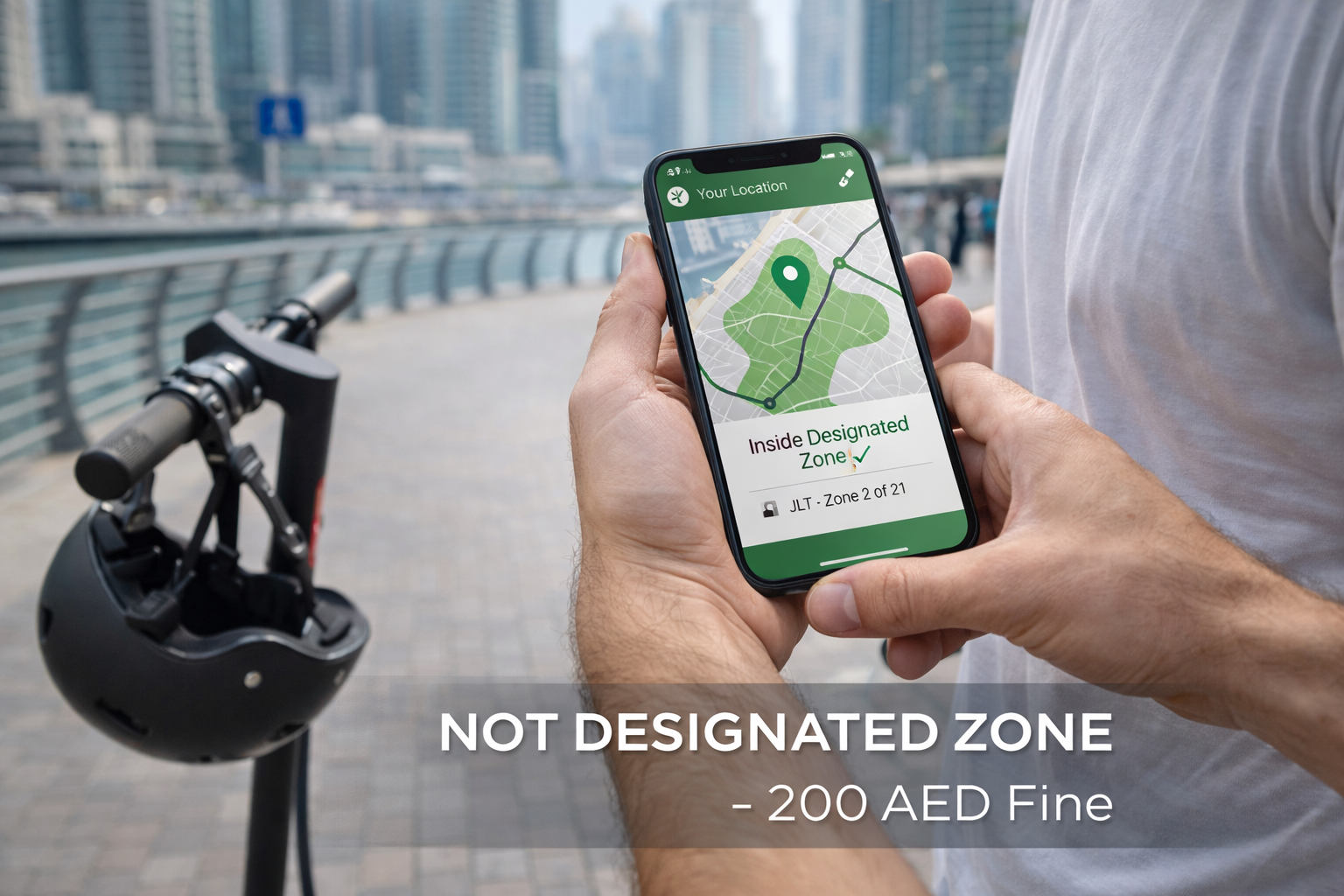
One thing about rental vs personal scooters
Rental scooters (Lime, Tier, Skurtt) use geofencing.
Geofencing = GPS boundaries. The app won’t let you ride outside designated zones. The scooter slows down or stops automatically.
Personal scooters have no geofencing. You can physically ride anywhere. But just because you CAN doesn’t mean it’s legal.
Rental scooters force you to stay legal. Personal scooters don’t.
This is why personal scooter owners get fined more often. No automatic enforcement.
With a personal scooter, you are responsible for knowing the zones. The scooter won’t stop you from breaking the law.
Before every ride: the zone checklist
- ✓ Starting point is in one of the 21 zones
- ✓ Destination is in one of the 21 zones
- ✓ Entire route stays within designated zones (no highway crossings)
- ✓ You know where zone boundaries are
- ✓ If route crosses non-zones, you have a plan to walk those sections
If any of those is “no,” don’t ride. Walk or take Metro instead.
The 21 zones cover a lot of Dubai. But not all of Dubai.
If you’re riding outside these zones, you’re taking a 200 AED risk every time.
Check the map. Know your boundaries. Stay in the zones.
Thanks