
Abu Dhabi E-Scooter Rules 2026: Laws, Fines, Speed & Where to Ride
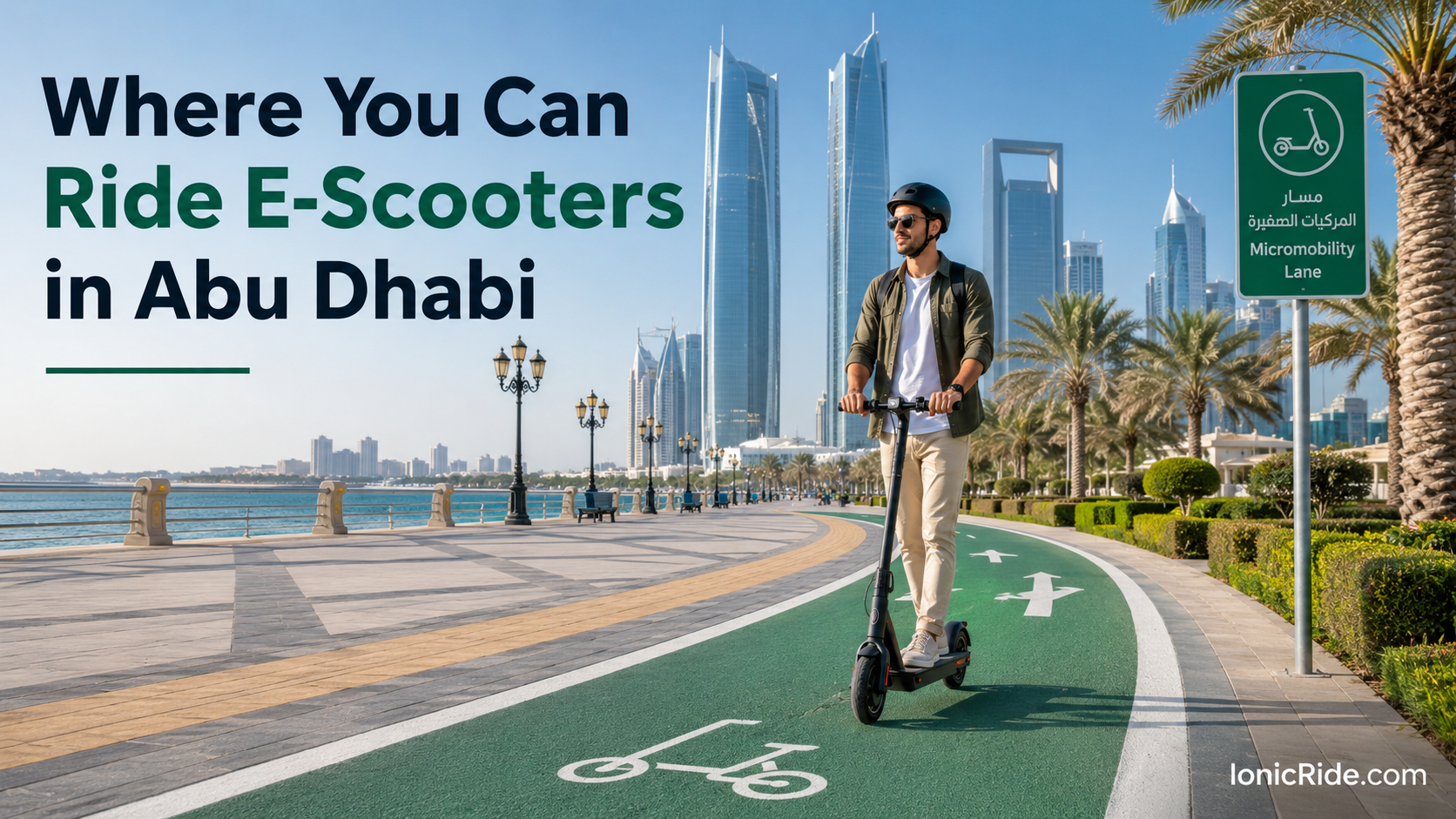
Here's the mistake riders make: they assume Abu Dhabi runs on Dubai's rulebook. It doesn't. Different emirate, different regulator, different fines. Dubai answers to the RTA; Abu Dhabi answers to the Integrated Transport Centre (ITC), and the details don't line up one-for-one.
The good news is that the safety basics are familiar — helmet, 20 km/h, no passengers, designated areas only. The catches are in the specifics: where you're actually allowed to ride, whether you need a permit at all, and a fine structure that climbs to AED 500 for the wrong road.
This guide lays out Abu Dhabi's e-scooter rules for 2026 in full — the regulator, where you can and can't ride, speed, helmet and age requirements, the complete fine breakdown, and a clear side-by-side with Dubai so cross-emirate riders don't get caught out.
Who Makes the Rules in Abu Dhabi
This is the first thing to get straight, because it's why Dubai guides don't fully apply. Abu Dhabi's micromobility framework sits with a different set of bodies:
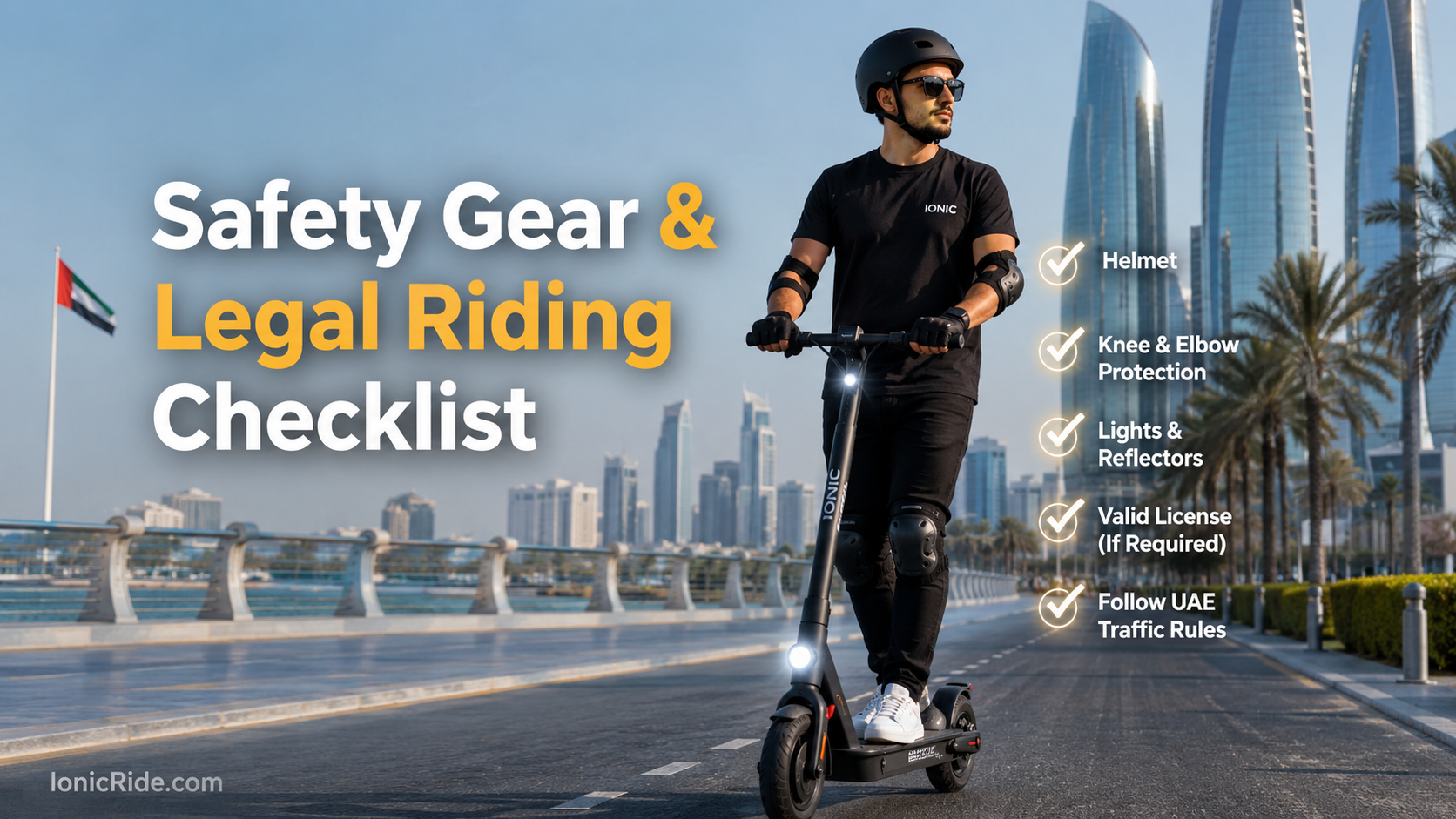
In May 2026, Abu Dhabi Police ran a fresh advisory campaign — timed with Gulf Traffic Week — warning riders to stick to designated areas, keep children supervised and properly geared up, and stay off public roads and vehicle-crowded areas. So while Abu Dhabi doesn't have a single headline-grabbing unit like Dubai's new monitoring team, enforcement and messaging are very much active.
Where You Can — and Can't — Ride
Abu Dhabi treats scooters as belonging on dedicated infrastructure and quiet, low-speed streets — never mixed in with fast traffic or with pedestrians.
- Designated cycle and scooter tracks — the natural home for scooters.
- Approved zones — areas like the Abu Dhabi Corniche and certain residential districts.
- Low-speed internal roads — where no track exists, ITC guidance allows riding on the right-hand side of low-speed internal roads, with the flow of traffic.
- Main roads used by vehicles and any highway — including riding on the shoulder.
- Pedestrian pavements and jogging / running tracks.
- Against the flow of traffic, or ignoring traffic signs and markings.
This is the detail that catches riders. While ITC conduct rules reference riding on the right of low-speed internal roads, the penalty schedule applies the AED 500 fine to riding on the shoulder of a highway or any road where the speed limit exceeds 40 km/h. The safe, practical rule: treat 40 km/h as your absolute ceiling for any on-road riding, and if a road is busier or faster than that, get onto a track or don't ride it. Never touch a main road or highway.
The Core Rules: Speed, Helmet, Age & Passengers
The ITC publishes a clear set of rider obligations. Here's the practical version:
- Speed: Never exceed 20 km/h, and slow right down in crowded areas and near pedestrians.
- Helmet: A protective helmet is mandatory. A reflective jacket or clothing is required when riding in dark areas.
- Lights: Scooters must have working front and rear lights fitted.
- Age: The UAE-wide minimum of 16 applies; children must be supervised and properly geared.
- One rider only: Carrying a passenger is prohibited — no exceptions.
- Pedestrian priority: Give way to pedestrians, and dismount to walk the scooter across pedestrian crossings.
- No distractions: No phone use, and don't wear headphones in both ears while riding.
- Parking: Leave the scooter in a designated spot without blocking vehicles or pedestrians, and don't lock it to lampposts or sign posts.
The helmet is the cheapest fine-insurance you can buy. Our tested picks: Best E-Scooter Helmets for the UAE 2026
Do You Need a Permit or Licence in Abu Dhabi?
This is the single biggest point of confusion for riders coming from Dubai, so let's be precise about what is and isn't published.
In Dubai, the RTA requires an individual e-scooter permit (free, after an online safety course) unless you hold a valid driving licence. Abu Dhabi has not published an equivalent individual rider permit. Its ITC framework focuses on licensing the rental operators — who must hold the right ITC permit and run approved, technically compliant scooters — and on regulating how everyone rides: designated areas, helmet, age, speed and lane discipline.
The absence of a Dubai-style permit does not mean Abu Dhabi is a free-for-all. The conduct rules and the AED 200–500 fines apply in full, and the framework is still developing. If you're riding regularly, confirm the current requirement directly with the ITC rather than assuming you're exempt.
We go deeper on the licence question here: Do You Need a Licence to Ride an E-Scooter in Abu Dhabi?
Abu Dhabi E-Scooter Fines — The Full Breakdown
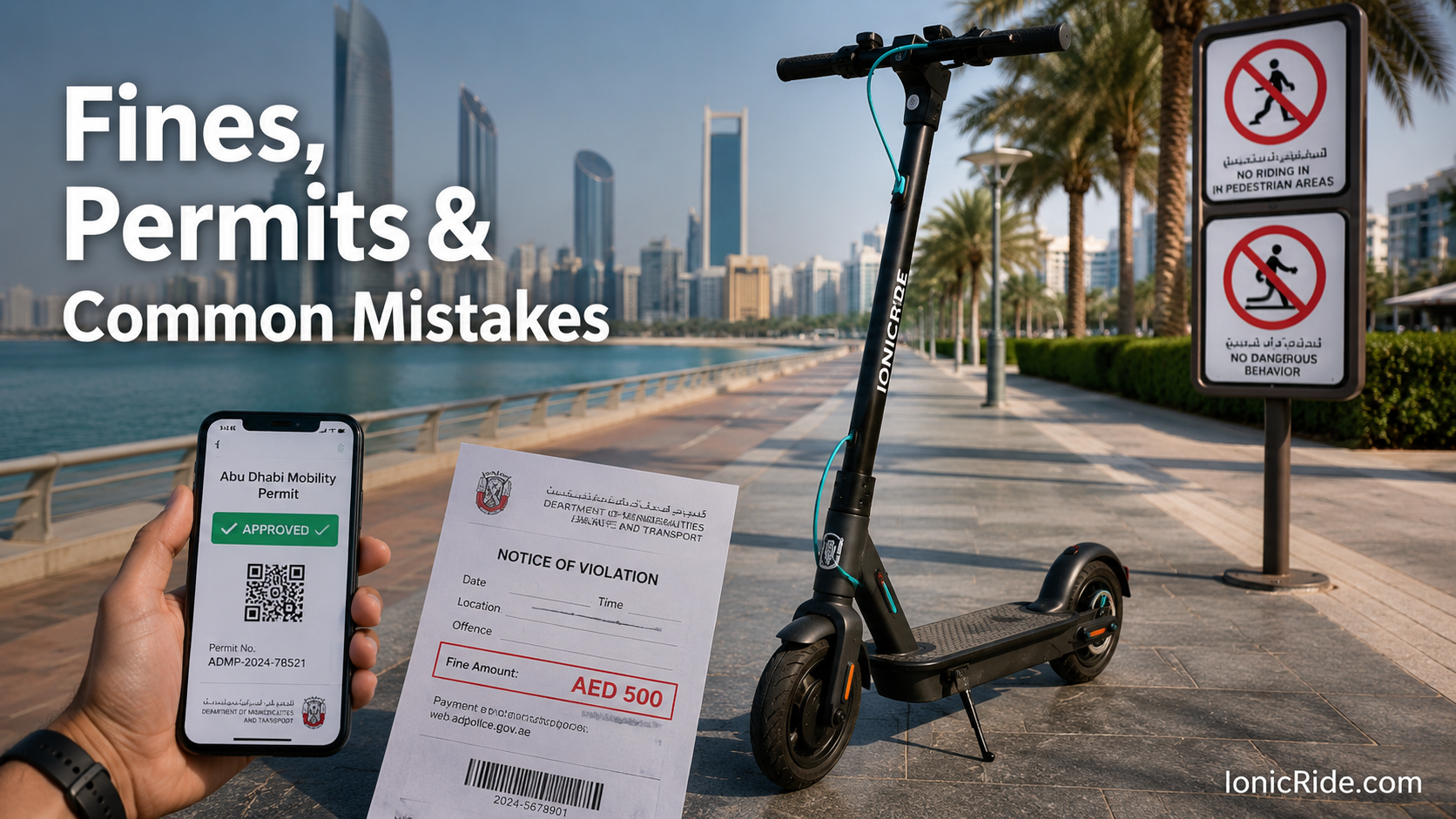
Abu Dhabi's penalties, set by the ITC with the DMT and Abu Dhabi Police, run from AED 200 to AED 500. The split is logical once you see it: the AED 500 tier is reserved for putting yourself where a scooter absolutely shouldn't be — fast roads and highways.
Abu Dhabi E-Scooter & Bicycle Fines (2026)
| Violation | Fine (AED) |
|---|---|
| Riding on unauthorised roads/areas, main vehicle roads or running tracks | 500 |
| Riding on a highway shoulder or road where the limit exceeds 40 km/h | 500 |
| Riding on the main road | 200 |
| Riding against the flow of traffic / ignoring signs | 200 |
| No helmet | 200 |
| No reflective clothing in dark areas | 200 |
| Parking that blocks vehicles/pedestrians, or locking to posts | 200 |
| Not giving way / not dismounting at pedestrian crossings | 200 |
As in Dubai, these can stack — and persistent or dangerous riding risks the scooter being seized. If that happens in Abu Dhabi, the recovery process differs from Dubai's, so it's worth knowing the emirate-specific steps in advance.
If your scooter is taken: E-Scooter Confiscated in Sharjah, Ajman or Abu Dhabi — What to Do
Abu Dhabi vs Dubai — Side by Side
If you ride in both emirates, this is the table to bookmark. The safety basics match; the systems around them don't.
E-Scooter Rules — Abu Dhabi vs Dubai (2026)
| Rule | Abu Dhabi | Dubai |
|---|---|---|
| Regulator | ITC / DMT | RTA |
| Individual rider permit | Not published | Required (or licence) |
| Minimum age | 16 | 16 |
| Speed cap | 20 km/h | 20 km/h |
| Helmet | Mandatory | Mandatory |
| Passengers | Banned | Banned |
| Where | Corniche, zones, tracks, low-speed roads | 21 named zones |
| Fine range | AED 200–500 | AED 200–300 (500 reckless) |
| Dedicated enforcement unit | Police campaigns | Monitoring Unit |
Compare the Dubai side in full: Where You Can Ride in Dubai (21 zones) · Dubai Fine Breakdown
Dubai's enforcement has stepped up sharply in 2026: Inside Dubai's Personal Mobility Monitoring Unit
Buying & Riding Smart in Abu Dhabi
Two practical notes beyond the law. First, whatever you buy needs to meet the ITC's approved technical standards — working lights, brakes and a build suited to UAE conditions — so steer clear of grey-market models that can't be serviced or certified locally. Second, the capital's heat is as hard on scooters as Dubai's: range drops, batteries age faster, and charging a hot pack is asking for trouble. Ride early or late, and never leave a scooter charging in direct sun or a hot car.
Models and where to buy in the capital: Best E-Scooters in Abu Dhabi 2026 — Models & Where to Buy
Beat the heat without killing your battery: UAE Summer Survival Guide for E-Scooters
Common Mistakes Riders Make in Abu Dhabi
- Assuming your Dubai RTA permit or Dubai habits transfer — the system and zones are different.
- Riding on a road faster than 40 km/h — that's the AED 500 tier, not a warning.
- Treating "no permit" as "no rules" — the conduct fines apply in full.
- Riding on the Corniche pavement among pedestrians instead of the designated path.
- Carrying a friend or a child on the deck — one rider only, always.
- Skipping the helmet or the night-time reflective jacket — both are AED 200 each.
Legal, in designated areas only. Ride the Corniche, approved zones, cycle tracks and low-speed internal roads — never main roads, highways, pavements or running tracks.
Core rules mirror Dubai: 16+, helmet mandatory, 20 km/h, lights fitted, one rider, no phones. But Abu Dhabi is run by the ITC, not the RTA, and has no Dubai-style individual permit.
Fines run AED 200–500, with the AED 500 tier reserved for fast roads and highways. Treat 40 km/h as your hard on-road ceiling, gear up, and stay in designated areas — do that and you'll ride the capital without trouble in 2026.
Abu Dhabi E-Scooter Rules — Full FAQ
Yes — legal to own and ride, but only in designated areas: cycle tracks, approved zones such as the Corniche and certain residential areas, and low-speed internal roads. They're banned on main roads, highways, pavements and running tracks. The rules are set by the ITC under the DMT, enforced by Abu Dhabi Police.
On designated tracks, approved areas like the Corniche, and — where there's no track — the right-hand side of low-speed internal roads, with traffic. Avoid main roads, highways and their shoulders, pavements and running tracks. Riding on a road where the limit exceeds 40 km/h triggers the AED 500 fine.
20 km/h maximum, and slower in crowded areas. Scooters must also have working front and rear lights and meet ITC-approved technical standards.
Abu Dhabi hasn't published a Dubai-style individual rider permit. The ITC mainly licenses rental operators and regulates conduct. The rules and fines still apply fully, so confirm the current requirement with the ITC and don't assume you're exempt — especially on a fast or high-powered scooter.
Yes. A helmet is mandatory and a reflective jacket is required in dark areas. Riding without either is an AED 200 fine. A bell is recommended, and headphones in both ears are discouraged.
16, in line with the UAE-wide rule. Children must be supervised and properly geared, and only one rider is allowed per scooter.
AED 200 to AED 500. The AED 500 tier covers unauthorised roads and areas, main vehicle roads, running tracks, and highway shoulders or roads above 40 km/h. AED 200 covers no helmet, no night reflective gear, riding against traffic, bad parking and crossing violations.
Same safety basics (16+, helmet, 20 km/h, no passengers, designated areas), but Dubai is RTA-run with a required permit, 21 named zones and a dedicated Monitoring Unit, while Abu Dhabi is ITC-run with no individual permit, Corniche-centred zones, and an AED 200–500 fine structure.
