E-Bike License UAE 2026: Do You Need One? Electric Bike Rules Explained
E-Bike License UAE 2026: Do You Need One? Electric Bike Rules Explained
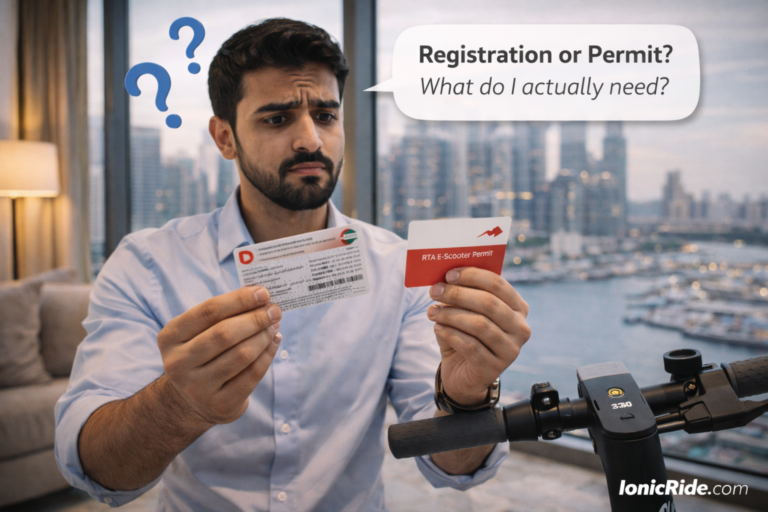
You bought an e-bike. Someone mentioned you might need a license. Now you’re not sure if you can legally ride it at all.
The problem is that e-bikes and e-scooters have different rules — but most articles online treat them as the same thing. They’re not. An e-bike can weigh 30 kg, hit 45 km/h, and share the road with cars. The rules reflect that. And the license you need depends entirely on the type of e-bike you own.
I break down exactly which e-bikes need which license, what the rules are across every emirate, and how to figure out in 2 minutes which category your bike falls into.
Do You Actually Need a License for an E-Bike in the UAE?
Short answer: Yes.
Which license: Depends on your e-bike.
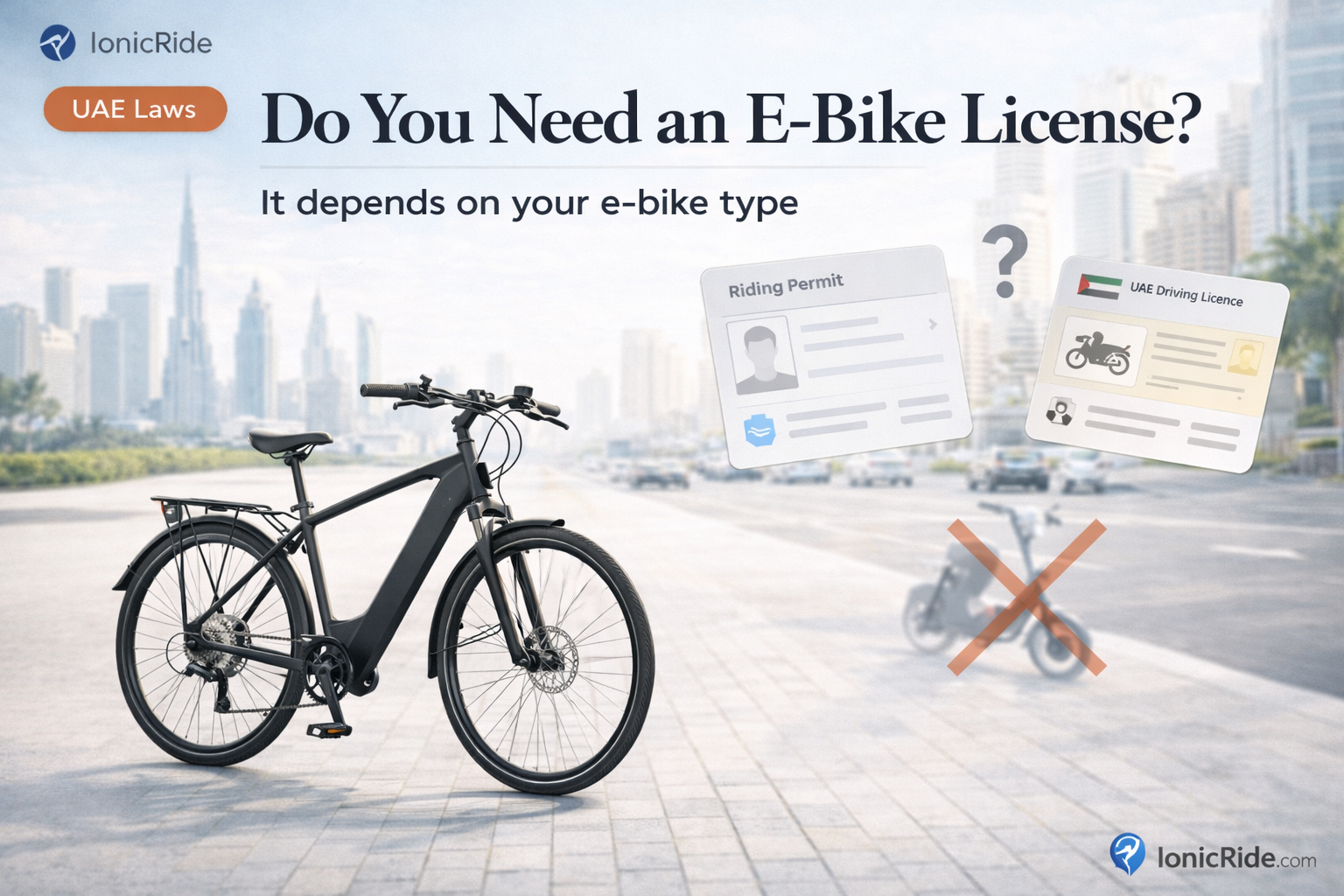
Not all e-bikes are treated the same. The UAE classifies electric bikes by motor power and top speed. That classification determines whether you need a riding permit, a full driving licence, or a motorcycle licence.
Here’s the thing…
Most people assume an e-bike is just a bicycle with a battery. Legally, it’s not. The moment you add a motor above a certain threshold, it becomes a motorised vehicle in the eyes of the RTA — and motorised vehicles need permits or licences.
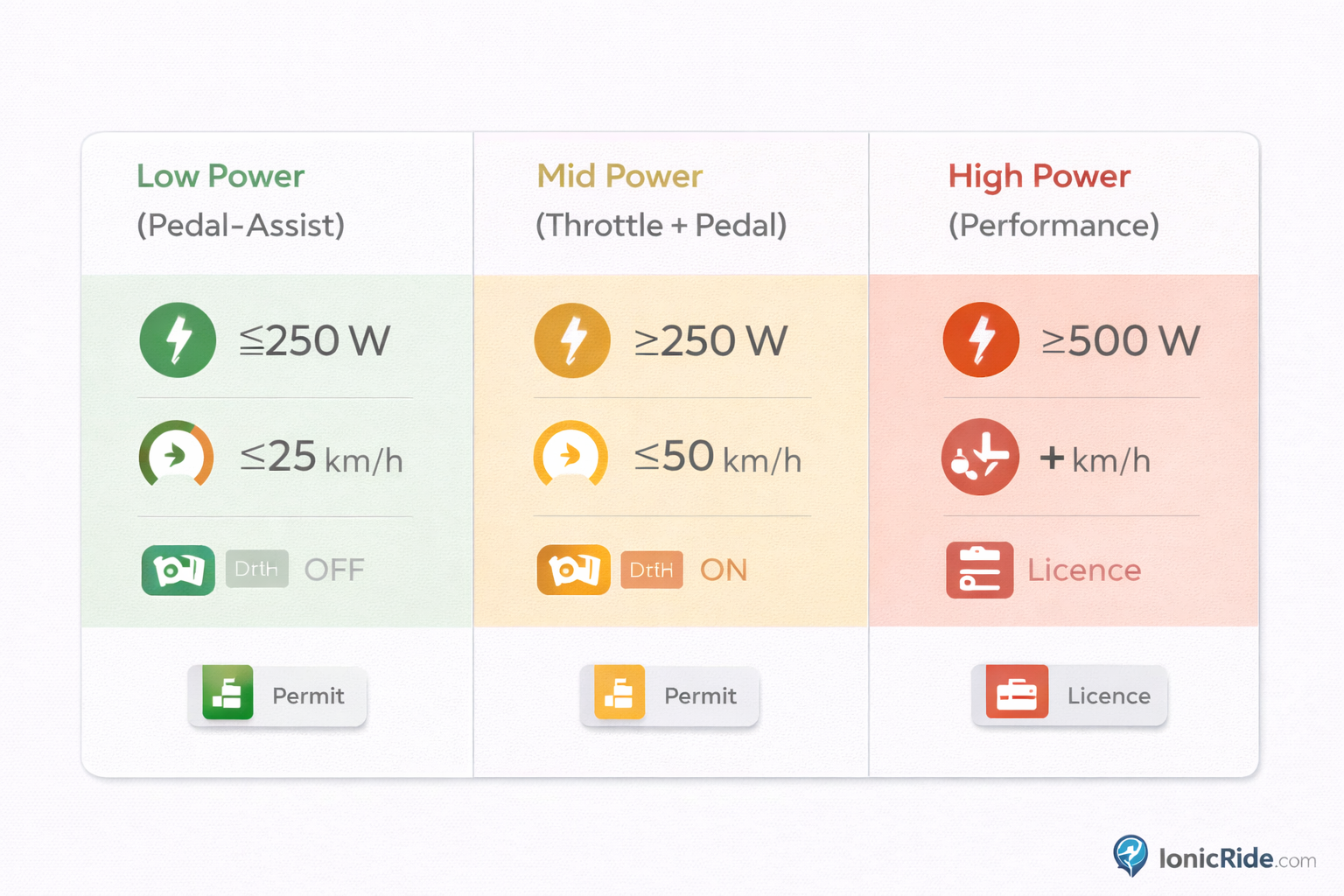
250W
Pedal-Assist E-Bike (Low Power)
Motor only activates when you’re pedalling. Max speed typically 25 km/h. Needs a riding permit OR a UAE driving licence. Same permit as e-scooters. Most common type sold in Dubai.
Mid-Power E-Bike (Throttle + Pedal)
Can run on throttle without pedalling. Hits 30–45 km/h. Technically requires a motorcycle licence if used on roads. Most riders don’t know this. Enforcement is inconsistent.
High-Power E-Bike (Performance)
Over 750W. Speeds of 45 km/h+. This is legally a motorcycle in the UAE. You need a full motorcycle licence. No exceptions. If you crash at this speed, insurance and police will both care about your licence category.
Check the sticker on the motor (usually near the wheel hub or bottom bracket). It’ll say something like “36V 250W” or “48V 750W.” The second number is what matters. If there’s no sticker, check the manual or the manufacturer’s website — search your model number.
E-Bike vs E-Scooter: How the Rules Actually Differ
But here’s where it gets interesting…
People assume the same permit covers everything. It does — but only for certain e-bikes. The moment your bike crosses into Tier 2 territory, the rules change significantly.
E-Bike vs E-Scooter: Rule Comparison
UAE Rules| Rule | E-Scooter | E-Bike (Tier 1) | E-Bike (Tier 2+) |
|---|---|---|---|
| License Needed | Riding permit | Riding permit | Motorcycle licence |
| Max Speed (zones) | 20 km/h | 25 km/h | Road rules apply |
| Where You Can Ride | Cycle tracks only | Cycle tracks + shared paths | Roads (with licence) |
| Helmet Required | Under 18 (Dubai) | Under 18 (Dubai) | All ages — mandatory |
| Passenger Allowed | No | No | No |
| Permit Cost | Free (Dubai) | Free (Dubai) | AED 3,000+ (motorcycle licence with training) |
See the jump at Tier 2? Free permit to AED 3,000+ motorcycle licence. That’s the line most people don’t know about until they’re stopped.
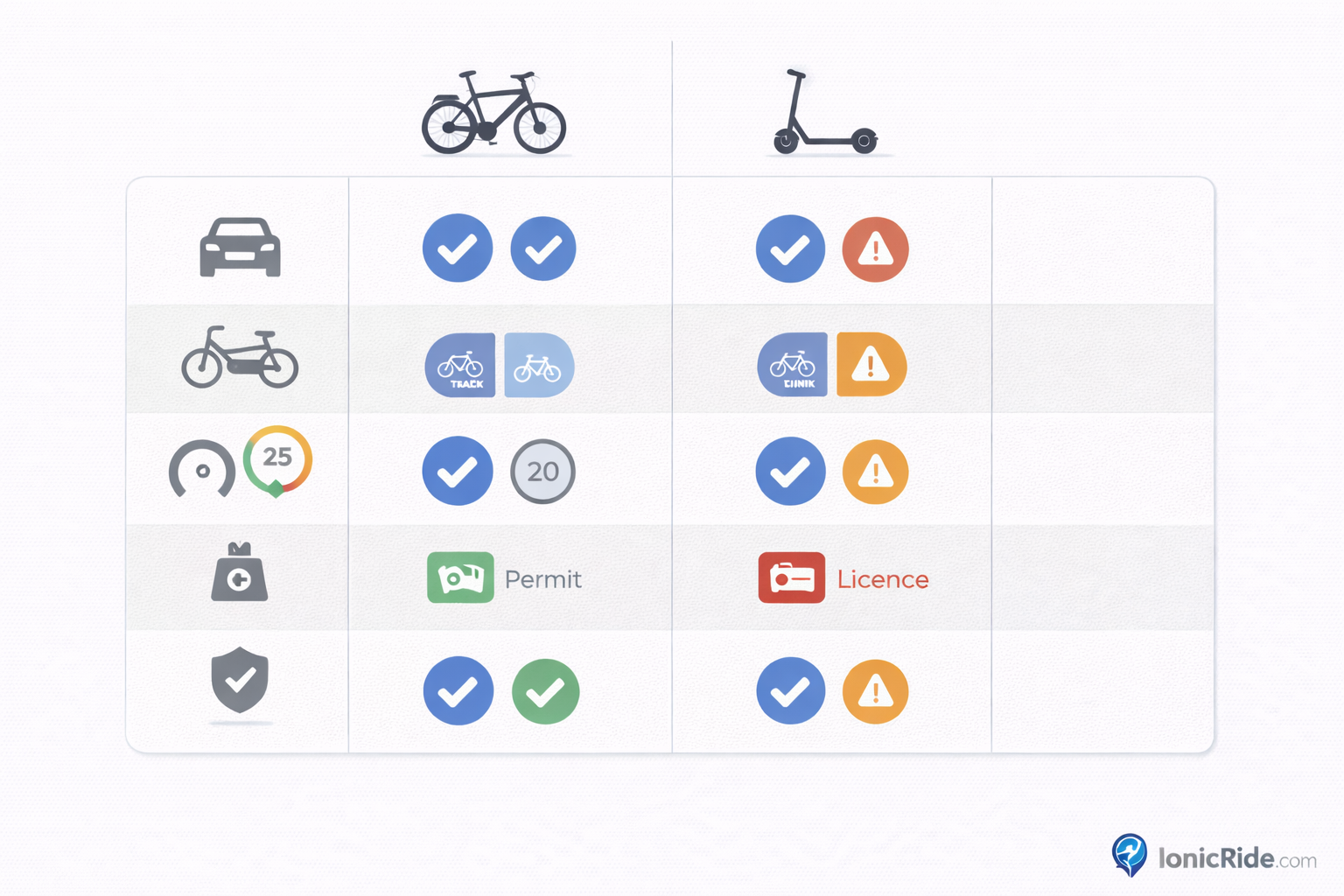
Which E-Bike License Do You Actually Need?
Now here’s what most people miss…
The riding permit covers Tier 1 e-bikes — the pedal-assist ones under 250W. Same permit, same process as e-scooters. Free. 15 minutes. Done.
But if your e-bike has a throttle that runs without pedalling, or if it regularly hits above 30 km/h, you’re in Tier 2. And Tier 2 means motorcycle licence territory.
✓ Riding Permit Is Enough If:
- Motor is 250W or under
- It’s pedal-assist only (no throttle)
- Top speed is 25 km/h or under
- You’re only riding on cycle tracks
- It’s a standard commuter e-bike
✗ You Need More Than a Permit If:
- Motor is over 250W
- It has a throttle (runs without pedalling)
- Top speed exceeds 30 km/h
- You’re riding on main roads
- It weighs over 25 kg (performance category)
Need the riding permit for a Tier 1 e-bike? Same process as e-scooters — free, 15 minutes, done online: E-Scooter License Dubai: Complete Guide
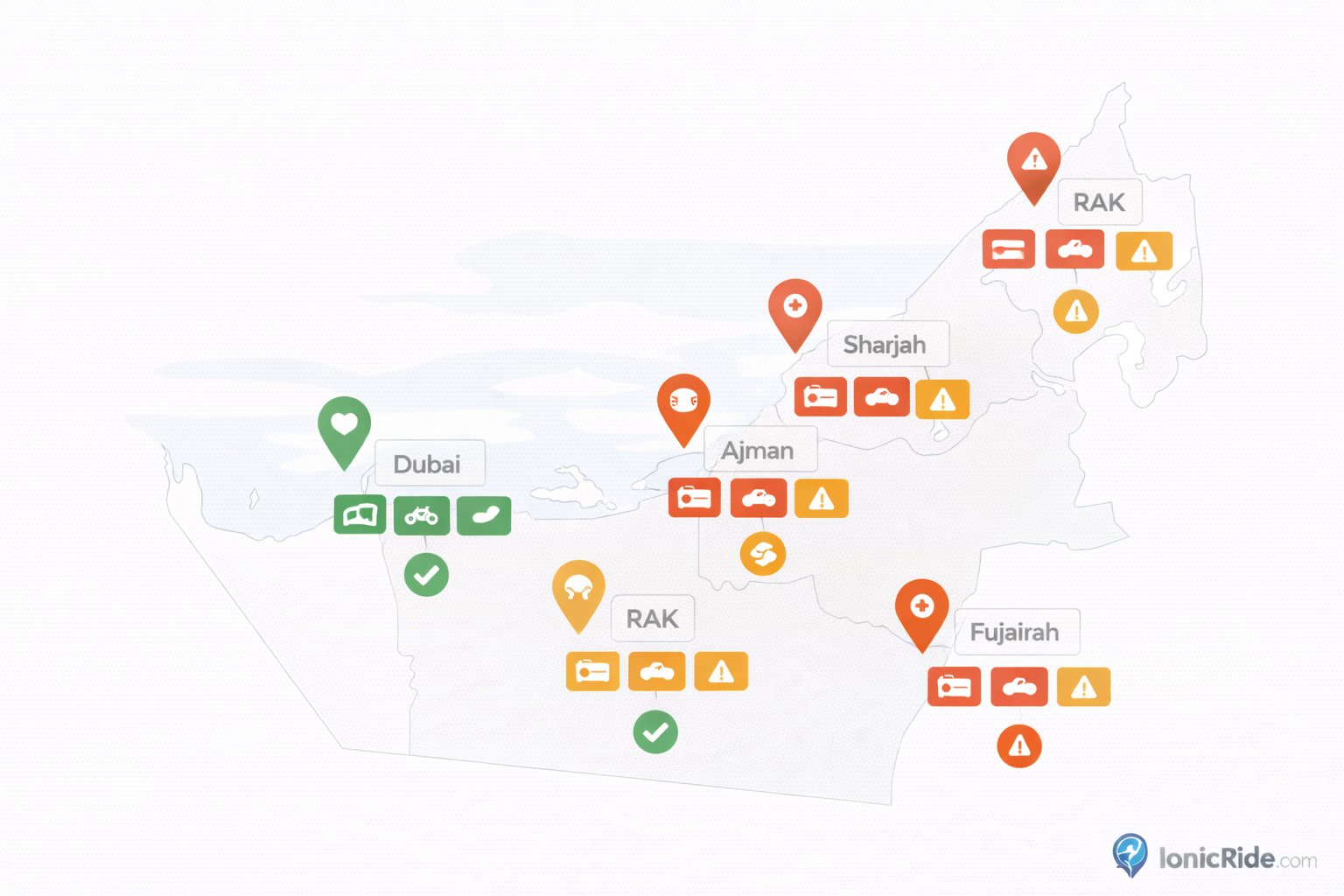
Emirates Comparison: Where Can You Ride and What Are the Rules?
Every emirate sets its own enforcement level. Dubai is the most relaxed. Abu Dhabi and Sharjah are stricter. Here’s the full picture.
E-Bike Rules by Emirate
Emirates Breakdown| Emirate | Permit Required | Helmet Rule | Enforcement | Strictness |
|---|---|---|---|---|
| Dubai | Yes | Under 18 | Medium | Relaxed |
| Sharjah | Yes — separate permit | All ages | High | Strict |
| Abu Dhabi | Yes | All ages | High | Strictest |
| Ajman | Yes | Under 18 | Medium | Moderate |
| Ras Al Khaimah | Yes | Under 18 | Low | Relaxed |
| Fujairah | Yes | Under 18 | Low | Relaxed |
| Umm Al Quwain | Yes | Under 18 | Low | Relaxed |
Abu Dhabi is the one to watch. They’ve been the most aggressive about enforcing e-bike rules since late 2024. If you’re riding into Abu Dhabi, treat it like Sharjah — helmet on, permit ready, stay in designated areas. Abu Dhabi ITC e-bike regulations
Sharjah has its own permit system and stricter rules. If you ride there regularly, read this: E-Scooter Sharjah Laws 2026: Full Guide
What Happens If You Ride an E-Bike Without the Right License?
Here’s the thing…
Riding a Tier 1 e-bike without a permit is the same as riding an e-scooter without one — AED 200 fine, warning first time in most areas. But riding a Tier 2 or Tier 3 e-bike without a motorcycle licence is a completely different level of trouble.
Fines by E-Bike Tier & Violation
Current Rates| Violation | Tier 1 Fine | Tier 2+ Fine | Risk Level |
|---|---|---|---|
| No permit / licence | AED 200 | AED 500+ | High |
| Exceeding speed limit | AED 200 | Traffic fine (road rules) | High |
| No helmet | AED 100 (under 18) | AED 200 (all ages) | Medium |
| Riding on roads (no road licence) | AED 200 | AED 500 + possible confiscation | Very High |
| Accident while unlicensed | Fines + liability | Full personal liability — no insurance coverage | Serious |
A customer brought in a 750W e-bike after being stopped in Ras Al Khaimah. Police didn’t even know what category it fell under — they called Dubai RTA while standing on the road. He got off with a warning. But his bike was flagged in the system. Next time won’t be as easy. The enforcement gap is closing.
Should You Get a Motorcycle Licence for Your E-Bike?
The bottom line?
If your e-bike is Tier 2 or above and you ride it on roads regularly, yes. It’s the only legal way to cover yourself fully. But it’s a big commitment — AED 3,000+ and weeks of training.
If your e-bike is Tier 1 and you stick to cycle tracks, the riding permit is all you need. Free. 15 minutes. No drama.
The real question is: what are you actually riding, and where are you actually going? Be honest about it. A 500W e-bike on a cycle track once a week is one thing. The same bike on Sheikh Zayed Road every morning is another.
If you’re on the fence about the motorcycle licence, get a UAE driving licence first if you don’t have one. It covers Tier 1 e-bikes and e-scooters everywhere in the UAE. It’s the single document that covers the most ground. Everything else builds from there.
Check your e-bike’s wattage. That number decides everything.
Under 250W and pedal-assist only? Riding permit. Free. Same as an e-scooter. Done in 15 minutes.
Over 250W with a throttle? You’re in motorcycle licence territory. It’s expensive and it takes time — but riding without it is a gamble that’s getting riskier as enforcement catches up.
Abu Dhabi and Sharjah are already stricter than Dubai. Don’t assume Dubai’s relaxed attitude follows you to another emirate.
Figure Out Your Situation in 2 Minutes
- Find your e-bike’s wattage — check the motor sticker or the manual
- Under 250W + pedal-assist only? → Get the riding permit (free, 15 min)
- Over 250W or has a throttle? → You need a motorcycle licence for road use
- Riding in Sharjah or Abu Dhabi? → Helmet on. Always. All ages.
- Don’t have a UAE driving licence yet? → Get one. It’s the best single document for coverage.
- Keep your permit or licence on you — screenshot on your phone at minimum
Already have your permit but not sure where you can legally ride?
Cycle tracks, shared paths, and designated zones — the map is different in every emirate.